Commentary · Tanakh
Jonah
If you don’t know me, my name is Rachel, and these are my scripture notes on the Book of Jonah. The verses are presented sequentially in English and Hebrew, followed by my commentary. Think of it as a living midrash: whenever I learn something new, I add a note. My notes draw from an eclectic range of ancient sources, both Jewish and Gentile. These include rabbinical commentaries, classical sources, and even the holy texts of other religions. See my about page for more.
We read the Book of Jonah in the final hour of Yom Kippur.
Jonah 1יוֹנָה א
1NOW THE WORD of HaShem came unto Jonah the son of Amittai, saying: 2“Arise, go to Nineveh, that great city, and proclaim against it; for their wickedness is come up before Me.”
1וַיְהִי, דְּבַר-יְהוָה, אֶל-יוֹנָה בֶן-אֲמִתַּי, לֵאמֹר. 2קוּם לֵךְ אֶל-נִינְוֵה, הָעִיר הַגְּדוֹלָה--וּקְרָא עָלֶיהָ: כִּי-עָלְתָה רָעָתָם, לְפָנָי.
The name Jonah means “dove,” and Amittai derives from אֱמֶת,truth. His full name meaning something like “Dove, son of Truthful.”
Islamic traditions use the equivalent name Yūnus ibn Mattā. Though a historical minority claim Mattā was his mother.
Bukhari Hadith 3395 – The Prophet ﷺ said, “One should not say that I am better than Yunus bin Matta.”
عَنِ النَّبِيِّ صلى الله عليه وسلم قَالَ «لاَ يَنْبَغِي لِعَبْدٍ أَنْ يَقُولَ أَنَا خَيْرٌ مِنْ يُونُسَ بْنِ مَتَّى»
Ibn al-Athir, al-Kamil 1:329 – It is said: none of the prophets was traced back to his mother except Jesus son of Mary and Yunus bin Matta, she being his mother.
قِيلَ: لَمْ يُنْسَبْ أَحَدٌ مِنَ الْأَنْبِيَاءِ إِلَى أُمِّهِ إِلَّا عِيسَى بْنَ مَرْيَمَ وَيُونُسَ بْنَ مَتَّى، وَهِيَ أُمُّهُ.
The church father Jerome (347–420 CE) associates this etymological “dove” with the Holy Spirit.
Jerome on Jonah, Preface – If indeed Jonah is to be translated as 'dove,' and if the dove can be seen as the Holy Spirit, then we can also interpret the Dove as signifying the dove's entrance into us.
Si enim Jonas interpretatur columba, columba autem refertur ad Spiritum sanctum: nos quoque columbam, ex adventu ad nos interpretemur columbae.
Jerome explains “Amittai” by relaying a rabbinic midrash connecting Jonah to the prophet Elijah through the widow of Zarephath. According to Jewish tradition, Jonah is her son, the same one Elijah raises from the dead in 1 Kings 17.
Jerome on Jonah, Preface – The Hebrews hand down that this man was the son of the widow of Zarephath, whom the prophet Elijah raised from the dead, his mother afterward saying to him: “Now I know that you are a man of God, and the word of God in your mouth is truth.” And for this reason the boy himself was so named: for Amathi in our tongue means ‘truth,’ and because Elijah spoke what was true, the one who was raised is called the son of truth.
Tradunt autem Hebraei hunc esse filium viduae Sareptanae, quem Elias propheta mortuum suscitavit, matre postea dicente ad eum: Nunc cognovi quia vir Dei es tu: et verbum Dei in ore tuo est veritas; et ob hanc causam etiam ipsum puerum sic vocatum. Amathi enim in nostra lingua veritatem sonat: et ex eo quod verum Elias locutus est, ille qui suscitatus est, filius esse dicitur veritatis.
1 Kings 17:17-22 – 17And it came to pass after these things, that the son of [the widow of Zarephath], the mistress of the house, fell sick; and his sickness was so sore, that there was no breath left in him. 18And she said unto Elijah: 'What have I to do with thee, O thou man of G-d? art thou come unto me to bring my sin to remembrance, and to slay my son?' 19And he said unto her: 'Give me thy son.' And he took him out of her bosom, and carried him up into the upper chamber, where he abode, and laid him upon his own bed. 20And he cried unto HaShem, and said: 'O HaShem my G-d, hast Thou also brought evil upon the widow with whom I sojourn, by slaying her son?' 21And he stretched himself upon the child three times, and cried unto HaShem, and said: 'O HaShem my G-d, I pray thee, let this child's soul come back into him.' 22And HaShem hearkened unto the voice of Elijah; and the soul of the child came back into him, and he revived.
17וַיְהִי, אַחַר הַדְּבָרִים הָאֵלֶּה, חָלָה, בֶּן-הָאִשָּׁה בַּעֲלַת הַבָּיִת; וַיְהִי חָלְיוֹ חָזָק מְאֹד, עַד אֲשֶׁר לֹא-נוֹתְרָה-בּוֹ נְשָׁמָה. 18וַתֹּאמֶר, אֶל-אֵלִיָּהוּ, מַה-לִּי וָלָךְ, אִישׁ הָאֱלֹהִים: בָּאתָ אֵלַי לְהַזְכִּיר אֶת-עֲוֺנִי, וּלְהָמִית אֶת-בְּנִי. 19וַיֹּאמֶר אֵלֶיהָ, תְּנִי-לִי אֶת-בְּנֵךְ; וַיִּקָּחֵהוּ מֵחֵיקָהּ, וַיַּעֲלֵהוּ אֶל-הָעֲלִיָּה אֲשֶׁר-הוּא יֹשֵׁב שָׁם, וַיַּשְׁכִּבֵהוּ, עַל-מִטָּתוֹ. 20וַיִּקְרָא אֶל-יְהוָה, וַיֹּאמַר: יְהוָה אֱלֹהָי--הֲגַם עַל-הָאַלְמָנָה אֲשֶׁר-אֲנִי מִתְגּוֹרֵר עִמָּהּ הֲרֵעוֹתָ, לְהָמִית אֶת-בְּנָהּ. 21וַיִּתְמֹדֵד עַל-הַיֶּלֶד שָׁלֹשׁ פְּעָמִים, וַיִּקְרָא אֶל-יְהוָה וַיֹּאמַר: יְהוָה אֱלֹהָי, תָּשָׁב נָא נֶפֶשׁ-הַיֶּלֶד הַזֶּה עַל-קִרְבּוֹ. 22וַיִּשְׁמַע יְהוָה, בְּקוֹל אֵלִיָּהוּ; וַתָּשָׁב נֶפֶשׁ-הַיֶּלֶד עַל-קִרְבּוֹ, וַיֶּחִי.
The Zohar repeats this tradition, adding that Jonah “derived from the power of Elijah” through his resurrection.
Zohar 2:197b, p122 – Who has gone up to heaven? Elijah. And come down – Jonah, who descended to the abyss, to the depths of the sea. Jonah derived from the power of Elijah. Elijah ascended, Jonah descended. One prayed that he might die, and the other prayed that he might die. Thus he is called son of אמתי (Amittai) (Jonah 1:1), and it is written The word of YHVH in your mouth is אמת, truth. (1Kings 17:24)
מִי עָלָה שָׁמַיִם, דָּא אֵלִיָּהוּ. וַיֵּרַד, דָּא יוֹנָה, דְּנָחַת לֵיהּ נוּנָא גּוֹ תְּהוֹמֵי, לְעִמְקֵי יַמָּא. יוֹנָה מֵחֵילָא דְּאֵלִיָּהוּ קָא אָתָא, אֵלִיָּהוּ סָלִיק, יוֹנָה נָחִית, דָּא שָׁאִיל נַפְשֵׁיהּ לְמֵימַת, וְדָא שָׁאִיל נַפְשֵׁיהּ לְמֵימַת, וּבְגִין כַּךְ אִקְרֵי בֶּן אֲמִתַּי. וּכְתִיב, (מלכים א י״ז:כ״ד) וּדְבַר יְיָ’ בְּפִיךָ אֱמֶת.
The aggadic midrash Pirké d’Rabbi Eliezer and the Lives of the Prophets also record this narrative. The latter is our earliest witness, predating Jerome, though both lack the “Amittai” identification as Daniel Matt (1950–) points out in his excellent Zohar commentary.
Pirké d’Rabbi Eliezer 33 – Rabbi Simeon said: Owing to the power of charity the dead will be quickened in the future. Whence do we learn this? From Elijah the Tishbite. For he betook himself to Zarephath, and a woman (who was) a widow received him with great honour. She was the mother of Jonah, and they were eating and drinking his bread and oil; he, she, and her son, as it is said, “And she did eat, and he also” (1Kings 17:15).
רַבִּי שִׁמְעוֹן אוֹמֵר: מִכֹּחַ צְדָקָה הַמֵּתִים עֲתִידִים לְהַחֲיוֹת. מִנַּיִן אָנוּ לְמֵדִין? מֵאֵלִיָּהוּ הַתִּשְׁבִּי, שֶׁהָלַךְ לוֹ לְצָרְפַת וְקִבְּלַתּוֹ אִשָּׁה אַלְמָנָה בְּכָבוֹד גָּדוֹל. אִמּוֹ שֶׁל יוֹנָה, וּמִפִּתּוֹ וּמִשֶּׁמֶן יִצְהָרוֹ הָיוּ אוֹכְלִין וְשׁוֹתִין הוּא וְהִיא וּבְנָהּ, שֶׁנֶּאֱמַר (מלכים א יז, טו): ״וַתֹּאכַל הִיא וָהוּא״.
Lives of the Prophets 10, Jonah – Jonah was from the land of Kariathmaous, near Azotus, a Greek city by the sea. And having been cast up by the sea-monster and gone off to Nineveh, on his return he did not remain in his own land, but taking his mother he settled in Sour, a country of foreign nations; for he said, 'Thus I will take away my reproach, that I lied in prophesying against Nineveh the great city.'
At that time Elijah was rebuking the house of Ahab, and having called a famine upon the land, he fled. And coming, he found the widow with her son — for he could not stay among the uncircumcised — and he blessed her. And when her son died, God raised him again from the dead through Elijah; for He wished to show him that one cannot run away from God.
And after the famine he rose up and went into the land of Judah. And when his mother died on the way, he buried her beside the oak of Deborah. And having settled in the land of Saraar, he died and was buried in the cave of Kenaz, who became judge of one tribe in the days of the anarchy. And he gave a portent concerning Jerusalem and the whole land: when they see a stone crying out piteously, the end is near; and when they see all the nations in Jerusalem, the whole city is razed to the ground.
Ἰωνᾶς ἦν ἐκ γῆς Καριαθμοῦς πλησίον πόλεως Ἑλλήνων Ἀζώτου κατὰ θάλασσαν. Καὶ ἐκβρασθεὶς ἐκ τοῦ κήτους καὶ ἀπελθὼν ἐν Νινευῇ ἀνακάμψας οὐκ ἔμεινεν εἰς τὴν γῆν αὐτοῦ, ἀλλὰ παραλαβὼν τὴν μητέρα αὐτοῦ παρῴκησε τὴν Σοὺρ χώραν ἀλλοφύλων ἐθνῶν· ἔλεγε γάρ, ὅτι οὕτως ἀφελῶ ὄνειδός μου, ὅτι ἐψευσάμην προφητεύσας κατὰ Νινευῆ τῆς μεγάλης πόλεως. Ἦν τότε Ἠλίας ἐλέγχων τὸν οἶκον Ἀχαὰβ καὶ καλέσας λιμὸν ἐπὶ τὴν γῆν ἔφυγεν. Καὶ ἐλθὼν εὗρε τὴν χήραν μετὰ τοῦ υἱοῦ αὐτῆς· οὐ γὰρ ἠδύνατο μένειν μετὰ ἀπεριτμήτων· καὶ εὐλόγησεν αὐτήν. Καὶ θανόντα τὸν υἱὸν αὐτῆς πάλιν ἤγειρεν ἐκ νεκρῶν ὁ θεὸς διὰ τοῦ Ἠλία· ἠθέλησε γὰρ δεῖξαι αὐτῷ, ὅτι οὐ δύναται ἀποδρᾶσαι θεόν. Καὶ ἀναστὰς μετὰ τὸν λιμὸν ἦλθεν ἐν γῇ Ἰούδα. Καὶ ἀποθανοῦσαν τὴν μητέρα αὐτοῦ κατὰ τὴν ὁδὸν ἔθαψεν αὐτὴν ἐχόμενα τῆς βαλάνου Δεββώρας. Καὶ κατοικήσας ἐν γῇ Σαραὰρ ἀπέθανε καὶ ἐτάφη ἐν σπηλαίῳ Κενεζέου κριτοῦ γενομένου μιᾶς φυλῆς ἐν ἡμέραις τῆς ἀναρχίας. Καὶ ἔδωκε τέρας ἐπὶ Ἱερουσαλὴμ καὶ ὅλην τὴν γῆν, ὅτε ἴδωσι λίθον βοῶντα οἰκτρῶς, ἐγγίζειν τὸ τέλος. Καὶ ὅτε ἴδωσιν ἐν Ἱερουσαλὴμ πάντα τὰ ἔθνη, ὅτι ἡ πόλις ἕως ἐδάφους ἠφάνισται ὅλη.
The same Jonah ben Amittai appears in 2 Kings as a conqueror’s prophet on behalf of King Jeroboam II. The book of Jonah is shocking for casting this once confident pro-Israel oracle as abandoning his mission.
2 Kings 14:25 – 25He restored the border of Israel from the entrance of Hamath unto the sea of the Arabah, according to the word of HaShem, the G-d of Israel, which He spoke by the hand of His servant Jonah the son of Amittai, the prophet, who was of Gath-hepher.
25הוּא, הֵשִׁיב אֶת-גְּבוּל יִשְׂרָאֵל, מִלְּבוֹא חֲמָת, עַד-יָם הָעֲרָבָה--כִּדְבַר יְהוָה, אֱלֹהֵי יִשְׂרָאֵל, אֲשֶׁר דִּבֶּר בְּיַד-עַבְדּוֹ יוֹנָה בֶן-אֲמִתַּי הַנָּבִיא, אֲשֶׁר מִגַּת הַחֵפֶר.
Nineveh was a great city of Assyria (and later its capital) whose empire eventually conquers Israel in 722 BCE.
“Their wickedness is come up before Me” echoes Sodom’s cry in Genesis 18. The Septuagint’s use of outcry,κραυγή sharpens this allusion.
Genesis 18:20-21 – 20And HaShem said: 'Verily, the cry of Sodom and Gomorrah is great, and, verily, their sin is exceeding grievous. 21I will go down now, and see whether they have done altogether according to the cry of it, which is come unto Me; and if not, I will know.'
20וַיֹּאמֶר יְהוָה, זַעֲקַת סְדֹם וַעֲמֹרָה כִּי-רָבָּה; וְחַטָּאתָם--כִּי כָבְדָה, מְאֹד. 21אֵרְדָה-נָּא וְאֶרְאֶה, הַכְּצַעֲקָתָהּ הַבָּאָה אֵלַי עָשׂוּ כָּלָה; וְאִם-לֹא, אֵדָעָה.
Jonah 1:2 LXX – 2Rise, and go to Nineve, the great city, and preach in it; for the cry of its wickedness is come up to me.
2ἀνάστηθι καὶ πορεύθητι εἰς Νινευὴ τὴν πόλιν τὴν μεγάλην καὶ κήρυξον ἐν αὐτῇ, ὅτι ἀνέβη ἡ κραυγὴ τῆς κακίας αὐτῆς πρός με.
3But Jonah rose up to flee unto Tarshish from the presence of HaShem; and he went down to Joppa, and found a ship going to Tarshish; so he paid the fare thereof, and went down into it, to go with them unto Tarshish, from the presence of HaShem.
3וַיָּקָם יוֹנָה לִבְרֹחַ תַּרְשִׁישָׁה, מִלִּפְנֵי יְהוָה; וַיֵּרֶד יָפוֹ וַיִּמְצָא אֳנִיָּה בָּאָה תַרְשִׁישׁ, וַיִּתֵּן שְׂכָרָהּ וַיֵּרֶד בָּהּ לָבוֹא עִמָּהֶם תַּרְשִׁישָׁה, מִלִּפְנֵי, יְהוָה.
The Greek historian Herodotus (484–425 BCE) places Tarshish to the West, beyond the far edge of the Greek economic world (plausibly Spain). He says Tartessus,Ταρτησσός, though modern scholarship equates the two.
Herodotus, Histories 4.152 – 2They then put out to sea from the island and would have sailed to Egypt, but an easterly wind drove them from their course, and did not abate until they had passed through the Pillars of Heracles and came providentially to Tartessus. 3Now this was at that time an untapped market; hence, the Samians, of all the Greeks whom we know with certainty, brought back from it the greatest profit on their wares except Sostratus of Aegina, son of Laodamas; no one could compete with him.
2αὐτοὶ δὲ ἀναχθέντες ἐκ τῆς νήσου καὶ γλιχόμενοι Αἰγύπτου ἔπλεον, ἀποφερόμενοι ἀπηλιώτῃ ἀνέμῳ· καὶ οὐ γὰρ ἀνίει τὸ πνεῦμα, Ἡρακλέας στήλας διεκπερήσαντες ἀπίκοντο ἐς Ταρτησσόν, θείῃ πομπῇ χρεώμενοι. 3τὸ δὲ ἐμπόριον τοῦτο ἦν ἀκήρατον τοῦτον τὸν χρόνον, ὥστε ἀπονοστήσαντες οὗτοι ὀπίσω μέγιστα δὴ Ἑλλήνων πάντων τῶν ἡμεῖς ἀτρεκείην ἴδμεν ἐκ φορτίων ἐκέρδησαν, μετά γε Σώστρατον τὸν Λαοδάμαντος Αἰγινήτην· τούτῳ γὰρ οὐκ οἷά τε ἐστὶ ἐρίσαι ἄλλον.
Ezekiel identifies Tarshish with tin, another indication Tarshish is to the West. Psalm 72 places Tarshish at the edge of the world. Nineveh, however, is to the East. For HaShem to reach Jonah as far West as Tarshish implies His universal sovereignty.
Ezekiel 27:12 – 12Tarshish was thy merchant by reason of the multitude of all kinds of riches; with silver, iron, tin, and lead, they traded for thy wares.
12תַּרְשִׁישׁ סֹחַרְתֵּךְ, מֵרֹב כָּל-הוֹן; בְּכֶסֶף בַּרְזֶל בְּדִיל וְעוֹפֶרֶת, נָתְנוּ עִזְבוֹנָיִךְ.
Psalm 72:8-10 – 8May he have dominion also from sea to sea, and from the River unto the ends of the earth. 9Let them that dwell in the wilderness bow before him; and his enemies lick the dust. 10The kings of Tarshish and of the isles shall render tribute; the kings of Sheba and Seba shall offer gifts.
8וְיֵרְדְּ, מִיָּם עַד-יָם; וּמִנָּהָר, עַד-אַפְסֵי-אָרֶץ. 9לְפָנָיו, יִכְרְעוּ צִיִּים; וְאֹיְבָיו, עָפָר יְלַחֵכוּ. 10מַלְכֵי תַרְשִׁישׁ וְאִיִּים, מִנְחָה יָשִׁיבוּ; מַלְכֵי שְׁבָא וּסְבָא, אֶשְׁכָּר יַקְרִיבוּ.
The Jewish historian Josephus (37–100 CE) disagrees, identifying Tarshish with Tarsus in Cilicia, north of Joppa.
Josephus, Antiquities 1.127 – Tharsus to the Tharsians, for so was Cilicia of old called: the sign of which is this, that the noblest city they have, and a metropolis also, is Tarsus: the Tau being by change put for the Theta.
Θάρσος δὲ Θαρσεῖς· οὕτως γὰρ ἐκαλεῖτο τὸ παλαιὸν ἡ Κιλικία. σημεῖον δέ· Ταρσὸς γὰρ παρ᾽ αὐτοῖς τῶν πόλεων ἡ ἀξιολογωτάτη καλεῖται, μητρόπολις οὖσα, τὸ ταῦ πρὸς τὴν κλῆσιν ἀντὶ τοῦ θῆτα μεταβαλόντων.
Rashi (1040–1105 CE) explains Jonah’s flight to Tarshish as an attempt to escape God’s presence, the Shekhinah. This is futile, however, as God’s angelic hosts travel everywhere.
Rashi on Jonah 1:3 – To flee to Tarshish—I.e, to a sea named Tarshish, which is outside the Holy Land. He said, “I will flee to the sea, for the Shekhinah does not rest outside the Holy Land.” Said the Holy One, blessed be He, to him, “By your life, I have messengers like you to send after you and fetch you from there.”
This is illustrated by an allegory of a priest’s slave who fled from his master and entered a cemetery [making it impossible for his master to retrieve him]. His master said to him, “I have slaves like you to send after you and fetch you from there.”
לִבְרֹחַ תַּרְשִׁישָׁה. יָם שֶׁשְּׁמוֹ תַּרְשִׁישׁ, וְהוּא בְּחוּצָה לָאָרֶץ. אָמַר: אֶבְרַח לִי הַיָּם, שֶׁאֵין הַשְּׁכִינָה שׁוֹרָה בְּחוּץ לָאָרֶץ. אָמַר לוֹ הַקָּדוֹשׁ בָּרוּךְ הוּא: חַיֶּיךָ, יֵשׁ לִי שְׁלוּחִים כְּיוֹצֵא בְּךָ לִשְׁלוֹחַ אַחֲרֶיךָ וּלְהָבִיאֲךָ מִשָּׁם. מָשָׁל לְעֶבֶד כֹּהֵן שֶׁבָּרַח מִן רַבּוֹ וְנִכְנַס לְבֵית הַקְּבָרוֹת. אָמַר לוֹ רַבּוֹ: יֵשׁ לִי עֲבָדִים כַּיוֹצֵא בְּךָ לִשְׁלוֹחַ אַחֲרֶיךָ וּלְהָבִיאֲךָ מִשָּׁם.
Rashi frames Jonah’s flight like a trolley problem. Should Nineveh repent, then this stronghold of the Assyrian empire survives. HaShem might spare the very people who will soon conquer Israel.
Rashi on Jonah 1:3 – Now what did Jonah see that he did not wish to go to Nineveh? He said, “The gentiles are quick to repent. Should I prophesy to them and they repent, I will be found condemning Israel, who do not heed the words of the prophets.” [from Mechilta, Exodus 12:1]
וּמָה רָאָה יוֹנָה שֶׁלֹּא רָצָה לֵילֵךְ אֶל נִינְוֵה? אָמַר: הָעַכּוּ״ם קְרוֹבֵי תְשׁוּבָה הֵם, אִם אוֹמַר לָהֶם וְיַעֲשׂוּ תְשׁוּבָה נִמְצֵאתִי מְחַיֵּב אֶת יִשְׂרָאֵל שֶׁאֵין שׁוֹמְעִים לְדִבְרֵי הַנְּבִיאִים:
Jerome states it plainly.
Jerome on Jonah 1:3 – The prophet knows by an inspiration of the Holy Spirit, that the repentance of the people is the destruction of the Jews.
Scit propheta, sancto sibi Spiritu suggerente, quod poenitentia gentium, ruina sit Judaeorum.
Pirké makes the same case, adding the nuance that Jonah’s prophecies are mutually exclusive with one another should Nineveh repent. It would also destroy his reputation.
Pirké d’Rabbi Eliezer 10 – ON the fifth day Jonah fled before his God. Why did he flee? Because on the first occasion when (God) sent him to restore the border of Israel, his words were fulfilled, as it is said, “And he restored the border of Israel from the entering in of Hamath” (2Kings 14:25). On the second occasion (God) sent him to Jerusalem to (prophesy that He would) destroy it. But the Holy One, blessed be He, did according to the abundance of His tender mercy and repented of the evil (decree), and He did not destroy it; thereupon they called him a lying prophet. On the third occasion (God) sent him against Nineveh to destroy it.
Jonah argued with himself, saying, I know that the nations are nigh to repentance, now they will repent and the Holy One, blessed be He, will direct His anger against Israel. And is it not enough for me that Israel should call me a lying prophet; but shall also the nations of the world (do likewise)?
בַּחֲמִישִׁי בָּרַח יוֹנָה מִפְּנֵי אֱלֹהִים, וְלָמָּה בָּרַח? אֶלָּא פַּעַם רִאשׁוֹן שְׁלָחוֹ לְהָשִׁיב אֶת גְּבוּל יִשְׂרָאֵל וְעָמְדוּ דְּבָרָיו, שֶׁנֶּאֱמַר (מלכים ב יד, כה): ״הוּא הֵשִׁיב אֶת גְּבוּל יִשְׂרָאֵל מִלְּבוֹא חֲמָת״ וְכוּ'. פַּעַם שְׁנִיָּה שְׁלָחוֹ לִירוּשָׁלַיִם לְהַחֲרִיבָהּ, כֵּיוָן שֶׁעָשׂוּ תְּשׁוּבָה הַקָּדוֹשׁ בָּרוּךְ הוּא עָשָׂה כְּרוֹב חֲסָדָיו וְנִחַם עַל הָרָעָה וְלֹא חָרְבָה, וְהָיוּ יִשְׂרָאֵל קוֹרְאִין אוֹתוֹ נְבִיא שֶׁקֶר. פַּעַם שְׁלִישִׁית שְׁלָחוֹ לְנִינְוֵה, דָּן יוֹנָה דִּין בֵּינוֹ לְבֵין עַצְמוֹ, אָמַר: אֲנִי יוֹדֵעַ שֶׁזֶּה הַגּוֹי קְרוֹבֵי הַתְּשׁוּבָה הֵם, עַכְשָׁיו עוֹשִׂין תְּשׁוּבָה וְהַקָּדוֹשׁ בָּרוּךְ הוּא שׁוֹלֵחַ רֻגְזוֹ עַל יִשְׂרָאֵל, וְלֹא דַי שֶׁיִּשְׂרָאֵל קוֹרִין אוֹתִי נְבִיא הַשֶּׁקֶר אֶלָּא אַף הָעַכּוּ״ם.
Christian tradition names Peter “Simon, son of Jonah.” The book of Acts places him in Joppa before his mission to the Gentiles. There he lives with a tanner,βυρσεύς / הַבֻּרְסִי, a trade disreputable among Jews, and on whose roof he receives a vision that changes his mind about Gentile inclusion in the Jesus movement.
Matthew 16:17 – 17And Jesus answered and said unto him, Blessed art thou, Simon Bar-jona: for flesh and blood hath not revealed it unto thee, but my Father which is in heaven.
17καὶ ἀποκριθεὶς ὁ Ἰησοῦς εἶπεν αὐτῷ, Μακάριος εἶ, Σίμων Βὰρ Ἰωνᾶ, ὅτι σὰρξ καὶ αἷμα οὐκ ἀπεκάλυψέ σοι, ἀλλ’ ὁ πατήρ μου ὁ ἐν τοῖς οὐρανοῖς.
Acts 10:5-6 – 5And now send men to Joppa, and call for one Simon, whose surname is Peter: 6He lodgeth with one Simon a tanner, whose house is by the sea side.
5καὶ νῦν πέμψον εἰς Ἰόππην ἄνδρας, καὶ μετάπεμψαι Σίμωνα ὃς ἐπικαλεῖται Πέτρος· 6οὗτος ξενίζεται παρά τινι Σίμωνι βυρσεῖ, ᾧ ἐστιν οἰκία παρὰ θάλασσαν.
Ketubot 7:10 – 10These are the ones who are forced to divorce their wives: one who is afflicted with boils, one who has a polypus, a gatherer of dog feces for the treatment of hides, a coppersmith or a tanner whether they were in such a condition before they married or whether they arose after they had married.
10וְאֵלּוּ שֶׁכּוֹפִין אוֹתוֹ לְהוֹצִיא, מֻכֵּה שְׁחִין, וּבַעַל פּוֹלִיפּוֹס, וְהַמְקַמֵּץ, וְהַמְצָרֵף נְחֹשֶׁת, וְהַבֻּרְסִי, בֵּין שֶׁהָיוּ בָם עַד שֶׁלֹּא נִשְּׂאוּ וּבֵין מִשֶּׁנִּשְּׂאוּ נוֹלָדוּ.
Pliny the Elder (23–79 CE) records a tradition that the city of Joppa predates the Flood and is home to a cult worshipping a sea monster whose massive bones were shipped to Rome and put on display. Apparently Joppa was rumoured to be a site for at least one human sacrifice to the sea. In pagan tradition the princess Andromeda was chained up and ritually offered to this monster to appease the gods.
Pliny, Natural History 5.69 – Joppa of the Phoenicians, older than the Flood, as they say, sits on a hill with a rock lying before it, on which they point out the traces of Andromeda's chains; the fabled Ceto, the sea monster, is worshipped there.
Iope Phoenicum, antiquior terrarum inundatione, ut ferunt, insidet collem, praeiacente saxo, in quo vinculorum Andromedae vestigia ostendit. colitur illic fabulosa Ceto.
Pliny, Natural History 9.11 – The bones of the monster to which Andromeda was said to have been exposed were brought to Rome from Joppa, a town of Judaea, and displayed by Marcus Scaurus among the other marvels of his aedileship: forty feet long, the height of the ribs exceeding Indian elephants, the spine a foot and a half thick.
belvae, cui dicebatur exposita fuisse Andromeda, ossa Romae apportata ex oppido Iudaeae Iope ostendit inter reliqua miracula in aedilitate sua M. Scaurus longitudine pedum XL, altitudine costarum Indicos elephantos excedente, spinae crassitudine sesquipedali.
Josephus repeats this tradition about the rocks bearing the marks of Andromeda’s chains. It seems to have become either a pilgrim or tourist site.
Josephus, Jewish War 3.419-420 – Now Joppa is not naturally a haven, for it ends in a rough shore, where all the rest of it is straight, but the two ends bend towards each other, where there are deep precipices, and great stones that jut out into the sea, and where the chains wherewith Andromeda was bound have left their footsteps, which attest to the antiquity of that fable.
Ἀλιμένου δʼ οὔσης φύσει τῆς Ἰόππης, αἰγιαλῷ γὰρ ἐπιλήγει τραχεῖ καὶ τὸ μὲν ἄλλο πᾶν ὀρθίῳ, βραχὺ δὲ συννεύοντι κατὰ τὰς κεραίας ἑκατέρωθεν· αἱ δέ εἰσιν κρημνοὶ βαθεῖς καὶ προύχουσαι σπιλάδες εἰς τὸ πέλαγος, ἔνθα καὶ τῶν Ἀνδρομέδας δεσμῶν ἔτι δεικνύμενοι τύποι πιστοῦνται τὴν ἀρχαιότητα τοῦ μύθου,
4But HaShem hurled a great wind into the sea, and there was a mighty tempest in the sea, so that the ship was like to be broken.
4וַיהוָה, הֵטִיל רוּחַ-גְּדוֹלָה אֶל-הַיָּם, וַיְהִי סַעַר-גָּדוֹל, בַּיָּם; וְהָאֳנִיָּה, חִשְּׁבָה לְהִשָּׁבֵר.
Literally “the ship thought to be broken.” This is the only instance in the Tanakh where an inanimate object thinks,חִשְּׁבָה.
Our friend Chloe recalls the talking cross in Peter 10.
Peter 10 – 38Then those soldiers seeing it woke up the centurion and the elders, because they were there too, keeping guard. 39And while they were explaining to them what they saw, again they saw three men coming out of the tomb, with the two supporting the one, and a cross following them. 40And the heads of the two reached as far as heaven, but that of the one being led by them reached beyond the heavens. 41And they heard a voice from the heavens, saying, “Have you proclaimed to those who sleep?” 42And a response was heard from the cross: “Yes!”
38ἰδόντες οὖν οἱ στρατιῶται ἐκεῖνοι ἐξύπνισαν τὸν κεντυρίωνα καὶ τοὺς πρεσβυτέρους, παρῆσαν γὰρ καὶ αὐτοὶ φυλάσσοντες. 39καὶ ἐξηγουμένων αὐτῶν ἃ εἶδον πάλιν ὁρῶσιν ἐξελθόντας ἀπὸ τοῦ τάφου τρεῖς ἄνδρας, καὶ τοὺς δύο τὸν ἕνα ὑπορθοῦντας καὶ σταυρὸν ἀκολουθοῦντα αὐτοῖς, 40καὶ τῶν μὲν δύο τὴν κεφαλὴν χωροῦσαν μέχρι τοῦ οὐρανοῦ, τοῦ δὲ χειραγωγουμένου ὑπ᾿ αὐτῶν ὑπερβαίνουσαν τοὺς οὐρανούς. 41καὶ φωνῆς ἤκουον ἐκ τῶν οὐρανῶν λεγούσης· Ἐκήρυξας τοῖς κοιμωμένοις; 42καὶ ὑπακοὴ ἠκούετο ἀπὸ τοῦ σταυροῦ τὸ Ναί.
HaShem hurledהֵטִיל a great wind, to which the sailors respond by hurling their livelihoods. Jonah uses the word a third time asking the sailors to hurl him into the sea, which they do. Three steps with the same Hebrew word used four times.
Pirké adds that the storm surrounded Jonah’s ship, but not the other boats nearby, causing the sailors to suspect a supernatural origin.
Pirké d’Rabbi Eliezer 10 – They had travelled one day's journey, and a mighty tempest on the sea arose against them on their right hand and on their left hand; but the movement of all the ships passing to and fro was peaceful in a quiet sea, but the ship into which Jonah had embarked was in great peril of shipwreck, as it is said, “But the Lord sent out a great wind into the sea, and there was a mighty tempest in the sea, so that the ship was like to be broken” (Jonah 1:4).
פָּרְשׂוּ מַהֲלַךְ יוֹם אֶחָד וְעָמַד עֲלֵיהֶם רוּחַ סְעָרָה בַּיָּם מִימִינָם וּמִשְּׂמֹאלָם, וְדֶרֶךְ כָּל הָאֳנִיּוֹת עוֹבְרוֹת וְשָׁבוֹת בְּשָׁלוֹם בִּשְׁתִיקוֹת הַיָּם, וְהָאֳנִיָּה שֶׁיָּרַד בָּהּ יוֹנָה הָיְתָה בְּצָרָה גְדוֹלָה, שֶׁנֶּאֱמַר (יונה א, ד): ״וְהָאֳנִיָּה חִשְּׁבָה לְהִשָּׁבֵר״.
5And the mariners were afraid, and cried every man unto his god; and they cast forth the wares that were in the ship into the sea, to lighten it unto them. But Jonah was gone down into the innermost parts of the ship; and he lay, and was fast asleep.
5וַיִּירְאוּ הַמַּלָּחִים, וַיִּזְעֲקוּ אִישׁ אֶל-אֱלֹהָיו, וַיָּטִלוּ אֶת-הַכֵּלִים אֲשֶׁר בָּאֳנִיָּה אֶל-הַיָּם, לְהָקֵל מֵעֲלֵיהֶם; וְיוֹנָה, יָרַד אֶל-יַרְכְּתֵי הַסְּפִינָה, וַיִּשְׁכַּב, וַיֵּרָדַם.
Jonah descends down to Joppa and down into the innermost parts of the ship. In Jonah 2:7 he similarly goes down to the bottom of the mountains. The Book of Jonah casts flight from HaShem as a spiritual descent. Or as the Zohar puts it:
Zohar 2:199a – In the story of Jonah we have a representation of the whole of a man’s career in this world. Jonah descending into the ship is symbolic of man’s soul that descends into this world to enter into his body. Why is she called Jonah (lit. aggrieved)? Because as soon as she becomes partner with the body in this world she finds herself full of vexation. Man, then, is in this world as in a ship that is traversing the great ocean and is like to be broken.
הָכָא אִית לָן סֶמֶךְ בְּעָלְמָא, עַל עוֹבָדִין דִּבְנֵי נָשָׁא בְּהַאי עָלְמָא. יוֹנָה דְּנָחַת לַסְּפִינָה, דָּא אִיהִי נִשְׁמְתָא דְּבַר נָשׁ, דְּנַחְתָּא לְהַאי עָלְמָא לְמֶהֱוֵי בְּגוּפָא דְּבַּר נָשׁ. אֲמַאי אִתְקְרֵי יוֹנָה. בְּגִין דְּכֵיוָן דְּאִשְׁתְּתָּפַת בְּגוּפָא, כְּדֵין אִיהִי יוֹנָה בְּהַאי עָלְמָא. כְּמָה דְּאִתְּמַר, וְלָא תוֹנוּ אִישׁ אֶת עֲמִיתוֹ. וּכְדֵין בַּר נָשׁ אָזִיל בְּהַאי עָלְמָא, כַּסְּפִינָה בְּגוֹ יַמָּא רַבָּא, דַּחֲשִׁיבַת לְאִתָּבְּרָא, כְּמָה דְאַתְּ אָמֵר וְהָאֳנִיָּה חִשְּׁבָה לְהִשָּׁבֵר.
The word used here for sleep,וַיֵּרָדַם puns on יָרַד,went down and is the same root רדם used for Adam’s deep sleep,תַּרְדֵּמָה before HaShem separates Eve.
Genesis 2:21 – 21And HaShem G-d caused a deep sleep to fall upon the man, and he slept; and He took one of his ribs, and closed up the place with flesh instead thereof.
21וַיַּפֵּל יְהוָה אֱלֹהִים תַּרְדֵּמָה עַל-הָאָדָם, וַיִּישָׁן; וַיִּקַּח, אַחַת מִצַּלְעֹתָיו, וַיִּסְגֹּר בָּשָׂר, תַּחְתֶּנָּה.
Genesis 15:12 – 12And it came to pass, that, when the sun was going down, a deep sleep fell upon Abram; and, lo, a dread, even a great darkness, fell upon him.
12וַיְהִי הַשֶּׁמֶשׁ לָבוֹא, וְתַרְדֵּמָה נָפְלָה עַל-אַבְרָם; וְהִנֵּה אֵימָה חֲשֵׁכָה גְדֹלָה, נֹפֶלֶת עָלָיו.
Archons 3:7-8 – 7The archons schemed with one another, and said: “Come, let us cause a deep sleep to fall upon Adam,” so that Adam slept. 8The deep sleep they caused to fall upon him, and which he slept, is ignorance.
7ⲁⲛⲁⲣⲭⲱⲛ ϣⲟϫⲛⲉ ⲙⲛ̄ ⲛⲟⲩⲉⲣⲏⲩ ⲡⲉϫⲁⲩ ϫⲉ ⲁⲙⲏⲉⲓⲧⲛ̄ ⲛ̄ⲧⲛ̄ⲉⲓⲛⲉ ⲛ̄ⲟⲩⲃϣⲉ ⲉϩⲣⲁⲓ̈ ⲉϫⲛ̄ ⲁⲇⲁⲙ ⲁⲩⲱ ⲁϥϩⲱⲣⲡ̄. 8ⲧⲃ̄ϣⲉ ⲇⲉ ⲧⲉ ⲧⲙ̄ⲛ̄ⲧⲁⲧⲥⲟⲟⲩⲛ ⲧⲁⲉⲓ ⲛ̄ⲧⲁⲩⲛ̄ⲧⲥ̄ ⲉϩⲣⲁⲓ̈ ⲉϫⲱϥ ⲁⲩⲱ ⲁϥϩⲱⲣⲡ̄.
Secret John 13:16 – 16It is not what Moses wrote in his first book: “He caused Adam to fall into deep sleep.” Rather, Adam’s perceptions were veiled. And he became unconscious. As he said through his prophet: “I will make their minds dull so that they do not see or understand.”
16ⲛ̄ⲑⲉ ⲁⲛ ⲉⲛⲧⲁⲙⲱⲩ̈ⲥⲏⲥ ⲥϩⲁⲓ̈ ⲉⲁⲕⲥⲱⲧⲙ̄ ⲁϥϫⲟⲟⲥ ⲅⲁⲣ ϩⲣⲁⲓ̈ ϩⲙ̄ ⲡⲉϥϣⲟⲣⲡ ⲛ̄ϫⲱⲙⲉ ϫⲉ ⲁϥϫⲧⲟ ⲙ̄ⲙⲟϥ ⲁⲗⲗⲁ ϩⲛ̄ ⲛⲉϥⲁⲓⲥⲑⲏⲥⲓⲥ ⲕⲁⲓ ⲅⲁⲣ ⲁϥϫⲟⲟⲥ ϩⲓⲧⲛ̄ ⲡⲉⲡⲣⲟⲫⲏⲧⲏⲥ ϫⲉ ϯⲛⲁϩⲣⲟϣ ⲉϩⲣⲁⲓ̈ ⲁϫⲛ̄ ⲛⲟⲩϩⲉⲧⲉ ϫⲉⲕⲁⲁⲥ ⲛ̄ⲛⲟⲩϯ ϩⲧⲏⲩ ⲟⲩⲧⲉ ⲛ̄ⲥⲉⲛⲁⲩ ⲉⲃⲟⲗ.
Adam 2:1-2 – 1I slept in the thought of my mind .... 2[They said]: “Adam, rise up from the sleep of death, and hear concerning the aeon and the seed of that man to whom life has come, who originated from you and Eve, your wife.”
1ⲁⲛⲟⲕ ⲇⲉ ⲛⲉⲓ̈ⲛ̄ⲕⲟⲧ ϩⲙ̄ ⲡⲙⲉⲉⲩⲉ ⲛ̄ⲧⲉ ⲡⲁϩⲏⲧ ... 2ⲉⲩϫⲱ ⲙ̄ⲙⲟⲥ ⲛⲁⲓ̈ ϫⲉ ⲧⲱⲟⲩⲛ̄ⲅ̄ ⲙ̄ⲙⲁⲩ ⲁⲇⲁⲙ ⲉⲃⲟⲗ ϩⲙ̄ ⲡⲓⲛ̄ⲕⲟⲧ ⲛ̄ⲧⲉ ⲡⲙⲟⲩ ⲁⲩⲱ ⲥⲱⲧⲙ̄ ⲉⲧⲃⲉ ⲡⲓⲉⲱⲛ ⲙⲛ̄ ϯⲥⲡⲟⲣⲁ ⲙ̄ⲡⲓⲣⲱⲙⲉ ⲉⲧⲙ̄ⲙⲁⲩ ⲡⲏ ⲉⲧⲁⲡⲓⲱⲛϩ̄ ⲡⲱϩ ϣⲁⲣⲟϥ ⲡⲏ ⲉⲧⲁϥⲉⲓ̈ ⲉⲃⲟⲗ ⲛ̄ϩⲏⲧⲕ̄ ⲁⲩⲱ ⲉⲃⲟⲗ ϩⲛ̄ ⲉⲩϩⲁ ⲧⲉⲕⲥⲩⲛϩⲩⲅⲟⲥ.
This scene is also the model for Mark’s calming of the storm, but reversing the piety of the sailors and sleeper.
Mark 4:38 – 38And he was in the hinder part of the ship, asleep on a pillow: and they awake him, and say unto him, Master, carest thou not that we perish?
38καὶ αὐτὸς ἦν ἐν τῇ πρύμνῃ ἐπὶ τὸ προσκεφάλαιον καθεύδων· καὶ ἐγείρουσιν αὐτὸν καὶ λέγουσιν αὐτῷ· Διδάσκαλε, οὐ μέλει σοι ὅτι ἀπολλύμεθα;
6So the shipmaster came to him, and said unto him: 'What meanest thou that thou sleepest? arise, call upon thy G-d, if so be that G-d will think upon us, that we perish not.'
6וַיִּקְרַב אֵלָיו רַב הַחֹבֵל, וַיֹּאמֶר לוֹ מַה-לְּךָ נִרְדָּם; קוּם, קְרָא אֶל-אֱלֹהֶיךָ--אוּלַי יִתְעַשֵּׁת הָאֱלֹהִים לָנוּ, וְלֹא נֹאבֵד.
Here the captain says arise, call!קוּם קְרָא, repeating HaShem’s directive to arise, proclaimקוּם ... וּקְרָא in verse 2.
Jonah lies in a deep sleep,נִרְדָּם like Sisera, the pagan general murdered in his deep sleep,נִרְדָּם by Jael the Kenite. Yet in this story, the pagans attempt to spare Jonah.
Judges 4:21 – 21Then Jael Heber's wife took a tent-pin, and took a hammer in her hand, and went softly unto him, and smote the pin into his temples, and it pierced through into the ground; for he was in a deep sleep; so he swooned and died.
21וַתִּקַּח יָעֵל אֵשֶׁת-חֶבֶר אֶת-יְתַד הָאֹהֶל וַתָּשֶׂם אֶת-הַמַּקֶּבֶת בְּיָדָהּ, וַתָּבוֹא אֵלָיו בַּלָּאט, וַתִּתְקַע אֶת-הַיָּתֵד בְּרַקָּתוֹ, וַתִּצְנַח בָּאָרֶץ; וְהוּא-נִרְדָּם וַיָּעַף, וַיָּמֹת.
7And they said every one to his fellow: 'Come, and let us cast lots, that we may know for whose cause this evil is upon us.' So they cast lots, and the lot fell upon Jonah.
7וַיֹּאמְרוּ אִישׁ אֶל-רֵעֵהוּ, לְכוּ וְנַפִּילָה גוֹרָלוֹת, וְנֵדְעָה, בְּשֶׁלְּמִי הָרָעָה הַזֹּאת לָנוּ; וַיַּפִּלוּ, גּוֹרָלוֹת, וַיִּפֹּל הַגּוֹרָל, עַל-יוֹנָה.
Lots (aka Cleromancy) appear frequently in Jewish and Christian scripture as a method for revealing God’s will. This instance is remarkable for HaShem answering pagans.
8Then said they unto him: 'Tell us, we pray thee, for whose cause this evil is upon us: what is thine occupation? and whence comest thou? what is thy country? and of what people art thou?' 9And he said unto them: 'I am an Hebrew; and I fear HaShem, the G-d of heaven, who hath made the sea and the dry land.'
8וַיֹּאמְרוּ אֵלָיו--הַגִּידָה-נָּא לָנוּ, בַּאֲשֶׁר לְמִי-הָרָעָה הַזֹּאת לָנוּ: מַה-מְּלַאכְתְּךָ, וּמֵאַיִן תָּבוֹא--מָה אַרְצֶךָ, וְאֵי-מִזֶּה עַם אָתָּה. 9וַיֹּאמֶר אֲלֵיהֶם, עִבְרִי אָנֹכִי; וְאֶת-יְהוָה אֱלֹהֵי הַשָּׁמַיִם, אֲנִי יָרֵא, אֲשֶׁר-עָשָׂה אֶת-הַיָּם, וְאֶת-הַיַּבָּשָׁה.
Jonah, the prophet, dodges even the question about his occupation, calling himself a mere Hebrew, the ethnonym label used in foreign contexts.
The Septuagint differs. In Greek Jonah declares himself “a servant of the Lord.” The translator seems to have read עברי as עבד (note the dalet ד, which looks like a resh ר) plus a divine name, perhaps יה. Yod and dot-based abbreviations are long-standing in Judaism, eventually culminating in the medieval period’s יי shorthand for יהוה we use in liturgy today.
Jonah 1:9 LXX – 9And he said to them, I am a servant of the Lord; and I worship the Lord God of heaven, who made the sea, and the dry land.
9καὶ εἶπε πρὸς αὐτούς· δοῦλος Κυρίου εἰμὶ ἐγὼ καὶ τὸν Κύριον Θεὸν τοῦ οὐρανοῦ ἐγὼ σέβομαι, ὃς ἐποίησε τὴν θάλασσαν καὶ τὴν ξηράν.
Jonah has just admitted that there is no escape, for HaShem is God even of the sea. Pirké argues that Jonah flees to the ocean on the mistaken belief that it’s the one place that doesn’t declare God’s glory.
Pirké d’Rabbi Eliezer 10 – Therefore, behold, I will escape from His presence to a place where His glory is not declared. (If) I ascend above the heavens, it is said, “Above the heavens is his glory” (Psalm 113:4). (If) above the earth, (it is said), “The whole earth is full of his glory” (Isaiah 6:8); behold, I will escape to the sea, to a place where His glory is not proclaimed.
הֲרֵינִי בּוֹרֵחַ לִי לְמָקוֹם שֶׁלֹּא נֶאֱמַר כְּבוֹדוֹ שָׁם; אִם עַל הַשָּׁמַיִם נֶאֱמַר שֶׁכְּבוֹדוֹ שָׁם, שֶׁנֶּאֱמַר (תהלים קיג, ד): ״עַל הַשָּׁמַיִם כְּבוֹדוֹ״, עַל הָאָרֶץ נֶאֱמַר שֶׁכְּבוֹדוֹ שָׁם, שֶׁנֶּאֱמַר (ישעיהו ו, ג): ״מְלֹא כָל הָאָרֶץ כְּבוֹדוֹ״, הֲרֵינִי בּוֹרֵחַ לִי לְמָקוֹם שֶׁלֹּא נֶאֱמַר כְּבוֹדוֹ שָׁם.
10Then were the men exceedingly afraid, and said unto him: 'What is this that thou hast done?' For the men knew that he fled from the presence of HaShem, because he had told them.
10וַיִּירְאוּ הָאֲנָשִׁים יִרְאָה גְדוֹלָה, וַיֹּאמְרוּ אֵלָיו מַה-זֹּאת עָשִׂיתָ: כִּי-יָדְעוּ הָאֲנָשִׁים, כִּי-מִלִּפְנֵי יְהוָה הוּא בֹרֵחַ--כִּי הִגִּיד, לָהֶם.
Jonah said he “feared” HaShem. The sailors however “exceedingly” feared Him. This repeats in verse 16, where their terror becomes worship. Jonah may be afraid, but he doesn’t have the sailors’ fear of God the Proverbs talk about.
Proverbs 1:7 – The fear of HaShem is the beginning of knowledge; but the foolish despise wisdom and discipline.
יִרְאַת יְהוָה, רֵאשִׁית דָּעַת; חָכְמָה וּמוּסָר, אֱוִילִים בָּזוּ.
11Then said they unto him: 'What shall we do unto thee, that the sea may be calm unto us?' for the sea grew more and more tempestuous. 12And he said unto them: 'Take me up, and cast me forth into the sea; so shall the sea be calm unto you; for I know that for my sake this great tempest is upon you.' 13Nevertheless the men rowed hard to bring it to the land; but they could not; for the sea grew more and more tempestuous against them.
11וַיֹּאמְרוּ אֵלָיו מַה-נַּעֲשֶׂה לָּךְ, וְיִשְׁתֹּק הַיָּם מֵעָלֵינוּ: כִּי הַיָּם, הוֹלֵךְ וְסֹעֵר. 12וַיֹּאמֶר אֲלֵיהֶם, שָׂאוּנִי וַהֲטִילֻנִי אֶל-הַיָּם, וְיִשְׁתֹּק הַיָּם, מֵעֲלֵיכֶם: כִּי, יוֹדֵעַ אָנִי, כִּי בְשֶׁלִּי, הַסַּעַר הַגָּדוֹל הַזֶּה עֲלֵיכֶם. 13וַיַּחְתְּרוּ הָאֲנָשִׁים, לְהָשִׁיב אֶל-הַיַּבָּשָׁה--וְלֹא יָכֹלוּ: כִּי הַיָּם, הוֹלֵךְ וְסֹעֵר עֲלֵיהֶם.
This is a remarkable inversion. Here the pagans pray, abandon their possessions, and try to save his life. Meanwhile the Hebrew prophet sleeps and then asks to be thrown to his death. It’s worth asking how much of this suggestion is an act of self-sacrifice vs the longing to die as Jonah 4:3 and Jonah 4:8 suggest.
14Wherefore they cried unto HaShem, and said: 'We beseech Thee, O HaShem, we beseech Thee, let us not perish for this man's life, and lay not upon us innocent blood; for Thou, O HaShem, hast done as it pleased Thee.'
14וַיִּקְרְאוּ אֶל-יְהוָה וַיֹּאמְרוּ, אָנָּה יְהוָה אַל-נָא נֹאבְדָה בְּנֶפֶשׁ הָאִישׁ הַזֶּה, וְאַל-תִּתֵּן עָלֵינוּ, דָּם נָקִיא: כִּי-אַתָּה יְהוָה, כַּאֲשֶׁר חָפַצְתָּ עָשִׂיתָ.
This alludes to Deuteronomy’s Eglah Arufah ritual employed after unresolved murders. When the perpetrator couldn’t be found, the elders of the town broke a heifer’s neck and washed their hands, saying “Our hands have not shed this blood, neither have our eyes seen it.” This appeased God’s wrath at the lack of justice, sparing the innocent from God’s evil.
Deuteronomy 21:8 – 8Forgive, O HaShem, Thy people Israel, whom Thou hast redeemed, and suffer not innocent blood to remain in the midst of Thy people Israel.' And the blood shall be forgiven them.
8כַּפֵּר לְעַמְּךָ יִשְׂרָאֵל אֲשֶׁר-פָּדִיתָ, יְהוָה, וְאַל-תִּתֵּן דָּם נָקִי, בְּקֶרֶב עַמְּךָ יִשְׂרָאֵל; וְנִכַּפֵּר לָהֶם, הַדָּם.
Psalm 26:6 – 6I will wash my hands in innocency; so will I compass Thine altar, O HaShem.
6אֶרְחַץ בְּנִקָּיוֹן כַּפָּי; וַאֲסֹבְבָה אֶת-מִזְבַּחֲךָ יְהוָה.
The author of Matthew invokes the same ritual to reduce the role of Rome in the crucifixion of Jesus, transferring blame to the Jews and their children. Tragically, this charge of deicide would form the backbone of Christian antisemitism for the next 2,000 years.
Matthew 27:24-25 – 24When Pilate saw that he could prevail nothing, but that rather a tumult was made, he took water, and washed his hands before the multitude, saying, I am innocent of the blood of this just person: see ye to it. 25Then answered all the people, and said, his blood be on us, and on our children.
24Ἰδὼν δὲ ὁ Πιλᾶτος ὅτι οὐδὲν ὠφελεῖ ἀλλὰ μᾶλλον θόρυβος γίνεται λαβὼν ὕδωρ ἀπενίψατο τὰς χεῖρας ἀπέναντι τοῦ ὄχλου λέγων· Ἀθῷός εἰμι ἀπὸ τοῦ αἵματος τούτου· ὑμεῖς ὄψεσθε. 25καὶ ἀποκριθεὶς πᾶς ὁ λαὸς εἶπεν· Τὸ αἷμα αὐτοῦ ἐφʼ ἡμᾶς καὶ ἐπὶ τὰ τέκνα ἡμῶν.
Jerome on Jonah 1:14 – This seems to be the confession of Pilate, as he washes his hands and says, “I am clean of the blood of this man” (Matthew 27:24). The gentiles do not want Christ to die, and affirm that it is innocent blood. And the Jew say, “let his blood fall upon us again and on our son.” (Matthew 27:25). This is why when they raise their hands to the sky, they will not be heard, for they are full of blood.
Nonne nobis videtur nautarum vox, Pilati esse confessio, qui lavat manus suas, et dicit: Mundus sum ego a sanguine viri hujus (Matth. XXVII, 25). Nolunt Christum perire gentes, innocentem sanguinem protestantur. Et Judaei dicunt: Sanguis ejus super nos, et super filios nostros. Et ideo si levaverint manus, non exaudientur, quia plenae sunt sanguine.
It’s worth remembering that such an act isn’t merely symbolic. In the ancient mind, performing these steps has a genuine effect on the divine.
This innocent blood,נָקִיא carries an unusual spelling seen only in Joel 4. Though perhaps unintentional, the extra aleph embeds the consonants for the root for vomited,וַיָּקֵא used in Jonah 2:11. The blood the sailors refused to shed is returned to shore. In any case, this links Jonah to Joel, which will become a theme of our analysis.
Joel 4:19 – 19Egypt shall be a desolation, and Edom shall be a desolate wilderness, for the violence against the children of Judah, because they have shed innocent blood in their land.
19מִצְרַיִם, לִשְׁמָמָה תִהְיֶה, וֶאֱדוֹם, לְמִדְבַּר שְׁמָמָה תִּהְיֶה; מֵחֲמַס בְּנֵי יְהוּדָה, אֲשֶׁר-שָׁפְכוּ דָם-נָקִיא בְּאַרְצָם.
15So they took up Jonah, and cast him forth into the sea; and the sea ceased from its raging.
15וַיִּשְׂאוּ, אֶת-יוֹנָה, וַיְטִלֻהוּ, אֶל-הַיָּם; וַיַּעֲמֹד הַיָּם, מִזַּעְפּוֹ.
Pirké emphasizes the sailors’ unwillingness to sacrifice Jonah. In this narrative they make absolutely certain that hurling him into the sea will have the intended effects, casting him down three times.
Pirké d’Rabbi Eliezer 10 – They took him (and cast him into the sea) up to his knee-joints, and the sea-storm abated. They took him up again to themselves and the sea became agitated again against them. They cast him in (again) up to his neck, and the sea-storm abated. Once more they lifted him up in their midst and the sea was again agitated against them, until they cast him in entirely and forthwith the sea-storm abated.
מִיָּד נְטָלוּהוּ וְהִטִּילוּהוּ עַד אַרְכֻּבּוֹתָיו, וְעָמַד הַיָּם מִזַּעְפּוֹ; לָקְחוּ אוֹתוֹ אֶצְלָם וְהַיָּם סוֹעֵר עֲלֵיהֶם; הִטִּילוּהוּ עַד צַוָּארוֹ וְהֶעֱמִיד הַיָּם מִזַּעְפּוֹ; וְעוֹד הֶעֱלוּ אוֹתוֹ אֶצְלָן וְהַיָּם הוֹלֵךְ וְסוֹעֵר עֲלֵיהֶם; הִטִּילוּהוּ כֻּלּוֹ וּמִיָּד עָמַד הַיָּם מִזַּעְפּוֹ.
A friend jokes that this is essentially a reverse baptism.
16Then the men feared HaShem exceedingly; and they offered a sacrifice unto HaShem, and made vows.
16וַיִּירְאוּ הָאֲנָשִׁים יִרְאָה גְדוֹלָה, אֶת-יְהוָה; וַיִּזְבְּחוּ-זֶבַח, לַיהוָה, וַיִּדְּרוּ, נְדָרִים.
The sailors come to HaShem,יְהוָה before Jonah does. Pirké expands on their conversions.
Pirké d’Rabbi Eliezer 10 – They returned to Joppa and went up to Jerusalem and circumcised the flesh of their foreskins .... Did they offer sacrifice? But this (sacrifice) refers to the blood of the covenant of circumcision, which is like the blood of a sacrifice. And they made vows every one to bring his children and all belonging to him to the God of Jonah
וְחָזְרוּ לְיָפוֹ וְעָלוּ לִירוּשָׁלַיִם וּמָלוּ אֶת בְּשַׂר עָרְלָתָם, שֶׁנֶּאֱמַר: ״וַיִּירְאוּ הָאֲנָשִׁים יִרְאָה גְדוֹלָה אֶת ה' וַיִּזְבְּחוּ זֶבַח לַה'״. וְכִי זֶבַח זָבְחוּ? וַהֲלֹא אֵין מְקַבְּלִין זֶבַח מִן הָעַכּוּ״ם, אֶלָּא זֶה הוּא דַּם בְּרִית שֶׁהוּא כְּדַם זֶבַח. וְנָדְרוּ וְשִׁלְּמוּ לְהָבִיא אִישׁ אֶת אִשְׁתּוֹ וְאֶת כָּל אֲשֶׁר לוֹ לְיִרְאַת אֱלֹהֵי יוֹנָה, וְנָדְרוּ וְשִׁלְּמוּ.
The Zohar even adds that the sailors became “eminent sages.”
Zohar 2:231a, p326-327 – Come and see: Afterward they all converted, when they saw the miracles and mighty deeds that the blessed Holy One performed for Jonah on the sea. They all saw him falling into the sea, and that fish coming up and swallowing him in front of them. And when that great fish appeared before their eyes and vomited him onto the dry land, they came to him and all of them converted, as is written: Those devoted to vaporous lies will forsake their shame (Jonah 2:9).
Come and see: All of these became righteous converts, wise in Torah, and eminent sages. For the blessed Holy One delights in those who approach Him and sanctify His Name openly, because when His Name is sanctified openly, the concealed Name ascends His Throne of Glory, as is written I shall be sanctified in the midst of the Children of Israel (Leviticus 22:32).
וְתָא חֲזֵי, כָּל אִלֵּין אִתְגַּיָּירוּ לְבָתַר, כַּד חָמוּ נִסִּין וּגְבוּרָן דְּעָבַד לֵיהּ קוּדְשָׁא בְּרִיךְ הוּא לְיוֹנָה בְּיַמָּא. וְכֻלְּהוּ חָמוּ לֵיהּ כַּד נָפַל בְּיַמָּא, וְהַהוּא נוּנָא דְּסָלִיק וּבָלַע לֵיהּ קָמַּיְיהוּ. וְכַד אָתָא הַהוּא נוּנָא רַבָּא לְעֵינֵיהוֹן דְּכֹלָּא, וּפָלַט לֵיהּ לְיַבֶּשְׁתָּא, אָתוּ לְגַבֵּיהּ וְאִתְגַיְּירוּ כֻּלְּהוּ. הֲדָא הוּא דִכְתִיב, (יונה ב׳:ט׳) מְשַׁמְּרִים הַבְלֵי שָׁוְא חַסְדָּם יַעֲזוֹבוּ.
וְתָא חֲזֵי, כֻּלְּהוּ אִלֵּין הֲווֹ גֵּרֵי צֶדֶק, וְאִתְחַכָּמוּ בְּאוֹרַיְיתָא, וַהֲווּ חַכִּימִין עִלָּאִין, בְּגִין דְּהָא קוּדְשָׁא בְּרִיךְ הוּא אִתְרְעֵי בְּהוּ, וּבְכָל אִינּוּן דְּמִקְרְבֵי לְגַבֵּיהּ, וּמְקַדְּשִׁין שְׁמֵיהּ בְּאִתְגַּלְיָא דְּכַד אִתְקַדָּשׁ שְׁמֵיהּ בְּאִתְגַּלְיָא, שְׁמֵיהּ דְּאִתְכַּסְּיָא, אִסְתְּלִיק עַל כּוּרְסֵי יְקָרֵיהּ, דִּכְתִּיב, (ויקרא כ״ב:ל״ב) וְנִקְדַּשְׁתִּי בְּתוֹךְ בְּנֵי יִשְׂרָאֵל.
Jonah 2יוֹנָה ב
1And HaShem prepared a great fish to swallow up Jonah; and Jonah was in the belly of the fish three days and three nights.
1וַיְמַן יְהוָה דָּג גָּדוֹל, לִבְלֹעַ אֶת-יוֹנָה; וַיְהִי יוֹנָה בִּמְעֵי הַדָּג, שְׁלֹשָׁה יָמִים וּשְׁלֹשָׁה לֵילוֹת.
Yes, a fish,דָּג. The word “whale” used in the KJV gospels is an artifact of rendering κῆτος,sea monster. The Quran similarly just says الْحُوت,large fish, though in modern Arabic the word means “whale.”
Quran 37:142 – 142And the fish swallowed him while he was blameworthy;
142فَٱلْتَقَمَهُ ٱلْحُوتُ وَهُوَ مُلِيمٌۭ
3 Maccabees also uses κῆτος,sea monster but adds βυθοτρεφής = βυθός,the deep + τρέφω,to rear. That is, a creature “reared in the deep,” a sea-monster.
3 Maccabees 6:8 – 8When Jonah was pining away in the belly of the sea-born monster, you looked at him, O Father, and recovered him to the sight of his own.
8τόν τε βυθοτρεφοῦς ἐν γαστρὶ κήτους Ἰωνᾶν τηκόμενον ἀφιδὼν ἀπήμαντον πᾶσιν οἰκείοις ἀνέδειξας, πάτερ.
The word וַיְמַן,prepared from the root מָנָה,to appoint is used again in Jonah 4:6-8. In each instance HaShem appoints an entity to carry out His will. Pirké and other sources suggest this preparation took place during the six days of creation, before Jonah was even born.
Pirké d’Rabbi Eliezer 10 – That fish was specially appointed from the six days of Creation to swallow up Jonah, as it is said, “And the Lord had prepared a great fish to swallow up Jonah.” He entered its mouth just as a man enters the great synagogue, and he stood (therein).
רַבִּי טַרְפוֹן אוֹמֵר: מְמֻנֶּה הָיָה אוֹתוֹ הַדָּג לִבְלֹעַ אֶת יוֹנָה מִשֵּׁשֶׁת יְמֵי בְרֵאשִׁית, שֶׁנֶּאֱמַר: ״וַיְמַן ה’ דָּג גָּדוֹל לִבְלֹעַ אֶת יוֹנָה״. נִכְנַס בְּפִיו כְּאָדָם שֶׁהוּא נִכְנָס בְּבֵית הַכְּנֶסֶת הַגְּדוֹלָה וְעָמַד.
Zohar 2:198b – ‘Where and when did God speak to the fish?’ he asked. ‘It was’, he replied, ‘at the time of Creation, when the Holy One, blessed be He, created the world; to wit, on the fifth day, when He created the fishes of the sea. Then He ordained and appointed a certain fish to swallow up Jonah and retain him in its body three days and three nights and then eject him.
פָּתַח רִבִּי אַבָּא וְאָמַר, וַיֹּאמֶר יְיָ' לַדָּג וְגוֹ', וְכִי בְּאָן אֲתָר אָמַר לֵיהּ. אֶלָּא בְּשַׁעֲתָא דְּבָרָא קוּדְשָׁא בְּרִיךְ הוּא עָלְמָא בְּעוֹבָדָא דִּבְרֵאשִׁית, בְּיוֹמָא חֲמִישָׁאָה בָּרָא נוּנֵי יַמָּא. כְּדֵין פָּקִיד וְאָמַר, דִּיְּהֵא זַמִין חַד נוּנָא לְמִבְלַע לְיוֹנָה, וִיֵּהֵא בְּמֵעוֹי תְּלָתָא יוֹמִין וּתְלַת לֵילָוָון, וּלְבָתַר דְּיִּרְמֵי לֵיהּ לְבַר.
Zohar 2:199b, p113 – On the fifth day He created the fish of the sea and the birds of heaven. He stipulated with the birds that ravens would feed Elijah when he restrained the heavens, as is written: The ravens I have commanded [to sustain you there] (1Kings 17:4) – precisely! He stipulated with the fish of the sea that one fish would be appointed to swallow Jonah and to cast him out.
בְּיוֹמָא חֲמִישָׁאָה בָּרָא נוּנֵי יַמָּא, וְעוֹפֵי דִּשְׁמַיָּא, אַתְנִי בְּעוֹפֵי לְמֵיזָן עוֹרְבִים לְאֵלִיָּהוּ, בְּזִמְנָא דְּעָצַר לִשְׁמַיָּא, דִּכְתִּיב, (מלכים א י״ז:ד׳) וְאֶת הָעוֹרְבִים צִוִּיתִי לְכַלְכְּלְךָ שָׁם. צִוִּיתִי דַּיְיקָא. וְאַתְנֵי בְּנוּנֵי יַמָּא לְאִזְדַּמְּנָא נוּנָא חַד, לְמִבְלַע לֵיהּ לְיוֹנָה, וּלְאַשְׁדָּאָה לֵיהּ לְבַר.
Zohar 1:69b, p408 – Jonah descended into the sea and encountered that destined fish, who swallowed him. Why did his soul not depart and fly away? Because the blessed Holy One rules the raging of the sea, and that raging is a single ray swelling the sea, by which it swells.
יוֹנָה נָחַת לְיַמָּא וְאִזְדַּמַּן לֵיהּ הַהוּא נוּנָא וּבָלַע לֵיהּ. הֵיךְ לָא נָפְקַת נִשְׁמְתֵיהּ מִנֵּיהּ וְלָא פָּרְחָא מִיָּד. אֶלָא בְּגִין דְּקוּדְשָׁא בְּרִיךְ הוּא שַׁלִּיט בְּהַהוּא גֵּאוּתָא דְיַמָּא. וְהַהוּא גֵּאוּתָא דְיַמָּא הוּא חַד חוּטָא דִּשְׂמָאלָא דְּסָלִיק לֵיהּ לְיַמָּא לְעֵילָא וּבֵיהּ אִסְתַּלַּק.
Pirké and the Zohar continue, describing Jonah’s discovery of light within the darkness.
Pirké d’Rabbi Eliezer 10 – The two eyes of the fish were like windows of glass giving light to Jonah. Rabbi Meir said: One pearl was suspended inside the belly of the fish and it gave illumination to Jonah, like this sun which shines with its might at noon; and it showed to Jonah all that was in the sea and in the depths, as it is said, “Light is sown for the righteous” (Psalm 97:11)
וְהָיוּ שְׁתֵּי עֵינָיו שֶׁל דָּג כַּחֲלוֹנוֹת אֲפוּמִיּוֹת מְאִירוֹת לְיוֹנָה. רַבִּי מֵאִיר אוֹמֵר: מַרְגָּלִית אַחַת הָיְתָה תְּלוּיָה בִּמְעָיו שֶׁל דָּג מְאִירָה לְיוֹנָה כַּשֶּׁמֶשׁ הַזֶּה שֶׁהוּא מֵאִיר בַּצָּהֳרַיִם וּמַרְאָה לוֹ כָּל מַה שֶּׁבַּיָּם וּבַתְּהוֹמוֹת, וְעָלָיו הַכָּתוּב אוֹמֵר (תהלים צז, יא): ״אוֹר זָרֻעַ לַצַּדִּיק״.
Zohar 2:48a, p229 – Once he was brought inside, Jonah saw in its belly an expanse like an immense temple, with the two eyes of that fish beaming like the sun. There was a gem in its belly shining upon him, and he saw everything in the sea and in the depths.
וְכֵיוָן דְּאַעֲלֵיהּ בְּגַוֵּיהּ, חָמָא יוֹנָה בְּמֵעוֹי, פּוּתְיָא דַּאֲתָר יַמָּא כְּמוֹ הֵיכְלָא רַבְרְבָא, וּתְרֵין עֵינוֹי דְּהַהוּא נוּנָא, דְּנָהֲרִין כְּשִׁמְשָׁא, וְאֶבֶן טָבָא הֲוָה בְּמֵעוֹי, דְּנָהִיר לֵיהּ, וַהֲוָה חָמֵי כָּל מַה דִּי בְּיַמָּא וּבִתְהוֹמוֹי.
Our friend Sara recalls Philip’s lovely metaphor likening the children of God to precious pearls.
Philip 6:28-30 – 28If a pearl is cast down into the mud, it will not be more despised, nor will it be more precious if anointed with balsam. 29It remains, on the contrary, ever valuable to its master. 30This is the way it is with the children of God: Wherever they are, they remain ever valuable to their Father.
28ⲡⲙⲁⲣⲅⲁⲣⲓⲧⲏⲥ ⲉⲩϣⲁⲛⲛⲟϫϥ ⲉⲡⲓⲧⲛ̄ ⲉⲡⲃⲟⲣⲃⲟⲣⲟⲛ ϣⲁϥϣⲱⲡⲉ ⲁⲛ ⲉϥϣⲏⲥ ⲛ̄ϩⲟⲩⲟ ⲟⲩⲧⲉ ⲉϥϣⲁⲧⲁϩⲥϥ ⲛ̄ⲛⲁⲡⲟⲃⲁⲣⲥⲓⲙⲟⲛ ⲉϥⲛⲁϣⲱⲡⲉ ⲁⲛ ⲉϥⲧⲁⲉⲓⲏⲩ. 29ⲁⲗⲗⲁ ⲟⲩⲛ̄ⲧⲁϥ ⲙ̄ⲙⲁⲩ ⲙ̄ⲡⲧⲁⲉⲓⲟ ϩⲁϩⲧⲛ̄ ⲡⲉϥϫⲟⲉⲓⲥ ⲟⲩⲟⲉⲓϣ ⲛⲓⲙ. 30ⲧⲁⲉⲓ ⲧⲉ ⲑⲉ ⲛ̄ⲛ̄ϣⲏⲣⲉ ⲙ̄ⲡⲛⲟⲩⲧⲉ ϩⲛ̄ ⲛⲉⲧⲟⲩⲛⲁϣⲱⲡⲉ ⲛ̄ϩⲏⲧⲟⲩ ⲉⲧⲓ ⲟⲩⲛ̄ⲧⲁⲩ ⲙ̄ⲙⲁⲩ ⲙ̄ⲡⲧⲁⲉⲓⲟ ϩⲁϩⲧⲙ̄ ⲡⲟⲩⲉⲓⲱⲧ.
I’m reminded of that primordial point of light revealed in the darkness.
Zohar 1:20a, p151 – The primordial point is inner radiance -- there is no way to gauge its translucency, tenuity, or purity until an expanse expanded from it. The expansion of that point became a palace, in which the point was clothed -- a radiance unknowable, so intense its luceny!
This palace, a garment for that concealed point, is a radiance beyond measure, yet not as diaphanous or translucent as the primordial point, hidden and treasured. That palace expanded an expanse: primordial light. That expansion of primordial light is a garment for the palace, which is a gossamer, translucent radiance, deeper within. From here on, this expands into this, this is clothed in this, so that this is a garment for this, and this for this. This, the kernel; this, the shell. Although a garment, it becomes the kernel of another layer.
Everything above is fashioned the same way below, so that a human in this world manifests this image: kernel and shell, spirit and body. All for the arrayal of the world, as so the world is!
נְקוּדָה קַדְמָאָה הֲוָה נְהִירוּ פְּנִימָאָה דְּלֵית לֵיהּ שִׁעוּרָא לְמִנְדַע זְכִיכוּ וְדַקִּיקוּ וְנַקְיוּ דִילֵיהּ. עַד דְּאִתְפְּשַׁט פְּשִׁיטוּ. וְהַהוּא פְּשִׁיטוּ דְּהַהִיא נְקוּדָה אִתְעֲבִיד חַד הֵיכָלָא לְאִתְלַבְּשָׁא הַהִיא נְקוּדָה נְהִירוּ דְּלָא יְדִיעַ לִסְגִיאוּ זִכּוּכָא דִילֵּיהּ.
הֵיכָלָא דְּאִיהוּ לְבוּשָׁא לְהַהוּא נְקוּדָה סְתִימָא אִיהִי נְהִירוּ דְּלֵית לֵיהּ שִׁעוּרָא. וְעִם כָּל דָּא לָאו דַּקִּיק וְזָכִיךְ אִיהוּ כְּהַהִיא נְקוּדָה קַדְמָאָה טָמִיר וְגָנִיז. הַהוּא הֵיכָלָא אִתְפַּשַּׁט פְּשִׁיטוּ אוֹר קַדְמָאָה. וְהַהוּא פְּשִׁיטוּ אִיהוּ לְבוּשָׁא לְהַהוּא הֵיכָלָא דַּקִּיק וְזָכִיךְ פְּנִימָאָה יַתִּיר. מִכָּאן וּלְהָלְאָה אִתְפַּשַּׁט דָּא בְּדָא וְאִתְלַבַּשׁ דָּא בְּדָא. עַד דְּאִשְׁתְּכַח דָּא לְבוּשָׁא לְדָא וְדָא לְדָא. דָּא מוֹחָא וְדָא קְלִיפָּה. וְאַף עַל גַּב דְּדָא לְבוּשָׁא. אִתְעֲבִיד אִיהוּ מוֹחָא לְדַרְגָא אָחֳרָא.
וְכֹלָּא כְּגַוְונָא דָּא אִתְעֲבִיד הָכִי לְתַתָּא. עַד כִּי בְּצֶלֶם דָּא אִיהוּ בַּר נָשׁ בְּהַאי עָלְמָא מוֹחָא וּקְלִיפָּה רוּחָא וְגוּפָא. וְכֹלָּא אִיהוּ תִּקּוּנָא דְּעָלְמָא.
Indeed, it’s in our darkest moments we come to appreciate the light. Jonah couldn’t see it clearly until he found himself trapped inside the fish.
Dialogue 9:2 – 2One who stands not in the darkness cannot see the light.
2ⲉⲣϣⲁⲧⲙ̄ ⲟⲩⲁ ⲱϩⲉ ⲉⲣⲁⲧϥ̄ ϩⲙ̄ ⲡⲕⲁⲕⲉ ⲛ̄ϥⲛⲁϣⲛⲁⲩ ⲉⲡⲟⲩⲟⲉⲓⲛ ⲁⲛ.
The Persian historian Al-Tabari (839–923 CE) records a hadith that Jonah could hear the sound of all the sea creatures praising Allah.
Tabari, Tarikh: Yunus ibn Matta – The Messenger of God ﷺ said: When God wished to confine Jonah in the belly of the fish, He revealed to the fish: “Take him, but scratch no flesh of his and break no bone.” So it took him, then plunged with him down to its dwelling in the sea. When it brought him to the bottom of the sea, Jonah heard a murmur and said to himself: “What is this?” And God revealed to him while he was in the belly of the fish: “This is the praise of the creatures of the sea.” So he too praised God in the belly of the fish, and the angels heard his praise and said: “Our Lord, we hear a faint voice in a strange land.” He said: “That is My servant Jonah; he disobeyed Me, so I have confined him in the belly of the fish in the sea.”
قال رسول الله صلى الله عليه وسلم: لما أراد الله حبس يونس في بطن الحوت أوحى الله إلى الحوت أن خذه ولا تخدش له لحمًا، ولا تكسر عظمًا، فأخذه، ثم هوى به إلى مسكنه من البحر. فلما انتهى به إلى أسفل البحر، سمع يونس حسًا، فقال في نفسه: ما هذا؟ فأوحى الله إليه وهو في بطن الحوت: إن هذا تسبيح دواب البحر. قال: فسبح وهو في بطن الحوت، قال: فسمعت الملائكة تسبيحه، فقالوا: يا ربنا، إنا لنسمع صوتًا ضعيفًا بأرض غريبة. قال: ذلك عبدي يونس، عصاني فحبسته في بطن الحوت في البحر.
Our friend James recalls the singing fish and sea monsters from the Acts of Philip.
Acts of Philip 3:10-12 – 10Then Philip went by sea to the borders of the Candaceans, and he found there a ship about to sail for Azotus. And he said to the sailors: “Take me, you sailors, and bring me also to Azotus.” And he agreed to give them four staters as a fare, and he went on board with them.
11And when they had sailed some four hundred stadia, a strong wind came up so that the ship was endangered. Then fierce locusts arrived on the wind and consequently harmed the men on the ship. 12Philip arose and came onto the prow and said: “Who is the one who aroused this wind to produce its children to harm people by their savage nature?” And he cried out, saying: “O merciful Lord Jesus Christ, you who have revealed yourself to me and told me, ‘If ever you call upon me, I will hear you.’ Listen, I am calling upon you now because of this pressing danger.”
Now it was about midnight when he said these words. And he saw a shining signet in the form of the cross, for it was dark. Now the signet was giving off more and more light, so that the sailors also saw the brilliance of a light brighter than the sun. And the brightness that had come about in the middle of the sky illuminated the depths of the sea. And when the sea monsters and the fish and the beasts beheld this brilliance in the sea, they formed into a circle, did obeisance to the light, and cried out hymns in their language. And the sea was transformed by the majesty of the light, and the wind also ceased and the locusts died in the sea. “But we ourselves stood fast, rejoicing in the light, that it came to us.”
No Greek available due to paywalls. The singing creatures only appear in Athos manuscript Xenophontos 32.
The author of Matthew would later reinterpret this three days and nights figure as the “sign of Jonah,” the timespan the Son of Man spends below in the innermost parts of the earth, paralleling Jonah’s sleep in the innermost parts of the ship. Indeed heart of the earth,καρδίᾳ τῆς γῆς echoes verse 4’s heart of the sea,בִּלְבַב יַמִּים.
Matthew 12:39-42 – 39But he answered and said unto them, An evil and adulterous generation seeketh after a sign; and there shall no sign be given to it, but the sign of the prophet Jonas: 40For as Jonas was three days and three nights in the whale's belly; so shall the Son of man be three days and three nights in the heart of the earth. 41The men of Nineveh shall rise in judgment with this generation, and shall condemn it: because they repented at the preaching of Jonas; and, behold, a greater than Jonas is here. 42The queen of the south shall rise up in the judgment with this generation, and shall condemn it: for she came from the uttermost parts of the earth to hear the wisdom of Solomon; and, behold, a greater than Solomon is here.
39ὁ δὲ ἀποκριθεὶς εἶπεν αὐτοῖς· Γενεὰ πονηρὰ καὶ μοιχαλὶς σημεῖον ἐπιζητεῖ, καὶ σημεῖον οὐ δοθήσεται αὐτῇ εἰ μὴ τὸ σημεῖον Ἰωνᾶ τοῦ προφήτου. 40ὥσπερ γὰρ ἦν Ἰωνᾶς ἐν τῇ κοιλίᾳ τοῦ κήτους τρεῖς ἡμέρας καὶ τρεῖς νύκτας, οὕτως ἔσται ὁ υἱὸς τοῦ ἀνθρώπου ἐν τῇ καρδίᾳ τῆς γῆς τρεῖς ἡμέρας καὶ τρεῖς νύκτας. 41ἄνδρες Νινευῖται ἀναστήσονται ἐν τῇ κρίσει μετὰ τῆς γενεᾶς ταύτης καὶ κατακρινοῦσιν αὐτήν· ὅτι μετενόησαν εἰς τὸ κήρυγμα Ἰωνᾶ, καὶ ἰδοὺ πλεῖον Ἰωνᾶ ὧδε. 42βασίλισσα νότου ἐγερθήσεται ἐν τῇ κρίσει μετὰ τῆς γενεᾶς ταύτης καὶ κατακρινεῖ αὐτήν· ὅτι ἦλθεν ἐκ τῶν περάτων τῆς γῆς ἀκοῦσαι τὴν σοφίαν Σολομῶνος, καὶ ἰδοὺ πλεῖον Σολομῶνος ὧδε.
Technically, this doesn’t fit with Matthew’s chronology (Jesus dies Friday 3:00pm and resurrects Sunday morning, so only two nights passed). Some argue Hosea may have been the proof text for “on the third day he will raise up.”
Hosea 6:2 – 2After two days will He revive us, on the third day He will raise us up, that we may live in His presence.
2יְחַיֵּנוּ, מִיֹּמָיִם; בַּיּוֹם, הַשְּׁלִישִׁי, יְקִמֵנוּ, וְנִחְיֶה לְפָנָיו.
The midrash Bereshit Rabba (300–500 CE) similarly collects third-day salvation narratives, demonstrating the number 3’s salience.
Bereshit Rabba 91 – The Holy One, blessed be He, never leaves the righteous in distress for three days, and likewise they learned from Joseph, Jonah, Mordekhai, and David, and likewise it says: “He will revive us after two days; on the third day” (Hosea 6:2) of the tribes “He will raise us” (Hosea 6:2) – “Joseph said to them on the third day.”
לְעוֹלָם אֵין הַקָּדוֹשׁ בָּרוּךְ הוּא מַנִּיחַ אֶת הַצַּדִּיקִים בְּצָרָה שְׁלשֶׁת יָמִים, וְכֵן לָמְדוּ לְיוֹסֵף לְיוֹנָה לְמָרְדְּכַי לְדָוִד, וְכֵן הוּא אוֹמֵר: יְחַיֵּינוּ מִיֹּמָיִם בַּיּוֹם הַשְּׁלִישִׁי, שֶׁל שְׁבָטִים, יְקִמֵנוּ, וַיֹּאמֶר אֲלֵהֶם יוֹסֵף בַּיּוֹם הַשְּׁלִישִׁי.
The author of Luke makes the duration implicit, perhaps to correct this discrepancy, and reorders the “Queen of the South” prophecy (Queen of Sheba who visits Solomon in 2 Chronicles 9 and 1 Kings 10).
Luke 11:29-32 – 29And when the people were gathered thick together, he began to say, This is an evil generation: they seek a sign; and there shall no sign be given it, but the sign of Jonas the prophet. 30For as Jonas was a sign unto the Ninevites, so shall also the Son of man be to this generation. 31The queen of the south shall rise up in the judgment with the men of this generation, and condemn them: for she came from the utmost parts of the earth to hear the wisdom of Solomon; and, behold, a greater than Solomon is here. 32The men of Nineve shall rise up in the judgment with this generation, and shall condemn it: for they repented at the preaching of Jonas; and, behold, a greater than Jonas is here.
29Τῶν δὲ ὄχλων ἐπαθροιζομένων ἤρξατο λέγειν· Ἡ γενεὰ αὕτη γενεὰ πονηρά ἐστιν· σημεῖον ζητεῖ, καὶ σημεῖον οὐ δοθήσεται αὐτῇ εἰ μὴ τὸ σημεῖον Ἰωνᾶ. 30καθὼς γὰρ ἐγένετο Ἰωνᾶς τοῖς Νινευίταις σημεῖον, οὕτως ἔσται καὶ ὁ υἱὸς τοῦ ἀνθρώπου τῇ γενεᾷ ταύτῃ. 31βασίλισσα νότου ἐγερθήσεται ἐν τῇ κρίσει μετὰ τῶν ἀνδρῶν τῆς γενεᾶς ταύτης καὶ κατακρινεῖ αὐτούς· ὅτι ἦλθεν ἐκ τῶν περάτων τῆς γῆς ἀκοῦσαι τὴν σοφίαν Σολομῶνος, καὶ ἰδοὺ πλεῖον Σολομῶνος ὧδε. 32ἄνδρες Νινευῖται ἀναστήσονται ἐν τῇ κρίσει μετὰ τῆς γενεᾶς ταύτης καὶ κατακρινοῦσιν αὐτήν· ὅτι μετενόησαν εἰς τὸ κήρυγμα Ἰωνᾶ, καὶ ἰδοὺ πλεῖον Ἰωνᾶ ὧδε.
Jerome saw this as a real issue and discusses various apologetic strategies to smooth it over. Some attribute it to the crucifixion darkness adding an extra night, though Jerome thinks it’s more likely a figure of speech. In any case he’s open to someone having a better answer.
Jerome on Jonah 2:1 – But we ask ourselves this: how was he three days and three nights in the belly of the earth? Some scholars [say it's] because of the solar eclipse ..... But I prefer to understand this by reason of synecdoche, seeing the whole as a part .... If someone does not agree with this, and he can explain the meaning in a clear way, then we should follow his interpretation.
Hoc solum quaerimus, quomodo tres dies, et tres noctes fuerit in corde terrae. Quidam παρασκευὴν, quando sole fugiente ab hora sexta usque ad horam nonam, nox successit diei, in duos dies et noctes dividunt ... nos vero συνεκδοχικῶς totum intelligamus a parte ... Si quis autem istam non receperit, et meliori sensu potest loci hujus exponere sacramentum, illius magis sequenda est sententia.
Our friend Hope notes that Michelangelo’s depiction of Jonah on the Sistine Chapel is famous among art historians for uniquely elevating the prophet. He’s enlarged and leaning backward as the ceiling slopes toward the viewer, inducing an optical illusion. He’s given the sole honor of being placed above the altar, and painted larger than the rest of the seers, even the major prophets and pagan sibyls.
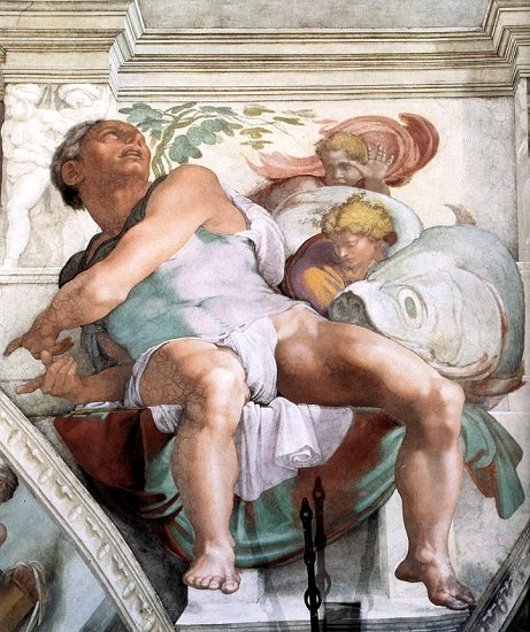
The Zohar famously describes a scene where two rabbis discover their donkey driver is secretly a great Talmudic sage. The sage describes himself to be the son of a great fish able to swim the entire ocean in an instant. While this parable is intended to encode his identity as the son of Rav Hamnuna Sava (or as Rabbi Abba later concludes, Hamnuna himself), I like to imagine this is the same fish of Jonah 2:1. Note that the name Hamnuna ends with נוּנָא,fish.
Zohar 1:6a, p36 – [The rabbis] said to the [donkey driver], “You haven’t told us your name. The site you inhabit – where is it?”
He replied, “The site I inhabit is fine and lofty for me: a certain tower soaring in the air, grand and splendid. Those dwelling in this tower are the blessed Holy One and a certain poor person. This is where I reside, but I have gone into exile, goading donkeys.
Rabbi Abba and Rabbi El’azar gazed at him. He had flavored his words for them as sweet as manna and honey. They said to him, “If you tell us the name of your father, we will kiss the dust of your feet.”
He said, “Why? It is not my habit to boast of Torah. But my father’s dwelling was in the great ocean. He was a fish, circumnavigating the vast ocean from one end to the other. So grand and splendid, ancient of days, he would swallow all the other fish in the ocean, then spew them out alive, thriving, filled with all goodness of the world. So strong, he could swim the ocean in one moment. He shot me out like an arrow from the hand of a mighty warrior, secreting me in that site I described. Then he returned to his site, disappearing into the ocean.”
Rabbi El’azar contemplated his words. He said, “You are the son of the Holy Lamp! You are the son of Rav Hamnuna Sava, son of the radiance of Torah, and you are goading donkeys behind us?” They both wept together, kissed him, and went on.
אָמְרוּ לֵיהּ הָא שְׁמָךְ לָא אָמַרְתְּ לָן, אֲתַר בֵּית מוֹתָבָךְ מַאי הוּא.
אָמַר לוֹן אֲתַר בֵּית מוֹתְבִי אִיהוּ טַב וְעַיְילָא לְגַבָּאי, וְאִיהוּ מִגְדָּל חַד דְּפָרַח בַּאֲוִירָא רַב וְיַקִּירָא. וְאִנּוּן דְּדַיְירִין בֵּיהּ בְּהַאי מִגְדְּלָא, קוּדְשָׁא בְּרִיךְ הוּא וְחַד מִסְכְּנָא. וְדָא הוּא אֲתַר בֵּית מוֹתְבִי וְגָלֵינָא מִתַּמָּן וְאֲנָא טָעִין חַמְרֵי.
אַשְׁגָּחוּ רִבִּי אַבָּא וְרִבִּי אֶלְעָזָר בֵּיהּ וְאַטְעִים לוֹן מִלּוֹי דְּהֲווּ מְתִיקִין כְּמַנָּא וְדוּבְשָׁא. אָמְרוּ לֵיהּ שְׁמָא דְּאֲבוּךְ אִי תֵימָא נַנְשִׁיק עַפְרָא דְרַגְלָךְ.
אָמַר לוֹן וְאַמַּאי, לָאו אוֹרַח דִּילִי בְּכָךְ לְאִתְגָאָה בְּאוֹרַיְיתָא. אֲבָל אַבָּא דִילִי הֲוָה דִיּוּרֵיהּ בְּיַמָּא רַבָּא וְאִיהוּ הֲוָה חַד נוּנָא דְּהֲוָה אַסְחַר יַמָּא רַבָּא מִסִּטְרָא דָא לְסִטְרָא דָא, וְהֲוָה רַב וְיַקִּירָא וְעַתִּיק יוֹמִין, עַד דְּהֲוָה בָּלַע כָּל שְׁאָר נוּנִין דְּיַמָּא, וּלְבָתַר אַפִּיק לוֹן חָיִין וְקַיָּמִין מַלְיָין מִכָּל טָבִין דְּעָלְמָא. וְשָׁאַט יַמָּא בְּרִגְעָא חָדָא בְּתוֹקְפֵּיהּ, וְאַפִּיק לִי כְּגִירָא בִּידָא דִגְבַר תָּקִיף, וְטָמִיר לִי בְּהַהוּא אֲתַר דְּאֲמָרִית לְכוּ. וְהוּא תָּב לְאַתְרֵיהּ וְאִגְנִיז בְּהַהוּא יַמָּא.
אַשְׁגַּח רִבִּי אֶלְעָזָר בְּמִלּוֹי. אָמַר לֵיהּ אַנְתְּ הוּא בְּרֵיהּ דְּבוּצִינָא קַדִּישָׁא, אַנְתְּ הוּא בְּרֵיהּ דְּרַב הַמְנוּנָא סָבָא, אַנְתְּ הוּא בְּרֵיהּ דִּנְהִירוּ דְּאוֹרַיְיתָא וְאַנְתְּ טָעִין אַבַּתְרָן. בָּכוּ כְּחֲדָא וּנְשָׁקוּהוּ וְאֲזְלוּ.
2Then Jonah prayed unto HaShem his G-d out of the fish's belly.
2וַיִּתְפַּלֵּל יוֹנָה, אֶל-יְהוָה אֱלֹהָיו, מִמְּעֵי, הַדָּגָה.
In this verse only, the gender of the fish has changed. The masculine דָּג swallows and spits him, yet here he prays from the belly of the feminine דָּגָה. Rashi (1040–1105 CE) famously argued this was because there were two fish: one male and one female. Though Ibn Ezra (c. 1089–1167 CE) and Radak (1160–1235 CE) contend it’s a grammatical quirk.
Rashi on Jonah 2:2 – [The fish] was a male, and he stood there with room, so that he did not think to pray. The Holy One, blessed be He, hinted to the fish, and it spewed him out into the mouth of a female, which was full of embryos, and it was crowded there, and he prayed there.
דָּג גָּדוֹל. זָכָר הָיָה וְהָיָה עוֹמֵד בְּרֶוַח וְלֹא נָתַן לֵב לְהִתְפַּלֵּל. רָמַז הַקָּדוֹשׁ בָּרוּךְ הוּא לַדָּג וְהֵקִיאוֹ לְתוֹךְ פִּיהָ שֶׁל נְקֵבָה שֶׁהָיְתָה מְלֵאָה עוּבָּרִים, וְהָיָה שָׁם בְּדוֹחַק וַיִּתְפַּלֵּל שָׁם, שֶׁנֶּאֱמַר: ״מִמְּעֵי הַדָּגָה״.
The Zohar interprets this gender shift to say that the fish itself died and was resurrected! Where Rashi says the constriction is due to the female fish being filled with embryos, the Zohar attributes it to other fish gnawing on its corpse.
Zohar 2:48a, p229 – Once that fish showed him everything in the sea and in the depths, it died, for it could not endure for three days. Then Jonah felt constricted. As Rabbi El’azar said, when Jonah saw all that spacious comfort, he rejoiced. The blessed Holy One said, ‘What more do you need? Is it for this that I brought you here?’ What did He do? He killed that fish, and all the fish of the sea circled round that fish – one biting it from this side, another from that side.
Then Jonah saw himself in distress; immediately, Jonah prayed to YHVH his God from the belly of הדגה, (ha-dagah) the fish (Jonah 2:2). At first, דג (dag); now, דגה (dagah), as is said: and הדגה (ha-dagah), the fish, that were in the Nile died (Exodus 7:21). Then it is written: Out of my straits I called to YHVH, and He answered me (Jonah 2:3). Out of my straits I called – and not I was in straits, or I dwelled in straits, but rather I called, out of that stressful constriction inflicted upon me by the fish of the sea. From the belly of Sheol (Jonah 2:3) – for it was dead. He did not say, ‘From the belly of a living creature,’ or ‘From the belly of a fish’; rather, it was surely dead. As soon as he offered a prayer, the blessed Holy One accepted it and revived that fish, and it spewed him out onto dry land before the eyes of all.
כֵּיוָן דְּאַחְמֵי לֵיהּ הַהוּא נוּנָא, כָּל מַה דִּי בְּיַמָּא וּבִתְהוֹמוֹי, מִית, דְּלָא יָכִיל תְּלַת יוֹמִין לְמִסְבַּל. כְּדֵין עָקַת לֵיהּ לְיוֹנָה.
דְּאָמַר רִבִּי אֶלְעָזָר, כֵּיוָן דְּחָמָא יוֹנָה כָּל הַהוּא רְוָוחָא, הֲוָה חַדֵּי. אָמַר קוּדְשָׁא בְּרִיךְ הוּא, וּמַה תִּבְעֵי יַתִּיר, לְהָא אֲעִילְנָא לָךְ הָכָא. מָה עֲבַד, קָטַל לְהַהוּא נוּנָא וּמִית, וְכָל שְׁאַר נוּנֵי יַמָּא, הֲווֹ סַחֲרֵי סַחֲרָנִיהּ דְּהַהוּא נוּנָא, דָּא נָשִׁיךְ לֵיהּ מֵהַאי גִּיסָא, וְדָא נָשִׁיךְ לֵיהּ מֵהַאי גִּיסָא.
כְּדֵין חָמָא יוֹנָה גַּרְמוֹי בְּעָקוּ, מִיַּד וַיִּתְפַּלֵּל יוֹנָה אֶל יְיָ’. בְּקַדְמִיתָא דָּג, וְהַשְׁתָּא דָּגָה. כְּמָה דְאַתְּ אָמֵר, (שמות ז׳:כ״א) וְהַדָּגָה אֲשֶׁר בַּיְאוֹר מֵתָה. וּכְדֵין כְּתִיב, קָרָאתִי מִצָּרָה לִי. וְלָא כְּתִיב הָיִיתִי בַּצָּרָה, אוֹ יָשַׁבְתִּי בַּצָּרָה, אֶלָּא קָרָאתִי, מֵהַהוּא עָקוּ דְּעָאקִין לִי נוּנִי יַמָּא.
מִבֶּטֶן שְׁאוֹל שִׁוַּעְתִּי, דְּהָא מִית. וְלָא כְּתִיב מִבֶּטֶן חַי, אוֹ מִבֶּטֶן דָּג, אֶלָּא דְּוַדַּאי הֲוָה מִית. כֵּיוָן דְּצַלֵּי צְלוֹתֵיהּ, קַבִּיל לֵיהּ קוּדְשָׁא בְּרִיךְ הוּא, וְאַחְיֵיהּ לֵיהּ לְהַאי נוּנָא, וְאַפִּיק לֵיהּ לְיַבֶּשְׁתָּא לְעֵינֵיהוֹן דְּכֹלָּא.
Zohar 2:199b, p138 – In this fish we find healing for the whole world. This fish, as soon as it swallowed Jonah, died; and Jonah was inside of it for three days. Afterward it was restored, and vomited Jonah out. As we have established, for it is written: Jonah prayed to YHVH his God from the belly of הדגה, (ha-dagah), the fish, and there is written Ha-dagah, The fish, that were in the Nile died (Exodus 7:21), as we have established. Similarly, the earth will awaken first, and then the earth will cast forth refa’im, the healed (Isaiah 26:19).
וּבְהַאי נוּנָא, אַשְׁכַּחְנָא מִלִּין לְאַסְוָותָא, דְּכָל עָלְמָא. הַאי נוּנָא כֵּיוָן דְּבָלַע לְיוֹנָה מִית. וּבֵיהּ הֲוָה יוֹנָה תְּלָתָא יוֹמִין, לְבָתַר אִתְקָיָּים כְּמִלְּקַדְמִין, וְאָקֵי לְיוֹנָה לְבַר, וְהָא אוּקְמוּהָ, דִּכְתִּיב וַיִּתְפַּלֵּל יוֹנָה אֶל יְיָ’ אֱלֹהָיו מִמְּעֵי הַדָּגָה. כְּתִיב הָכָא הַדָּגָה, וּכְתִיב הָתָם (שמות ז׳:כ״א) וְהַדָּגָה אֲשֶׁר בַּיְאוֹר מֵתָה, וְהָא אוּקְמוּהָ. כְּגַוְונָא דָּא, זְמִינַת אַרְעָא דְּיִשְׂרָאֵל לְאַתְעֲרָא בְּקַדְמִיתָא, וּלְבָתַר וָאָרֶץ רְפָאִים תַּפִּיל.
Our friend Alfy adds that, in a way, the female fish gives birth to Jonah. Indeed, Al-Tabari relays that the fish cast Jonah onto the shore like a newborn child.
Tabari, Tarikh: Yunus ibn Matta – It, meaning the fish, went off with him until it spat him out on the seashore, and cast him down like a newborn child, with nothing of his form diminished.
خرج به - يعنى الحوت - حتى لفظه في ساحل البحر، فطرحه مثل الصبي المنفوس، لم ينقص من خلقه شيء.
This is the 13th instance of יְהוָה. Thirteen is the gematria sum for love,אַהֲבָה and oneness,אֶחָד.
3And he said: I called out of mine affliction unto HaShem, and He answered me; out of the belly of the nether-world cried I, and Thou heardest my voice.
3וַיֹּאמֶר, קָרָאתִי מִצָּרָה לִי אֶל-יְהוָה--וַיַּעֲנֵנִי; מִבֶּטֶן שְׁאוֹל שִׁוַּעְתִּי, שָׁמַעְתָּ קוֹלִי.
Surah Al-Qalam (The Pen) adds that Jonah was literally choking,مَكْظُوم on his grief.
Quran 68:48 – 48But wait thou for thy Lord's decree, and be not like him of the fish, who cried out choking with grief.
48فَٱصْبِرْ لِحُكْمِ رَبِّكَ وَلَا تَكُن كَصَاحِبِ ٱلْحُوتِ إِذْ نَادَىٰ وَهُوَ مَكْظُومٌۭ
The fish becomes Sheol, the belly of the netherworld,בֶּטֶן שְׁאוֹל. The Zohar equates the fish to the grave itself.
Zohar 2:199b, p136 – The fish that swallowed him is the grave. What is written? Jonah was in the belly of the fish (Jonah 2:1). The belly of the fish is the belly of Sheol. How do we know? As is written: From the belly of Sheol I cried out (Jonah 2:3) – he was in the belly of the fish and called it the belly of Sheol.
Three days and nights (Jonah 2:1) – the three days a person lies in the grave, when his belly bursts. After three days, that filth is ejected onto his face, exclaiming to him, ‘Take what you put into me! You ate and drank every day and gave nothing to the poor; all your days were like feasts and holidays, while the poor were hungry because they didn’t eat with you. Take what you put into me!’
וְנוּנָא דְּבָלַע לֵיהּ, דָּא אִיהוּ קִבְרָא. מַה כְּתִיב, וַיְהִי יוֹנָה בִּמְעֵי הַדָּג. מְעוֹי דְּדָּג, דָּא אִיהוּ בֶּטֶן שְׁאוֹל. מְנָלָן. דִּכְתִּיב, (יונה ב׳:א׳) מִבֶּטֶן שְׁאוֹל שִׁוַּעְתִּי. וְאִיהוּ בִּמְעֵי דְּנוּנָא הֲוָה, וְקָארֵי לֵיהּ בֶּטֶן שְׁאוֹל.
שְׁלשָׁה יָמִים וּשְׁלֹשָׁה לֵילוֹת, אִלֵּין תְּלַת יוֹמִין, דְּבַר נָשׁ בְּקִבְרָא, וְאִתְבְּקָעוּ מֵעוֹי. לְבָתַר תְּלָתָא יוֹמִין, הַהוּא טִנּוּפָא אִתְהַפַּךְ עַל אַנְפּוֹי, וְאוֹמֵר לוֹ טוֹל מַה דִּיְהָבַת בִּי. אַכְלַת וְשָׁתִית כָּל יוֹמָא, וְלָא יָהַבְתְּ לְמִסְכְּנֵי, וְכָל יוֹמָךְ הֲווֹ כְּחַגִּין וּכְמוֹעֲדִין, וּמִסְכְּנֵי הֲווֹ כַּפְנִין, דְּלָא אַכְלוּ בַּהֲדָךְ, טוֹל מַה דִּיְּהָבַת בִּי.
Jonah’s prayer for salvation is written as a psalm whose lines echo the book of Psalms, often borrowing language verbatim. Scholars debate whether this is a textual insertion due to the lack of plot references and Jonah praying as if he is already saved.
Psalm 120:1 – 1A Song of Ascents. In my distress I called unto HaShem, and He answered me.
1שִׁיר, הַמַּעֲלוֹת: אֶל-יְהוָה, בַּצָּרָתָה לִּי-- קָרָאתִי, וַיַּעֲנֵנִי.
Psalm 18:7 – 7In my distress I called upon HaShem, and cried unto my G-d; out of His temple He heard my voice, and my cry came before Him unto His ears.
7בַּצַּר-לִי, אֶקְרָא יְהוָה-- וְאֶל-אֱלֹהַי אֲשַׁוֵּעַ: יִשְׁמַע מֵהֵיכָלוֹ קוֹלִי; וְשַׁוְעָתִי, לְפָנָיו תָּבוֹא בְאָזְנָיו.
Psalm 118:5 – 5Out of my straits I called upon Yah; He answered me with great enlargement.
5מִן-הַמֵּצַר, קָרָאתִי יָּהּ; עָנָנִי בַמֶּרְחָב יָהּ.
4For Thou didst cast me into the depth, in the heart of the seas, and the flood was round about me; all Thy waves and Thy billows passed over me.
4וַתַּשְׁלִיכֵנִי מְצוּלָה בִּלְבַב יַמִּים, וְנָהָר יְסֹבְבֵנִי; כָּל-מִשְׁבָּרֶיךָ וְגַלֶּיךָ, עָלַי עָבָרוּ.
Psalm 42:8 – 8Deep calleth unto deep at the voice of Thy cataracts; all Thy waves and Thy billows are gone over me.
8תְּהוֹם-אֶל-תְּהוֹם קוֹרֵא, לְקוֹל צִנּוֹרֶיךָ; כָּל-מִשְׁבָּרֶיךָ וְגַלֶּיךָ, עָלַי עָבָרוּ.
5And I said: 'I am cast out from before Thine eyes'; yet I will look again toward Thy holy temple.
5וַאֲנִי אָמַרְתִּי, נִגְרַשְׁתִּי מִנֶּגֶד עֵינֶיךָ; אַךְ אוֹסִיף לְהַבִּיט, אֶל-הֵיכַל קָדְשֶׁךָ.
I am cast out,נִגְרַשְׁתִּי is almost identical to Psalm 31:23’s נִגְרַזְתִּי,I am cut off. Whether this is wordplay or textual drift, Jonah’s psalmist clearly felt the freedom to adapt and remix Jewish liturgy.
Psalm 31:23 – 23As for me, I said in my haste: 'I am cut off from before Thine eyes'; nevertheless Thou heardest the voice of my supplications when I cried unto Thee.
23וַאֲנִי, אָמַרְתִּי בְחָפְזִי-- נִגְרַזְתִּי, מִנֶּגֶד עֵינֶיךָ: אָכֵן--שָׁמַעְתָּ, קוֹל תַּחֲנוּנַי; בְּשַׁוְּעִי אֵלֶיךָ.
6The waters compassed me about, even to the soul; the deep was round about me; the weeds were wrapped about my head.
6אֲפָפוּנִי מַיִם עַד-נֶפֶשׁ, תְּהוֹם יְסֹבְבֵנִי; סוּף, חָבוּשׁ לְרֹאשִׁי.
Psalm 69:2 – 2Save me, O G-d; for the waters are come in even unto the soul.
2הוֹשִׁיעֵנִי אֱלֹהִים-- כִּי בָאוּ מַיִם עַד-נָפֶשׁ.
7I went down to the bottoms of the mountains; the earth with her bars closed upon me for ever; yet hast Thou brought up my life from the pit, O HaShem my G-d.
7לְקִצְבֵי הָרִים יָרַדְתִּי, הָאָרֶץ בְּרִחֶיהָ בַעֲדִי לְעוֹלָם; וַתַּעַל מִשַּׁחַת חַיַּי, יְהוָה אֱלֹהָי.
Redemption is spiritual ascension. HaShem brings his life up from the pit. This ties together Jonah 1:3 and 1:5’s usage of יָרַדdown and weighs against Jonah’s psalm being a later textual insertion.
The gates or barsבְּרִחֶיהָ of death are common imagery for the netherworld.
Isaiah 38:10 – 10I said: In the noontide of my days I shall go, even to the gates of the nether-world; I am deprived of the residue of my years.
10אֲנִי אָמַרְתִּי, בִּדְמִי יָמַי אֵלֵכָה--בְּשַׁעֲרֵי שְׁאוֹל; פֻּקַּדְתִּי, יֶתֶר שְׁנוֹתָי.
Psalm 9:14 – 14Be gracious unto me, O HaShem, behold mine affliction at the hands of them that hate me; Thou that liftest me up from the gates of death;
14חָנְנֵנִי יְהוָה--רְאֵה עָנְיִי, מִשֹּׂנְאָי; מְרוֹמְמִי, מִשַּׁעֲרֵי מָוֶת.
Job 38:17 – 17Have the gates of death been revealed unto thee? Or hast thou seen the gates of the shadow of death?
17הֲנִגְלוּ לְךָ, שַׁעֲרֵי-מָוֶת; וְשַׁעֲרֵי צַלְמָוֶת תִּרְאֶה.
We see this prominently in Christian scriptures that include the “harrowing of hell.”
Thought 9:8 – 8I released you from all fetters, and I broke the demonic chains of the netherworld which fettered and detained my members, and I cast down the high walls of darkness, and the fortified gates of those merciless ones I broke, and I crushed their bars, and the evil force and the one who strikes and holds you back, and the tyrant, and the opponent, and the king, and the present foe.
8ⲛ̄ⲥⲛⲁⲩϩ ⲧⲏⲣⲟⲩ ⲁⲉⲓⲃⲱⲗ ⲙ̄ⲙⲟⲟⲩ ⲉⲃⲟⲗ ⲛ̄ϩⲏⲧⲛ̄ ⲁⲩⲱ ⲙ̄ⲣ̄ⲣⲉ ⲛ̄ⲛ̄ⲇⲁⲓⲙⲱⲛ ⲛⲉⲙⲛ̄ⲧⲉ ⲁⲉⲓⲥⲟⲗⲡⲟⲩ ⲛⲁⲓ̈ ⲉⲧⲙⲏⲣ ⲛ̄ⲛⲁⲙⲉⲗⲟⲥ ⲉⲩϯ ⲁϩⲧⲏⲩ ⲁⲩⲱ ⲛⲓⲥⲁⲃⲧ ⲉⲧϫⲟⲥⲉ ⲛ̄ⲧⲉ ⲡⲕⲁⲕⲉ ⲁⲉⲓϣⲣ̄ϣⲱⲣⲟⲩ ⲁⲡⲓⲧⲛ̄ ⲁⲩⲱ ⲙ̄ⲡⲩⲗⲏ ⲉⲧⲟⲣϫ ⲛ̄ⲧⲉ ⲛⲓⲁⲧⲛ̄ⲁⲉ ⲁⲉⲓϩⲁϣϥⲟⲩ ⲁⲩⲱ ⲛⲉⲩⲙⲟⲭⲗⲟⲥ ⲁⲉⲓϩⲟⲣⲃⲟⲩ ⲁⲩⲱ ⲧⲉⲛⲉⲣⲅⲓⲁ ⲉⲧϩⲟⲟⲩ ⲙⲛ̄ ⲡⲉⲧϩⲓⲟⲩⲉ ⲁⲣⲱⲧⲛ̄ ⲙⲛ̄ ⲡⲉⲧⲥⲱϣⲧ ⲙ̄ⲙⲱⲧⲛ̄ ⲁⲩⲱ ⲡⲧⲩⲣⲁⲛⲛⲟⲥ ⲙⲛ̄ ⲡⲁⲛⲧⲓⲕⲉⲓⲙⲉⲛⲟⲥ ⲙⲛ̄ ⲡⲉⲧⲟ ⲛ̄ⲣ̄ⲣⲟ ⲁⲩⲱ ⲡϫⲁϫⲉ ⲉⲧϣⲟⲟⲡ.
Sophia 10:12 – 12In front of them I shattered the gates of the merciless ones, shaming their evil intention, and all of them have been disgraced, and have not risen from their ignorance.
12ⲁⲓ̈ϩⲱϣϥ ⲛ̄ⲙ̄ⲡⲩⲗⲏ ⲛ̄ⲧⲉ ⲛⲓⲁⲧⲛⲁⲉ ⲙ̄ⲡⲉⲩⲙ̄ⲧⲟ ⲉⲃⲟⲗ ⲁⲓ̈ⲑⲃ̄ⲃⲓⲟ ⲛ̄ⲧⲉⲩⲡⲣⲟⲛⲟⲓⲁ ⲁⲩϫⲓ ϣⲓⲡⲉ ⲧⲏⲣⲟⲩ ⲁⲩⲧⲱⲟⲩⲛ ⲉⲃⲟⲗ ϩⲛ̄ ⲧⲉⲩⲃ̄ϣⲉ.
Power 5:4 – 4Regarding the words he spoke, he spoke all of them in seventy-two languages, and with his words he opened the gates of the heavens, and he humiliated the ruler of Hades, raising the dead and destroying his rule.
4ⲉⲧⲃⲉ ⲛⲉϥϣⲁϫⲉ ⲉⲧⲉ ⲁϥϫⲱ ⲙ̄ⲙⲟⲟⲩ ⲁϥϣⲁϫⲉ ⲛ̄ϩⲏⲧⲟⲩ ⲧⲏⲣⲟⲩ ϩⲛ̄ ϣⲃⲉ ⲥⲛⲟⲟⲩⲥ ⲛ̄ⲗⲁⲥ ⲁⲩⲱ ⲁϥⲟⲩⲱⲛ ⲉⲛⲡⲩⲗⲏ ⲛ̄ⲛ̄ⲙ̄ⲡⲏⲟⲩⲉ ϩⲛ̄ ⲛⲉϥϣⲁϫⲉ ⲁⲩⲱ ⲁϥϯ ϣⲓⲡⲉ ⲙ̄ⲡⲁⲓ̈ ⲉⲧϩⲓ̈ϫⲛ̄ ⲉⲙⲛ̄ⲧⲉ ⲁϥⲧⲟⲩⲛⲟⲥ ⲛⲉⲧⲙⲟⲟⲩⲧ ⲁⲩⲱ ⲧⲉϥⲙⲛ̄ⲧϫⲟⲉⲓⲥ ⲁϥⲃⲁⲗⲉⲥ ⲉⲃⲟⲗ.
2 Seth 5:2 – 2As I descended, no one saw me, because I constantly transformed my shapes while in the height, changing from shape to shape, so that when I arrived at their gates, I retained their likeness, because in silence I passed by them.
2ⲉⲓ̈ⲛ̄ⲛⲏⲧ ⲅⲁⲣ ⲉⲡⲉⲥⲏⲧ ⲙ̄ⲡⲉⲗⲁⲁⲩ ⲛⲁⲩ ⲉⲣⲟⲓ̈ ⲛⲉⲉⲓ̈ϣⲓⲃⲉ ⲅⲁⲣ ⲛ̄ⲛⲓⲙⲟⲣⲫⲏ ⲛ̄ϩⲣⲁⲓ̈ ⲛ̄ϩⲏⲧ ⲉⲉⲓⲟⲩⲱⲧⲃ̄ ⲉⲃⲟⲗ ⲛ̄ⲟⲩⲉⲓⲇⲉⲁ ⲉⲩⲉⲓⲇⲉⲁ ⲁⲩⲱ ⲉⲧⲃⲉ ⲡⲁⲓ̈ ⲉⲓ̈ϣⲟⲟⲡ ϩⲛ̄ ⲛⲉⲩⲡⲩⲗⲏ ⲛⲉⲓ̈ϫⲓ ⲉⲓⲛⲉ ⲙ̄ⲙⲟⲟⲩ ⲡⲉ ⲁⲉⲓⲡⲁⲣⲁⲅⲉ ⲅⲁⲣ ⲙ̄ⲙⲟⲟⲩ ϩⲛ̄ ⲟⲩϩⲣⲟⲕ.
8When my soul fainted within me, I remembered HaShem; and my prayer came in unto Thee, into Thy holy temple.
8בְּהִתְעַטֵּף עָלַי נַפְשִׁי, אֶת-יְהוָה זָכָרְתִּי; וַתָּבוֹא אֵלֶיךָ תְּפִלָּתִי, אֶל-הֵיכַל קָדְשֶׁךָ.
See again Psalm 18:7 for the temple language. That and Psalms 142-143 for the fainting soul.
Psalm 142:4 – 4When my spirit fainteth within me — Thou knowest my path — in the way wherein I walk have they hidden a snare for me.
4בְּהִתְעַטֵּף עָלַי, רוּחִי-- וְאַתָּה, יָדַעְתָּ נְתִיבָתִי: בְּאֹרַח-זוּ אֲהַלֵּךְ-- טָמְנוּ פַח לִי.
Psalm 143:4 – 4And my spirit fainteth within me; my heart within me is appalled.
4וַתִּתְעַטֵּף עָלַי רוּחִי; בְּתוֹכִי, יִשְׁתּוֹמֵם לִבִּי.
In the commentary for Jonah 2:1 we saw that Pirké 10 compares the fish to a synagogue. A tradition Al-Tabari records similarly describes Allah appointing the fish to serve as Jonah’s mosque.
Tabari, Tarikh: Yunus ibn Matta – The fish was called: “O fish, We have not made Jonah food for you; We have only made you a refuge and a mosque for him.” So the fish swallowed him.
فنودي الحوت: أيا حوت، إنا لم نجعل يونس لك رزقًا، إنما جعلناك له حرزًا ومسجدًا، فالتقمه الحوت.
Here Jonah’s salvation comes through remembering the divine, a major trope in Gnostic scriptures. For example, Mary’s soul is saved in part by overcoming the fetter of forgetfulness,ⲧⲙⲣ̄ⲣⲉ ⲛⲧⲃ̄ϣⲉ.
Mary 5:13-16 – 13The archons interrogated the soul: “Where do you come from, you who kill men, and where are you going, you who overcome space?”
14The soul replied and said: “What fetters me has been slain, and what surrounds me has been defeated, my lust has been finished, and my ignorance has died. 15I was set free from the world with the aid of another, and from a type with a heavenly type, and from the fetter of forgetfulness, which endures for a season. 16Beginning at this moment, I will reach the repose of the time of the season of the aeon inside Silence.”
13ⲉⲩϣⲓⲛⲉ ⲛ̄ⲧⲉⲯⲩⲭⲏ ϫⲉ ⲉⲣⲉⲛⲏⲩ ϫⲓⲛ ⲧⲱⲛ ⲧϩⲁⲧⲃ̄ⲣⲱⲙⲉ ⲏ ⲉⲣⲉⲃⲏⲕ ⲉⲧⲱⲛ ⲧⲟⲩⲁⲥϥⲙⲁ.
14ⲁⲥⲟⲩⲱϣⲃ̄ ⲛ̄ϭⲓ ⲧⲉⲯⲩⲭⲏ ⲡⲉϫⲁⲥ ϫⲉ ⲡⲉⲧⲉⲙⲁϩⲧⲉ ⲙ̄ⲙⲟⲓ̈ ⲁⲩⲕⲟⲛⲥϥ̄ ⲁⲩⲱ ⲡⲉⲧⲕⲧⲟ ⲙ̄ⲙⲟⲓ̈ ⲁⲩⲟⲩⲟⲥϥ ⲁⲩⲱ ⲧⲁⲉⲡⲓⲑⲩⲙⲓⲁ ⲁⲥϫⲱⲕ ⲉⲃⲟⲗ ⲁⲩⲱ ⲧⲙⲛ̄ⲧⲁⲧⲥⲟⲟⲩⲛ ⲁⲥⲙⲟⲩ. 15ϩⲛ̄ ⲟⲩⲕⲟⲥⲙⲟⲥ ⲛ̄ⲧⲁⲩⲃⲟⲗⲧ ⲉⲃⲟⲗ ϩⲛ̄ⲛ ⲟⲩⲕⲟⲥⲙⲟⲥ ⲁⲩⲱ ϩⲛ̄ ⲟⲩⲧⲩⲡⲟⲥ ⲉⲃⲟⲗ ϩⲛ ⲟⲩⲧⲩⲡⲟⲥ ⲉⲧⲙ̄ⲡⲥⲁ ⲛⲧⲡⲉ ⲁⲩⲱ ⲧⲙⲣ̄ⲣⲉ ⲛⲧⲃ̄ϣⲉ ⲉⲧϣⲟⲟⲡ ⲡⲣⲟⲥ ⲟⲩⲟⲓ̈ϣ. 16ϫⲓⲛ ⲙ̄ⲡⲓⲛⲁⲩ ⲉⲉⲓⲛⲁϫⲓ ⲛ̄ⲧⲁⲛⲁⲡⲁⲩⲥⲓⲥ ⲙ̄ⲡⲉⲭⲣⲟⲛⲟⲥ ⲙ̄ⲡⲕⲁⲓⲣⲟⲥ ⲙ̄ⲡⲁⲓ̈ⲱⲛ ϩⲛ̄ ⲟⲩⲕⲁⲣⲱϥ.
1 James frames Jesus’ mission as one of helping people to remember in a world of forgetfulness. Like Jonah in his 4-stage descent, Jesus comes down into the world’s oblivion, yet carries salvific memory.
1 James 6:8-9 – 8You have come with knowledge, so that you could reprove their forgetfulness. 9You have come with remembrance, so that you might reprove their ignorance, but I was worried about you, because you have come down into a thick ignorance, yet you were not defiled by anything in it. You have come down to oblivion, yet memory dwells inside you.
8ⲁⲕⲉⲓ ϩⲛ̄ ⲟⲩⲅⲛⲱⲥⲓⲥ ϫⲉ ⲉⲕⲉⲥⲟϩⲉ ⲛ̄ⲧⲉⲩⲃ̄ϣⲉ. 9ⲁⲕⲉⲓ ϩⲛ̄ ⲟⲩⲙⲛⲏⲙⲏ ϫⲉ ⲉⲕⲉⲥⲁϩⲉ ⲧⲉⲩⲙⲛ̄ⲧⲁⲧⲥⲟⲟⲩⲛ. ⲁⲗⲗⲁ ⲛⲉⲓ̈ϥⲓ ⲣⲟⲟⲩϣ ⲉⲧⲃⲏⲏⲧⲕ̄. ⲁⲕⲉⲓ ⲅⲁⲣ ⲉϩⲣⲁⲓ̈ ⲉⲩⲛⲟϭ ⲙ̄ⲙⲛ̄ⲧⲁⲧⲙ̄ⲙⲉ, ⲁⲗⲗⲁ ⲙ̄ⲡⲉⲕⲧⲱⲗⲙ̄ ⲉⲗⲁⲁⲩ ϩⲣⲁⲓ̈ ⲛ̄ϩⲏⲧⲥ̄. ⲁⲕⲉⲓ ⲅⲁⲣ ⲉϩⲣⲁⲓ̈ ⲉⲩⲙⲛ̄ⲧⲁⲧⲙⲉⲉⲩⲉ ⲁⲩⲱ ⲛⲉⲣⲉ ϯⲙⲛⲏⲙⲏ ⲛⲉⲥⲙⲏⲛ ⲉⲣⲟⲕ.
Jonah has 48 verses, making “I remembered HaShem” the exact midpoint of the text. His journey turns around at the moment of his remembrance.
9They that regard lying vanities forsake their own mercy.
9מְשַׁמְּרִים, הַבְלֵי-שָׁוְא--חַסְדָּם, יַעֲזֹבוּ.
Lying vanitiesהַבְלֵי־שָׁוְא, i.e. “idolatry,” present also in Psalm 31, this time in verse 7. This is rich coming from Jonah, who was morally outclassed by pagans trying to save him.
Psalm 31:7 – 7I hate them that regard lying vanities; but I trust in HaShem.
7שָׂנֵאתִי, הַשֹּׁמְרִים הַבְלֵי-שָׁוְא; וַאֲנִי, אֶל-יְהוָה בָּטָחְתִּי.
10But I will sacrifice unto Thee with the voice of thanksgiving; that which I have vowed I will pay. Salvation is of HaShem.
10וַאֲנִי, בְּקוֹל תּוֹדָה אֶזְבְּחָה-לָּךְ, אֲשֶׁר נָדַרְתִּי, אֲשַׁלֵּמָה: יְשׁוּעָתָה, לַיהוָה.
Thus ends Jonah’s Psalm. Surah Al-Anbiya (The Prophets) abridges it to a single line known as the Duʿāʾ Yūnus that Muslims recite in times of distress. Here “Dhu’n-Nun” means “he of the fish,” another title for Jonah ben Amittai (Yūnus ibn Mattā).
Quran 21:87 – 87And mention Dhu'n-Nun, when he went off in anger and deemed that We had no power over him, but he cried out in the darknesses, saying: There is no God save Thee. Be Thou Glorified! Lo! I have been a wrong-doer.
87وَذَا ٱلنُّونِ إِذ ذَّهَبَ مُغَٰضِبًۭا فَظَنَّ أَن لَّن نَّقْدِرَ عَلَيْهِ فَنَادَىٰ فِى ٱلظُّلُمَٰتِ أَن لَّآ إِلَٰهَ إِلَّآ أَنتَ سُبْحَٰنَكَ إِنِّى كُنتُ مِنَ ٱلظَّٰلِمِينَ
11And HaShem spoke unto the fish, and it vomited out Jonah upon the dry land.
11וַיֹּאמֶר יְהוָה, לַדָּג; וַיָּקֵא אֶת-יוֹנָה, אֶל-הַיַּבָּשָׁה.
Note the word וַיֹּאמֶר here. HaShem spoke to the fish, which unlike Jonah immediately did as it was told. The Zohar includes even this divine speech during the creation of the world.
Zohar 2:199a – In regard to every unique phenomenon that has happened in the world, the Holy One, Blessed be He, had predestined it from the time when the world was created. And so here the meaning of “And the Lord said to the fish” is that He had commanded it at the creation of the world.
וְכֵן בְּכָל עוֹבָדָא וְעוֹבָדָא דְּאִתְחַדֵּשׁ בְּעָלְמָא, קוּדְשָׁא בְּרִיךְ הוּא פָּקִיד הַהוּא עוֹבָדָא מִיּוֹמָא דְּאִתְבְּרֵי עָלְמָא. אוּף הָכָא, וַיֹּאמֶר יְיָ' לַדָּג. וַיֹּאמֶר, מִשִּׁית יוֹמִין דִּבְרִאשִׁית קָאָמַר לֵיהּ.
The word vomited,וַיָּקֵא is humorous. Jonah has just delivered a formal liturgy within the belly of the fish, which in a way couldn’t keep him down.
Jonah 3יוֹנָה ג
1And the word of HaShem came unto Jonah the second time, saying: 2'Arise, go unto Nineveh, that great city, and make unto it the proclamation that I bid thee.'
1וַיְהִי דְבַר-יְהוָה אֶל-יוֹנָה, שֵׁנִית לֵאמֹר. 2קוּם לֵךְ אֶל-נִינְוֵה, הָעִיר הַגְּדוֹלָה; וּקְרָא אֵלֶיהָ אֶת-הַקְּרִיאָה, אֲשֶׁר אָנֹכִי דֹּבֵר אֵלֶיךָ.
HaShem’s commandment to proclaim against,קְרָא עָלֶיהָ Nineveh in Jonah 1:2 has been softened to proclaim unto,קְרָא אֵלֶיהָ, a one-letter difference foreshadowing Nineveh’s eventual repentance.
3So Jonah arose, and went unto Nineveh, according to the word of HaShem. Now Nineveh was an exceeding great city, of three days' journey.
3וַיָּקָם יוֹנָה, וַיֵּלֶךְ אֶל-נִינְוֵה--כִּדְבַר יְהוָה; וְנִינְוֵה, הָיְתָה עִיר-גְּדוֹלָה לֵאלֹהִים--מַהֲלַךְ, שְׁלֹשֶׁת יָמִים.
The idiomatic phrase an exceedingly great city,עִיר־גְּדוֹלָה לֵאלֹהִים contains אֱלֹהִים,Elohim. That is, a great city to God.
Saying that Nineveh was,הָיְתָה suggests authorship after Nineveh’s fall in 612 BCE. However this could also just be the storytelling register, matching the “three days journey” hyperbole.
A city of three days journey would have been huge in antiquity. The megacity of the world, like Tokyo or New York.
4And Jonah began to enter into the city a day's journey, and he proclaimed, and said: 'Yet forty days, and Nineveh shall be overthrown.'
4וַיָּחֶל יוֹנָה לָבוֹא בָעִיר, מַהֲלַךְ יוֹם אֶחָד; וַיִּקְרָא, וַיֹּאמַר, עוֹד אַרְבָּעִים יוֹם, וְנִינְוֵה נֶהְפָּכֶת.
40 days is a standard biblical timeframe: the flood, Moses at Sinai, the spies in Canaan, Goliath’s taunts, Elijah’s journey, and in various prophecies. In the Christian world Jesus spends 40 days fasting in the wilderness. The Gnostics even use this figure for how long Adam’s body lay there lifeless.
Origin 18:7-9 – 7When the chief archon recalled the speech of Pistis, he feared in case the true man might enter into his shaped form and become its lord. 8This is why for forty days he departed from his shaped form, which then lacked a soul, and he retreated and forsook it. 9On the fortieth day, Sophia Zoe sent her breath into Adam, who was without soul.
7ⲛ̄ⲧⲁⲣⲉ ⲡⲛⲟϭ ⲛ̄ⲁⲣⲭⲱⲛ ⲣ̄ ⲡⲙⲉⲉⲩⲉ ⲙ̄ⲡϣⲁϫⲉ ⲛ̄ⲧⲡⲓⲥⲧⲓⲥ ⲁϥⲣ̄ ϩⲟⲧⲉ ⲙⲏⲡⲱⲥ ⲛ̄ϥⲓ ⲛ̄ϭⲓ ⲡⲣⲙ̄ⲙ̄ⲙⲉ ⲉϩⲟⲩⲛ ⲉⲡⲉϥⲡⲗⲁⲥⲙⲁ ⲛ̄ϥⲣ̄ ϫⲟⲉⲓⲥ ⲉϫⲱϥ. 8ⲉⲧⲃⲉ ⲡⲁⲉⲓ ⲁϥⲕⲱ ⲙ̄ⲡⲉϥⲡⲗⲁⲥⲙⲁ ⲛ̄ϩⲙⲉ ⲛ̄ϩⲟⲟⲩ ⲭⲱⲣⲓⲥ ⲯⲩⲭⲏ ⲁⲩⲱ ⲁϥⲁⲛⲁⲭⲱⲣⲉⲓ ⲁϥⲕⲁⲁϥ. 9ϩⲙ̄ ⲡⲙⲁϩϩⲙⲉ ⲇⲉ ⲛ̄ϩⲟⲟⲩ ⲁⲧⲥⲟⲫⲓⲁ ⲛ̄ⲍⲱⲏ ⲧⲛ̄ⲛⲟⲟⲩ ⲙ̄ⲡⲉⲥⲛⲓϥⲉ ⲉϩⲟⲩⲛ ⲁⲁⲇⲁⲙ ⲡⲁⲉⲓ ⲉⲧⲉ ⲙⲛ̄ ⲯⲩⲭⲏ ⲙ̄ⲙⲟϥ.
Curiously, the Septuagint instead says it was 3 days, matching Jonah’s days in the fish.
Jonah 3:4 LXX – 4And Jonas began to enter into the city about a day's journey, and he proclaimed, and said, Yet three days, and Nineve shall be overthrown.
4καὶ ἤρξατο Ἰωνᾶς τοῦ εἰσελθεῖν εἰς τὴν πόλιν ὡσεὶ πορείαν ἡμέρας μιᾶς καὶ ἐκήρυξε καὶ εἶπεν· ἔτι τρεῖς ἡμέραι καὶ Νινευὴ καταστραφήσεται.
Jerome on Jonah 3:4 – The number three written in the Septuagint does not agree with the penitence, and I am quite astonished at this, for in Hebrew neither the letters or syllables or accents or the word show any common element.
Trinus numerus qui ponitur a Septuaginta, non convenit poenitentiae: et satis miror cur ita translatum sit, cum in Hebraeo nec litterarum, nec syllabarum, nec accentuum, nec verbi sit ulla communitas.
Jonah’s sermon is just 5 words, yet it shakes an empire.
Overthrown,נֶהְפָּכֶת, is a form of the same word used to describe Sodom. The audience hears fire and ashes.
Genesis 19:25 – 25and He overthrew those cities, and all the Plain, and all the inhabitants of the cities, and that which grew upon the ground.
25וַיַּהֲפֹךְ אֶת-הֶעָרִים הָאֵל, וְאֵת כָּל-הַכִּכָּר, וְאֵת כָּל-יֹשְׁבֵי הֶעָרִים, וְצֶמַח הָאֲדָמָה.
However, the root הפך means “transform,” which is exactly what happens to Nineveh – even if the prophet didn’t know it. A gloss in Rashi argues both were meant, contingent on Nineveh’s repentance.
Rashi on Jonah 3:4 – He did not say, “Destroyed,” because “overturned” has two meanings, bad and good. If they do not repent, it will be destroyed; if they repent, then “overturned” refers to the people of Nineveh, that they will be changed from bad to good, and they will repent.
וְלֹא אָמַר נֶחֱרֶבֶת כִּי נֶהְפָּכֶת מְשַׁמֵּשׁ שְׁתֵּי לְשׁוֹנוֹת, רַע וְטוֹב: אִם לֹא יַעֲשׂוּ תְשׁוּבָה – נֶחֱרֶבֶת, וְאִם יַעֲשׂוּ תְשׁוּבָה – אָז נֶהְפָּכֶת. עַל אַנְשֵׁי נִינְוֵה קָאֵי שֶׁיַּהַפְכוּ מֵרָעָה לְטוֹבָה וְיַעֲשׂוּ תְשׁוּבָה.
The Gemara agrees.
Sanhedrin 89b – In the case of Jonah, from the outset, the heavenly court told him to say: “Nineveh will be overturned” (Jonah 3:4). Still, he did not know if the sentence would be for the good, as their corruption would be overturned through repentance, or if it would be for the bad, as the city would be overturned through destruction. Therefore, the prophecy was never revoked, but simply fulfilled in accordance with one of its possible interpretations.
יוֹנָה מֵעִיקָּרָא ״נִינְוֵה נֶהְפָּכֶת״ אֲמַרוּ לֵיהּ. אִיהוּ לָא יְדַע אִי לְטוֹבָה אִי לְרָעָה.
The Jewish historian Josephus (37–100 CE), retelling the story for a pagan audience, ends his account here. The chronology is also different: Jonah repents after being spat up, and the purpose of his mission isn’t the same. Nineveh never repents, nor do we have chapter 4 with the gourd. His use of λόγος,the story goes seems to distance himself from the narrative, almost like he doesn’t want to commit to the claim Jonah was in the fish 3 days.
Josephus, Antiquities 9.208-214 – 208Now I cannot but think it necessary for me, who have promised to give an accurate account of our affairs, to describe the actions of this prophet, so far as I have found them written down in the Hebrew books.
Jonah had been commanded by God to go to the kingdom of Nineveh; and when he was there, to publish it in that city, how it should lose the dominion it had over the nations. But he went not, out of fear; nay, he ran away from God to the city of Joppa, and finding a ship there, he went into it, and sailed to Tarsus, in Cilicia; 209and upon the rise of a most terrible storm, which was so great that the ship was in danger of sinking, the mariners, the master, and the pilot himself, made prayers and vows, in case they escaped the sea: but Jonah lay still and covered [in the ship,] without imitating any thing that the others did; 210but as the waves grew greater, and the sea became more violent by the winds, they suspected, as is usual in such cases, that some one of the persons that sailed with them was the occasion of this storm, and agreed to discover by lot which of them it was. 211When they had cast lots, the lot fell upon the prophet; and when they asked him whence he came, and what he had done? he replied, that he was a Hebrew by nation, and a prophet of Almighty God; and he persuaded them to cast him into the sea, if they would escape the danger they were in, for that he was the occasion of the storm which was upon them. 212Now at the first they durst not do so, as esteeming it a wicked thing to cast a man who was a stranger, and who had committed his life to them, into such manifest perdition; but at last, when their misfortune overbore them, and the ship was just going to be drowned, and when they were animated to do it by the prophet himself, and by the fear concerning their own safety, they cast him into the sea; 213upon which the sea became calm.
It is also reported that Jonah was swallowed down by a whale, and that when he had been there three days, and as many nights, he was vomited out upon the Euxine Sea, and this alive, and without any hurt upon his body; 214and there, on his prayer to God, he obtained pardon for his sins, and went to the city Nineveh, where he stood so as to be heard, and preached, that in a very little time they should lose the dominion of Asia. And when he had published this, he returned.
208Ἀναγκαῖον δὲ ἡγησάμην τὴν ἀκρίβειαν τῶν πραγμάτων παραδώσειν ὑπεσχημένος ὅσα καὶ περὶ τούτου τοῦ προφήτου εὗρον ἐν ταῖς Ἑβραϊκαῖς βίβλοις ἀναγεγραμμένα διεξελθεῖν·
κελευσθεὶς γὰρ οὗτος ὑπὸ τοῦ θεοῦ πορευθῆναι μὲν εἰς τὴν Νινύου βασιλείαν κηρῦξαι δʼ ἐκεῖ γενόμενον ἐν τῇ πόλει ὅτι τὴν ἀρχὴν ἀπολέσει, δείσας οὐκ ἀπῆλθεν, ἀλλʼ ἀποδιδράσκει τὸν θεὸν εἰς Ἰόπην πόλιν καὶ πλοῖον εὑρὼν ἐμβὰς εἰς Ταρσὸν ἔπλει τῆς Κιλικίας. 209ἐπιγενομένου δὲ χειμῶνος σφοδροτάτου καὶ κινδυνεύοντος καταδῦναι τοῦ σκάφους οἱ μὲν ναῦται καὶ οἱ κυβερνῆται καὶ αὐτὸς ὁ ναύκληρος εὐχὰς ἐποιοῦντο χαριστηρίους, εἰ διαφύγοιεν τὴν θάλασσαν, ὁ δὲ Ἰωνᾶς συγκαλύψας αὑτὸν ἐβέβλητο μηδὲν ὧν τοὺς ἄλλους ἑώρα ποιοῦντας μιμούμενος. 210αὔξοντος δʼ ἔτι μᾶλλον τοῦ κλύδωνος καὶ βιαιοτέρας γενομένης ὑπὸ τῶν πνευμάτων τῆς θαλάσσης ὑπονοήσαντες, ὡς ἐνδέχεταί τινα τῶν ἐμπλεόντων αἴτιον αὐτοῖς εἶναι τοῦ χειμῶνος, συνέθεντο κλήρῳ τοῦτον ὅστις ποτὲ ἦν μαθεῖν. 211κληρωσαμένων οὖν ὁ προφήτης λαγχάνει πυνθανομένων τε πόθεν τε εἴη καὶ τί μετέρχεται τὸ μὲν γένος ἔλεγεν Ἑβραῖος εἶναι προφήτης τοῦ μεγίστου θεοῦ· συνεβούλευσεν οὖν αὐτοῖς, εἰ θέλουσιν ἀποδράναι τὸν παρόντα κίνδυνον, ἐκβαλεῖν αὐτὸν εἰς τὸ πέλαγος· αἴτιον γὰρ αὐτοῖς εἶναι τοῦ χειμῶνος. 212οἱ δὲ τὸ μὲν πρῶτον οὐκ ἐτόλμων κρίναντες ἀσέβημα ξένον ἄνθρωπον καὶ πεπιστευκότα αὐτοῖς τὸ ζῆν εἰς φανερὰν αὐτοὺς ἀπώλειαν ἐκρῖψαι, τελευταῖον δʼ ὑπερβιαζομένου τοῦ κακοῦ καὶ ὅσον οὔπω μέλλοντος βαπτίζεσθαι τοῦ σκάφους, ὑπό τε τοῦ προφήτου παρορμηθέντες αὐτοῦ καὶ ὑπὸ τοῦ δέους τοῦ περὶ τῆς αὑτῶν σωτηρίας ῥίπτουσιν αὐτὸν εἰς τὴν θάλασσαν. 213καὶ ὁ μὲν χειμὼν ἐστάλη,
τὸν δὲ λόγος ὑπὸ τοῦ κήτους καταποθέντα τρεῖς ἡμέρας καὶ τοσαύτας νύκτας εἰς τὸν Εὔξεινον ἐκβρασθῆναι πόντον ζῶντα καὶ μηδὲν τοῦ σώματος λελωβημένον. 214ἔνθα τοῦ θεοῦ δεηθεὶς συγγνώμην αὐτῷ παρασχεῖν τῶν ἡμαρτημένων ἀπῆλθεν εἰς τὴν Νίνου πόλιν καὶ σταθεὶς εἰς ἐπήκοον ἐκήρυσσεν, ὡς μετʼ ὀλίγον πάλιν ἀποβαλοῦσι τὴν ἀρχὴν τῆς Ἀσίας, καὶ ταῦτα δηλώσας ὑπέστρεψε.
Immediately after the above he appends the following to further distance himself from the literal claims of the story.
Josephus, Antiquities 9.214 – Now I have given this account about him as I found it written [in our books.]
διεξῆλθον δὲ τὴν περὶ αὐτοῦ διήγησιν, ὡς εὗρον ἀναγεγραμμένην.
5And the people of Nineveh believed G-d; and they proclaimed a fast, and put on sackcloth, from the greatest of them even to the least of them.
5וַיַּאֲמִינוּ אַנְשֵׁי נִינְוֵה, בֵּאלֹהִים; וַיִּקְרְאוּ-צוֹם וַיִּלְבְּשׁוּ שַׂקִּים, מִגְּדוֹלָם וְעַד-קְטַנָּם.
Radak attributes their swift repentance to the testimony of the sailors.
Radak on Jonah 3:5 – Because the sailors were in the city and they testified about Yonah that they had cast him into the sea, and the rest of his story as it happened. This is why they believed his prophecy and repented completely.
ויאמינו. כי אנשי האניה היו בעיר והעידו עליו כי הטילוהו אל הים וכל ענינו כמו שהיה לפיכך האמינו בנבואתו ושבו בתשובה שלמה:
The people of Nineveh believed Elohim,וַיַּאֲמִינוּ... בֵּאלֹהִים, the same idiom used in Genesis 15 and Exodus 14 but with the word אֱלֹהִים. This is different than the personal name יְהוָה Israel, Abraham, and the convert sailors come to know in Jonah 1:16. The people have the fear of God; the sailors have the fear of Adonai. My mentor notes this subtle difference between Jews and Gentiles.
Exodus 14:31 – 31And Israel saw the great work which HaShem did upon the Egyptians, and the people feared HaShem; and they believed in HaShem, and in His servant Moses.
31וַיַּרְא יִשְׂרָאֵל אֶת-הַיָּד הַגְּדֹלָה, אֲשֶׁר עָשָׂה יְהוָה בְּמִצְרַיִם, וַיִּירְאוּ הָעָם, אֶת-יְהוָה; וַיַּאֲמִינוּ, בַּיהוָה, וּבְמֹשֶׁה, עַבְדּוֹ. {ר}
Genesis 15:5-6 – 5And He brought him forth abroad, and said: 'Look now toward heaven, and count the stars, if thou be able to count them'; and He said unto him: 'So shall thy seed be.' 6And he believed in HaShem; and He counted it to him for righteousness.
5וַיּוֹצֵא אֹתוֹ הַחוּצָה, וַיֹּאמֶר הַבֶּט-נָא הַשָּׁמַיְמָה וּסְפֹר הַכּוֹכָבִים--אִם-תּוּכַל, לִסְפֹּר אֹתָם; וַיֹּאמֶר לוֹ, כֹּה יִהְיֶה זַרְעֶךָ. 6וְהֶאֱמִן, בַּיהוָה; וַיַּחְשְׁבֶהָ לּוֹ, צְדָקָה.
Paul cites this same passage from the Septuagint (note Paul’s use of the Septuagint’s to God,τῷ Θεῷ vs the Masoretic’s in HaShem,בַּיהוָה, which would normally be the Lord,κύριος in Greek) to explain Gentile inclusion into the family of Abraham. Abraham believed,Ἐπίστευσε God, a founding act of piety Christians are offered through trust in the resurrection of Jesus. The semantic range of this Greek word for faith, pistis, is at the heart of one of the greatest debates in New Testament scholarship: does Paul mean “faith” as belief in a propositional truth claim, or the underlying relational trust,הֶאֱמִן used in Hebrew Genesis? Scholars similarly debate whether Paul’s theology centers on “faith in Christ,” vs “the faithfulness of Christ.”
Genesis 15:6 LXX – 6And Abram believed God, and it was counted to him for righteousness.
6καὶ ἐπίστευσεν Ἅβραμ τῷ Θεῷ, καὶ ἐλογίσθη αὐτῷ εἰς δικαιοσύνην.
Galatians 3:6-7 – 6Even as Abraham believed God, and it was accounted to him for righteousness. 7Know ye therefore that they which are of faith, the same are the children of Abraham.
6καθὼς Ἀβραὰμ ἐπίστευσε τῷ Θεῷ, καὶ ἐλογίσθη αὐτῷ εἰς δικαιοσύνην. 7γινώσκετε ἄρα ὅτι οἱ ἐκ πίστεως, οὗτοί εἰσιν υἱοὶ Ἀβραάμ.
Romans 4:3,23-24 – 3For what saith the scripture? Abraham believed God, and it was counted unto him for righteousness. ...
23Now it was not written for his sake alone, that it was imputed to him; 24But for us also, to whom it shall be imputed, if we believe on him that raised up Jesus our Lord from the dead;
3τί γὰρ ἡ γραφὴ λέγει; Ἐπίστευσε δὲ Ἀβραὰμ τῷ Θεῷ, καὶ ἐλογίσθη αὐτῷ εἰς δικαιοσύνην. ...
23οὐκ ἐγράφη δὲ δι’ αὐτὸν μόνον, ὅτι ἐλογίσθη αὐτῷ· 24ἀλλὰ καὶ δι’ ἡμᾶς, οἷς μέλλει λογίζεσθαι, τοῖς πιστεύουσιν ἐπὶ τὸν ἐγείραντα Ἰησοῦν τὸν Κύριον ἡμῶν ἐκ νεκρῶν,
The author of James by contrast shares Taanit 2:1’s emphasis on works, which we’ll discuss in verse 9. Abraham is justified by works, and not by faith alone. James even uses Paul’s wording, deviating from both the Septuagint and Masoretic text – evidence he’s rebutting Paul’s tradition directly. This competing theology was at the heart of Luther’s distaste for James, which he famously called “an epistle of straw.”
James 2:21-23 – 21Was not Abraham our father justified by works, when he had offered Isaac his son upon the altar? 22Seest thou how faith wrought with his works, and by works was faith made perfect? 23And the scripture was fulfilled which saith, Abraham believed God, and it was imputed unto him for righteousness: and he was called the Friend of God.
21Ἀβραὰμ ὁ πατὴρ ἡμῶν οὐκ ἐξ ἔργων ἐδικαιώθη, ἀνενέγκας Ἰσαὰκ τὸν υἱὸν αὐτοῦ ἐπὶ τὸ θυσιαστήριον; 22βλέπεις ὅτι ἡ πίστις συνήργει τοῖς ἔργοις αὐτοῦ, καὶ ἐκ τῶν ἔργων ἡ πίστις ἐτελειώθη· 23καὶ ἐπληρώθη ἡ γραφὴ ἡ λέγουσα, Ἐπίστευσε δὲ Ἀβραὰμ τῷ Θεῷ, καὶ ἐλογίσθη αὐτῷ εἰς δικαιοσύνην, καὶ φίλος Θεοῦ ἐκλήθη.
Notably, the Septuagint’s Jonah 3:5 similarly uses to God,τῷ Θεῷ when referring to the people of Nineveh. These little details help explain why Jonah was so theologically significant to Christians.
Jonah 3:5 LXX – 5And the men of Nineve believed God, and proclaimed a fast, and put on sackcloths, from the greatest of them to the least of them.
5καὶ ἐπίστευσαν οἱ ἄνδρες Νινευὴ τῷ Θεῷ καὶ ἐκήρυξαν νηστείαν καὶ ἐνεδύσαντο σάκκους ἀπὸ μεγάλου αὐτῶν ἕως μικροῦ αὐτῶν.
Surah Yūnus (Jonah) agrees with James, echoing the Quran’s popular refrain: ءَامَنُوا۟ وَعَمِلُوا۟ ٱلصَّـٰلِحَـٰتِ,believed and did the righteous deeds.
Quran 10:9 – 9Lo! those who believe and do good works, their Lord guideth them by their faith. Rivers will flow beneath them in the Gardens of Delight,
9إِنَّ ٱلَّذِينَ ءَامَنُوا۟ وَعَمِلُوا۟ ٱلصَّٰلِحَٰتِ يَهْدِيهِمْ رَبُّهُم بِإِيمَٰنِهِمْ ۖ تَجْرِى مِن تَحْتِهِمُ ٱلْأَنْهَٰرُ فِى جَنَّٰتِ ٱلنَّعِيمِ
6And the tidings reached the king of Nineveh, and he arose from his throne, and laid his robe from him, and covered him with sackcloth, and sat in ashes.
6וַיִּגַּע הַדָּבָר, אֶל-מֶלֶךְ נִינְוֵה, וַיָּקָם מִכִּסְאוֹ, וַיַּעֲבֵר אַדַּרְתּוֹ מֵעָלָיו; וַיְכַס שַׂק, וַיֵּשֶׁב עַל-הָאֵפֶר.
This chapter foils the Jeremiah 36 story of the Jewish King Jehoiakim, who similarly receives a prophetic judgement against Judah. In this narrative King Jehoiakim receives a scroll from the prophet Jeremiah. But instead of repenting, he shreds the scroll, attempts to seize the prophet, and along with his court refuses to heed the words of HaShem. Jonah’s experience is the precise opposite: with five mere words the king debases himself, stripping his robe and sitting in ashes. His advisors, subjects, and even animals universally embrace Jonah and his prophecy.
Jeremiah 36:1-26 – 1And it came to pass in the fourth year of Jehoiakim the son of Josiah, king of Judah, that this word came unto Jeremiah from HaShem, saying: 2'Take thee a roll of a book, and write therein all the words that I have spoken unto thee against Israel, and against Judah, and against all the nations, from the day I spoke unto thee, from the days of Josiah, even unto this day. 3It may be that the house of Judah will hear all the evil which I purpose to do unto them; that they may return every man from his evil way, and I may forgive their iniquity and their sin.' ...
5And Jeremiah commanded Baruch, saying: 'I am detained, I cannot go into the house of HaShem; 6therefore go thou, and read in the roll, which thou hast written from my mouth, the words of HaShem in the ears of the people in HaShem'S house upon a fast-day; and also thou shalt read them in the ears of all Judah that come out of their cities. 7It may be they will present their supplication before HaShem, and will return every one from his evil way; for great is the anger and the fury that HaShem hath pronounced against this people.' ...
16Now it came to pass, when they had heard all the words, they turned in fear one toward another, and said unto Baruch: 'We will surely tell the king of all these words.' ... 21And Jehudi read it in the ears of the king, and in the ears of all the princes that stood beside the king. 22Now the king was sitting in the winter-house in the ninth month; and the brazier was burning before him. 23And it came to pass, when Jehudi had read three or four columns, that he cut it with the penknife, and cast it into the fire that was in the brazier, until all the roll was consumed in the fire that was in the brazier. 24Yet they were not afraid, nor rent their garments, neither the king, nor any of his servants that heard all these words. 25Moreover Elnathan and Delaiah and Gemariah had entreated the king not to burn the roll; but he would not hear them. 26And the king commanded Jerahmeel the king's son, and Seraiah the son of Azriel, and Shelemiah the son of Abdeel, to take Baruch the scribe and Jeremiah the prophet; but HaShem hid them.
1וַיְהִי בַּשָּׁנָה הָרְבִעִית, לִיהוֹיָקִים בֶּן-יֹאשִׁיָּהוּ מֶלֶךְ יְהוּדָה; הָיָה הַדָּבָר הַזֶּה, אֶל-יִרְמְיָהוּ, מֵאֵת יְהוָה, לֵאמֹר. 2קַח-לְךָ, מְגִלַּת-סֵפֶר, וְכָתַבְתָּ אֵלֶיהָ אֵת כָּל-הַדְּבָרִים אֲשֶׁר-דִּבַּרְתִּי אֵלֶיךָ עַל-יִשְׂרָאֵל וְעַל-יְהוּדָה, וְעַל-כָּל-הַגּוֹיִם--מִיּוֹם דִּבַּרְתִּי אֵלֶיךָ, מִימֵי יֹאשִׁיָּהוּ, וְעַד, הַיּוֹם הַזֶּה. 3אוּלַי יִשְׁמְעוּ, בֵּית יְהוּדָה, אֵת כָּל-הָרָעָה, אֲשֶׁר אָנֹכִי חֹשֵׁב לַעֲשׂוֹת לָהֶם--לְמַעַן יָשׁוּבוּ, אִישׁ מִדַּרְכּוֹ הָרָעָה, וְסָלַחְתִּי לַעֲוֺנָם, וּלְחַטָּאתָם. ...
5וַיְצַוֶּה יִרְמְיָהוּ, אֶת-בָּרוּךְ לֵאמֹר: אֲנִי עָצוּר--לֹא אוּכַל, לָבוֹא בֵּית יְהוָה. 6וּבָאתָ אַתָּה וְקָרָאתָ בַמְּגִלָּה אֲשֶׁר-כָּתַבְתָּ-מִפִּי אֶת-דִּבְרֵי יְהוָה בְּאָזְנֵי הָעָם, בֵּית יְהוָה--בְּיוֹם צוֹם; וְגַם בְּאָזְנֵי כָל-יְהוּדָה הַבָּאִים מֵעָרֵיהֶם, תִּקְרָאֵם. 7אוּלַי תִּפֹּל תְּחִנָּתָם, לִפְנֵי יְהוָה, וְיָשֻׁבוּ, אִישׁ מִדַּרְכּוֹ הָרָעָה: כִּי-גָדוֹל הָאַף וְהַחֵמָה, אֲשֶׁר-דִּבֶּר יְהוָה אֶל-הָעָם הַזֶּה. ...
16וַיְהִי, כְּשָׁמְעָם אֶת-כָּל-הַדְּבָרִים, פָּחֲדוּ, אִישׁ אֶל-רֵעֵהוּ; וַיֹּאמְרוּ, אֶל-בָּרוּךְ, הַגֵּיד נַגִּיד לַמֶּלֶךְ, אֵת כָּל-הַדְּבָרִים הָאֵלֶּה. ... 21וַיִּשְׁלַח הַמֶּלֶךְ אֶת-יְהוּדִי, לָקַחַת אֶת-הַמְּגִלָּה, וַיִּקָּחֶהָ, מִלִּשְׁכַּת אֱלִישָׁמָע הַסֹּפֵר; וַיִּקְרָאֶהָ יְהוּדִי, בְּאָזְנֵי הַמֶּלֶךְ, וּבְאָזְנֵי כָּל-הַשָּׂרִים, הָעֹמְדִים מֵעַל הַמֶּלֶךְ. 22וְהַמֶּלֶךְ, יוֹשֵׁב בֵּית הַחֹרֶף, בַּחֹדֶשׁ, הַתְּשִׁיעִי; וְאֶת-הָאָח, לְפָנָיו מְבֹעָרֶת. 23וַיְהִי כִּקְרוֹא יְהוּדִי, שָׁלֹשׁ דְּלָתוֹת וְאַרְבָּעָה, יִקְרָעֶהָ בְּתַעַר הַסֹּפֵר, וְהַשְׁלֵךְ אֶל-הָאֵשׁ אֲשֶׁר אֶל-הָאָח: עַד-תֹּם, כָּל-הַמְּגִלָּה, עַל-הָאֵשׁ, אֲשֶׁר עַל-הָאָח. 24וְלֹא פָחֲדוּ, וְלֹא קָרְעוּ אֶת-בִּגְדֵיהֶם--הַמֶּלֶךְ, וְכָל-עֲבָדָיו, הַשֹּׁמְעִים, אֵת כָּל-הַדְּבָרִים הָאֵלֶּה. 25וְגַם אֶלְנָתָן וּדְלָיָהוּ וּגְמַרְיָהוּ הִפְגִּעוּ בַמֶּלֶךְ, לְבִלְתִּי שְׂרֹף אֶת-הַמְּגִלָּה; וְלֹא שָׁמַע, אֲלֵיהֶם. 26וַיְצַוֶּה הַמֶּלֶךְ אֶת-יְרַחְמְאֵל בֶּן-הַמֶּלֶךְ וְאֶת-שְׂרָיָהוּ בֶן-עַזְרִיאֵל, וְאֶת-שֶׁלֶמְיָהוּ בֶּן-עַבְדְּאֵל, לָקַחַת אֶת-בָּרוּךְ הַסֹּפֵר, וְאֵת יִרְמְיָהוּ הַנָּבִיא; וַיַּסְתִּרֵם, יְהוָה.
Several shared phrases, like “proclaimed a fast,” and “turn every one from his way,” and the general sequence of events each king does (or refuses to do) suggests that the relationship between these two passages goes beyond mere thematic similarity. Whatever the relationship, the take-away is clear: here the pagan king of Nineveh and his court out-repents all of Judah.
Job, stripped of his nobility, similarly sits upon the ashes.
Job 2:7-9 – 7So Satan went forth from the presence of HaShem, and smote Job with sore boils from the sole of his foot even unto his crown. 8And he took him a potsherd to scrape himself therewith; and he sat among the ashes. 9Then said his wife unto him: 'Dost thou still hold fast thine integrity? blaspheme G-d, and die!'
7וַיֵּצֵא, הַשָּׂטָן, מֵאֵת, פְּנֵי יְהוָה; וַיַּךְ אֶת-אִיּוֹב בִּשְׁחִין רָע, מִכַּף רַגְלוֹ וְעַד קָדְקֳדוֹ. 8וַיִּקַּח-לוֹ חֶרֶשׂ, לְהִתְגָּרֵד בּוֹ; וְהוּא, יֹשֵׁב בְּתוֹךְ-הָאֵפֶר. 9וַתֹּאמֶר לוֹ אִשְׁתּוֹ, עֹדְךָ מַחֲזִיק בְּתֻמָּתֶךָ; בָּרֵךְ אֱלֹהִים, וָמֻת.
The beautiful Queen Esther likewise debases herself in the Septuagint’s expansion of Esther 4 during her three day fast, filling her hair with ashes and dung.
Esther 4:17 LXX (Addition C) – And queen Esther betook herself for refuge to the Lord, being taken in the agony of death. And having taken off her glorious apparel, she put on garments of distress and mourning; and instead of grand perfumes she filled her head with ashes and dung, and she greatly brought down her body, and she filled every place of her glad adorning with the curls of her hair.
Καὶ Ἐσθὴρ ἡ βασίλισσα κατέφυγεν ἐπὶ τὸν Κύριον ἐν ἀγῶνι θανάτου κατειλημμένη, καὶ ἀφελομένη τὰ ἱμάτια τῆς δόξης αὐτῆς ἐνεδύσατο ἱμάτια στενοχωρίας καὶ πένθους, καὶ ἀντὶ τῶν ὑπερηφάνων ἡδυσμάτων, σποδοῦ καὶ κοπριῶν ἐνέπλησε τὴν κεφαλὴν αὐτῆς καὶ τὸ σῶμα αὐτῆς ἐταπείνωσε σφόδρα καὶ πάντα τόπον κόσμου ἀγαλλιάματος αὐτῆς ἔπλησε στρεπτῶν τριχῶν αὐτῆς.
Consider too Mordecai and the Jews’ piety in the same story.
Esther 4:1-3 – 1Now when Mordecai knew all that was done, Mordecai rent his clothes, and put on sackcloth with ashes, and went out into the midst of the city, and cried with a loud and a bitter cry; 2and he came even before the king's gate; for none might enter within the king's gate clothed with sackcloth. 3And in every province, whithersoever the king's commandment and his decree came, there was great mourning among the Jews, and fasting, and weeping, and wailing; and many lay in sackcloth and ashes.
1וּמָרְדֳּכַי, יָדַע אֶת-כָּל-אֲשֶׁר נַעֲשָׂה, וַיִּקְרַע מָרְדֳּכַי אֶת-בְּגָדָיו, וַיִּלְבַּשׁ שַׂק וָאֵפֶר; וַיֵּצֵא בְּתוֹךְ הָעִיר, וַיִּזְעַק זְעָקָה גְדוֹלָה וּמָרָה. 2וַיָּבוֹא, עַד לִפְנֵי שַׁעַר-הַמֶּלֶךְ: כִּי אֵין לָבוֹא אֶל-שַׁעַר הַמֶּלֶךְ, בִּלְבוּשׁ שָׂק. 3וּבְכָל-מְדִינָה וּמְדִינָה, מְקוֹם אֲשֶׁר דְּבַר-הַמֶּלֶךְ וְדָתוֹ מַגִּיעַ--אֵבֶל גָּדוֹל לַיְּהוּדִים, וְצוֹם וּבְכִי וּמִסְפֵּד; שַׂק וָאֵפֶר, יֻצַּע לָרַבִּים.
Jonah similarly doesn’t appear before the king. According to verse 4, he has only ventured “one day” into Nineveh yet word has reached the king ahead of him, potentially three days distant.
Jerome disagrees, believing instead that Jonah travelled quickly enough that he compressed a three days’ journey into one, but comments on the possibility that word got ahead of him. I don’t find Jerome’s reading likely since verse 4 says Jonah “began to enter into the city a day’s journey.”
Jerome on Jonah 3:3 – [He] makes the normal journey of three days in one day. However, there are some people who believe that he simply proclaimed his message in a third of the city, and that his speech quickly was made known to the other inhabitants.
viam trium dierum unius diei festinatione complevit, quamquam sint qui ita simpliciter intelligant, quod in tertia tantum parte urbis praedicaverit, et ad reliquos confestim praedicationis sermo pervenerit.
Fun fact, Pirké d’Rabbi Eliezer names the king – the same Pharaoh from Exodus!
Pirké d’Rabbi Eliezer 43 – Rabbi Nechunia, son of Haḳḳanah, said: Know thou the power of repentance. Come and see from Pharaoh, king of Egypt, who rebelled most grievously against the Rock, the Most High, as it is said, “Who is the Lord, that I should hearken unto his voice?” (Exodus 5:2). In the same terms of speech in which he sinned, he repented, as it is said “Who is like thee, O Lord, among the mighty?” (Exodus 15:11). The Holy One, blessed be He, delivered him from amongst the dead. Whence (do we know) that he did not die? Because it is said, “For now I had put forth my hand, and smitten thee” (Exodus 9:15). He went and ruled in Nineveh.
רַבִּי נְחוּנְיָא בֶּן הַקָּנָה אוֹמֵר: תֵּדַע לְךָ כֹּחַ הַתְּשׁוּבָה. בֹּא וּרְאֵה מִפַּרְעֹה מֶלֶךְ מִצְרַיִם שֶׁמָּרַד בְּצוּר עֶלְיוֹן הַרְבֵּה מְאֹד, שֶׁנֶּאֱמַר: ״מִי ה' אֲשֶׁר אֶשְׁמַע בְּקוֹלוֹ״. וּבַלָּשׁוֹן שֶׁחָטָא בּוֹ בַּלָּשׁוֹן עָשָׂה תְשׁוּבָה, שֶׁנֶּאֱמַר: ״מִי כָמֹכָה בָּאֵלִם ה', מִי כָּמֹכָה נֶאְדָּר בַּקֹּדֶשׁ״. וְהִצִּילוֹ הַקָּדוֹשׁ בָּרוּךְ הוּא בֵּין הַמֵּתִים. מִנַּיִן שֶׁלֹּא מֵת? שֶׁנֶּאֱמַר: ״כִּי עַתָּה שָׁלַחְתִּי אֶת יָדִי וָאַךְ אוֹתְךָ, וְאוּלָם בַּעֲבוּר זֹאת הֶעֱמַדְתִּיךָ״ וְכוּ'. וְהָלַךְ וּמָלַךְ בְּנִינְוֵה.
Speaking of which, the title “king of Nineveh” similarly supports a later dating. Assyria the kingdom had kings, but there was no “king of Nineveh” the city, just as there’s no “president of Nashville” today.
7And he caused it to be proclaimed and published through Nineveh by the decree of the king and his nobles, saying: 'Let neither man nor beast, herd nor flock, taste any thing; let them not feed, nor drink water; 8but let them be covered with sackcloth, both man and beast, and let them cry mightily unto G-d; yea, let them turn every one from his evil way, and from the violence that is in their hands.
7וַיַּזְעֵק, וַיֹּאמֶר בְּנִינְוֵה, מִטַּעַם הַמֶּלֶךְ וּגְדֹלָיו, לֵאמֹר: הָאָדָם וְהַבְּהֵמָה הַבָּקָר וְהַצֹּאן, אַל-יִטְעֲמוּ מְאוּמָה--אַל-יִרְעוּ, וּמַיִם אַל-יִשְׁתּוּ. 8וְיִתְכַּסּוּ שַׂקִּים, הָאָדָם וְהַבְּהֵמָה, וְיִקְרְאוּ אֶל-אֱלֹהִים, בְּחָזְקָה; וְיָשֻׁבוּ, אִישׁ מִדַּרְכּוֹ הָרָעָה, וּמִן-הֶחָמָס, אֲשֶׁר בְּכַפֵּיהֶם.
The Greek historian Herodotus (484–425 BCE) reports in his Histories that the Persians did indeed mourn with their pack animals.
Herodotus, Histories 9.24 – 24When the cavalry arrived at the camp, the whole army and also Mardonios made great mourning for Masistios, cutting off their own hair and that of their horses and baggage-animals and giving way to lamentation without stint; for all Boeotia was filled with the sound of it, because one had perished who after Mardonios was of the most account with the Persians and with the king.
24ἀπικομένης δὲ τῆς ἵππου ἐς τὸ στρατόπεδον πένθος ἐποιήσαντο Μασιστίου πᾶσά τε ἡ στρατιὴ καὶ Μαρδόνιος μέγιστον, σφέας τε αὐτοὺς κείροντες καὶ τοὺς ἵππους καὶ τὰ ὑποζύγια οἰμωγῇ τε χρεώμενοι ἀπλέτῳ· ἅπασαν γὰρ τὴν Βοιωτίην κατεῖχε ἠχὼ ὡς ἀνδρὸς ἀπολομένου μετά γε Μαρδόνιον λογιμωτάτου παρά τε Πέρσῃσι καὶ βασιλέι.
The book of Judith describes the reverse, the Israelites placing sackcloth on their own animals in response to the Assyrian threat.
Judith 4:10 – 10Both they, and their wives and their children, and their cattle, and every stranger and hireling, and their servants bought with money, put sackcloth upon their loins.
10αὐτοὶ καὶ αἱ γυναῖκες αὐτῶν καὶ τὰ νήπια αὐτῶν καὶ τὰ κτήνη αὐτῶν καὶ πᾶς πάροικος ἢ μισθωτὸς καὶ ἀργυρώνητος αὐτῶν ἐπέθεντο σάκκους ἐπὶ τὰς ὀσφύας αὐτῶν.
Verse 8 uses violence,חָמָס, the same word used in Genesis 6. Nineveh is characterized as a flood generation that repents.
Genesis 6:11-13 – 11And the earth was corrupt before G-d, and the earth was filled with violence. 12And G-d saw the earth, and, behold, it was corrupt; for all flesh had corrupted their way upon the earth. 13And G-d said unto Noah: 'The end of all flesh is come before Me; for the earth is filled with violence through them; and, behold, I will destroy them with the earth.
11וַתִּשָּׁחֵת הָאָרֶץ, לִפְנֵי הָאֱלֹהִים; וַתִּמָּלֵא הָאָרֶץ, חָמָס. 12וַיַּרְא אֱלֹהִים אֶת-הָאָרֶץ, וְהִנֵּה נִשְׁחָתָה: כִּי-הִשְׁחִית כָּל-בָּשָׂר אֶת-דַּרְכּוֹ, עַל-הָאָרֶץ. 13וַיֹּאמֶר אֱלֹהִים לְנֹחַ, קֵץ כָּל-בָּשָׂר בָּא לְפָנַי--כִּי-מָלְאָה הָאָרֶץ חָמָס, מִפְּנֵיהֶם; וְהִנְנִי מַשְׁחִיתָם, אֶת-הָאָרֶץ.
9Who knoweth whether G-d will not turn and repent, and turn away from His fierce anger, that we perish not?'
9מִי-יוֹדֵעַ יָשׁוּב, וְנִחַם הָאֱלֹהִים; וְשָׁב מֵחֲרוֹן אַפּוֹ, וְלֹא נֹאבֵד.
Who knoweth?מִי־יוֹדֵעַ, the same question David and Joel ask in their times of repentance. The theology is clear: teshuvah doesn’t obligate God, it makes room for Him.
2 Samuel 12:22 – 22And he said: 'While the child was yet alive, I fasted and wept; for I said: Who knoweth whether HaShem will not be gracious to me, that the child may live?
22וַיֹּאמֶר--בְּעוֹד הַיֶּלֶד חַי, צַמְתִּי וָאֶבְכֶּה: כִּי אָמַרְתִּי מִי יוֹדֵעַ, וְחַנַּנִי יְהוָה וְחַי הַיָּלֶד.
Joel 2:14 – 14Who knoweth whether He will not turn and repent, and leave a blessing behind Him, even a meal-offering and a drink-offering unto HaShem your G-d?
14מִי יוֹדֵעַ, יָשׁוּב וְנִחָם; וְהִשְׁאִיר אַחֲרָיו, בְּרָכָה--מִנְחָה וָנֶסֶךְ, לַיהוָה אֱלֹהֵיכֶם.
The Mishnah reaches for the adjacent verse, emphasizing their deeds and the condition of their hearts when explaining why God changes His mind.
Taanit 2:1 – 1What is the order of service for fast days? They take the ark out to the open space of the city. And they put ashes on the ark and on the head of the Nasi and on the head of the court av beit din. And everyone else puts ashes on his own head. The elder among them says in front of them words of admonition, “Brothers, it does not say of the people of Nineveh, ‘And God saw their sackcloth and their fasting,’ but, ‘And God saw their deeds, for they turned from their evil way. (Jonah 3:10)’ And in the prophets it says, ‘And rend your heart and not your garments” (Joel 2:13).
סֵדֶר תַּעֲנִיּוֹת כֵּיצַד, מוֹצִיאִין אֶת הַתֵּבָה לִרְחוֹבָהּ שֶׁל עִיר, וְנוֹתְנִין אֵפֶר מִקְלֶה עַל גַּבֵּי הַתֵּבָה, וּבְרֹאשׁ הַנָּשִׂיא וּבְרֹאשׁ אַב בֵּית דִּין, וְכָל אֶחָד וְאֶחָד נוֹתֵן בְּרֹאשׁוֹ. הַזָּקֵן שֶׁבָּהֶן אוֹמֵר לִפְנֵיהֶן דִּבְרֵי כִבּוּשִׁין, אַחֵינוּ, לֹא נֶאֱמַר בְּאַנְשֵׁי נִינְוֵה, וַיַּרְא הָאֱלֹהִים אֶת שַׂקָּם וְאֶת תַּעֲנִיתָם, אֶלָּא (יונה ג) וַיַּרְא הָאֱלֹהִים אֶת מַעֲשֵׂיהֶם, כִּי שָׁבוּ מִדַּרְכָּם הָרָעָה. וּבַקַּבָּלָה הוּא אוֹמֵר (יואל ב) וְקִרְעוּ לְבַבְכֶם וְאַל בִּגְדֵיכֶם:
The aforementioned Surah Yūnus (Jonah) attributes Nineveh’s salvation to the people’s belief in Allah, that belief contextually inseparable from deed.
Quran 10:62-63, 98-99 – 62Lo! verily the friends of Allah are (those) on whom fear (cometh) not, nor do they grieve? 63Those who believe and keep their duty (to Allah). ...
98If only there had been a community (of all those that were destroyed of old) that believed and profited by its belief as did the folk of Jonah! When they believed We drew off from them the torment of disgrace in the life of the world and gave them comfort for a while. 99And if thy Lord willed, all who are in the earth would have believed together. Wouldst thou (Muhammad) compel men until they are believers?
62أَلَآ إِنَّ أَوْلِيَآءَ ٱللَّهِ لَا خَوْفٌ عَلَيْهِمْ وَلَا هُمْ يَحْزَنُونَ 63ٱلَّذِينَ ءَامَنُوا۟ وَكَانُوا۟ يَتَّقُونَ ...
98فَلَوْلَا كَانَتْ قَرْيَةٌ ءَامَنَتْ فَنَفَعَهَآ إِيمَٰنُهَآ إِلَّا قَوْمَ يُونُسَ لَمَّآ ءَامَنُوا۟ كَشَفْنَا عَنْهُمْ عَذَابَ ٱلْخِزْىِ فِى ٱلْحَيَوٰةِ ٱلدُّنْيَا وَمَتَّعْنَٰهُمْ إِلَىٰ حِينٍۢ 99وَلَوْ شَآءَ رَبُّكَ لَءَامَنَ مَن فِى ٱلْأَرْضِ كُلُّهُمْ جَمِيعًا ۚ أَفَأَنتَ تُكْرِهُ ٱلنَّاسَ حَتَّىٰ يَكُونُوا۟ مُؤْمِنِينَ
10And G-d saw their works, that they turned from their evil way; and G-d repented of the evil, which He said He would do unto them; and He did it not.
10וַיַּרְא הָאֱלֹהִים אֶת-מַעֲשֵׂיהֶם, כִּי-שָׁבוּ מִדַּרְכָּם הָרָעָה; וַיִּנָּחֶם הָאֱלֹהִים, עַל-הָרָעָה אֲשֶׁר-דִּבֶּר לַעֲשׂוֹת-לָהֶם--וְלֹא עָשָׂה.
Repent,נִחַם is a very suggestive verb to use for HaShem that also appears in Genesis 6, Exodus 32, and Jeremiah 18. This will become salient in Jonah 4.
Genesis 6:6 – 6And it repented HaShem that He had made man on the earth, and it grieved Him at His heart.
6וַיִּנָּחֶם יְהוָה, כִּי-עָשָׂה אֶת-הָאָדָם בָּאָרֶץ; וַיִּתְעַצֵּב, אֶל-לִבּוֹ.
Exodus 32:14 – 14And HaShem repented of the evil which He said He would do unto His people.
14וַיִּנָּחֶם, יְהוָה, עַל-הָרָעָה, אֲשֶׁר דִּבֶּר לַעֲשׂוֹת לְעַמּוֹ.
Jeremiah 18:7-8 – 7At one instant I may speak concerning a nation, and concerning a kingdom, to pluck up and to break down and to destroy it; 8but if that nation turn from their evil, because of which I have spoken against it, I repent of the evil that I thought to do unto it.
7רֶגַע אֲדַבֵּר, עַל-גּוֹי וְעַל-מַמְלָכָה, לִנְתוֹשׁ וְלִנְתוֹץ, וּלְהַאֲבִיד. 8וְשָׁב, הַגּוֹי הַהוּא, מֵרָעָתוֹ, אֲשֶׁר דִּבַּרְתִּי עָלָיו--וְנִחַמְתִּי, עַל-הָרָעָה, אֲשֶׁר חָשַׁבְתִּי, לַעֲשׂוֹת לוֹ.
Notably it’s also the fourth use of שׁוב,turn in the past 3 verses. Whether it’s God or man, repentance uses the same language.
Numbers and 1 Samuel, however, contradict this theology.
Numbers 23:19 – 19G-d is not a man, that He should lie; neither the son of man, that He should repent: when He hath said, will He not do it? or when He hath spoken, will He not make it good?
19לֹא אִישׁ אֵל וִיכַזֵּב, וּבֶן-אָדָם וְיִתְנֶחָם; הַהוּא אָמַר וְלֹא יַעֲשֶׂה, וְדִבֶּר וְלֹא יְקִימֶנָּה.
1 Samuel 15:29 – 29And also the Glory of Israel will not lie nor repent; for He is not a man, that He should repent.'
29וְגַם נֵצַח יִשְׂרָאֵל, לֹא יְשַׁקֵּר וְלֹא יִנָּחֵם: כִּי לֹא אָדָם הוּא, לְהִנָּחֵם.
Job 9 similarly emphasizes the alien nature of HaShem, dismissing Bildad the Shuhite’s suggestion that Job attempt to reason with God.
Job 9:32 – 32For He is not a man, as I am, that I should answer Him, that we should come together in judgment.
32כִּי-לֹא-אִישׁ כָּמוֹנִי אֶעֱנֶנּוּ; נָבוֹא יַחְדָּו, בַּמִּשְׁפָּט.
However, the same 1 Samuel 15 twice has God repent making Saul king, suggesting that this tension is something 1 Samuel deliberately holds vs a theological oversight.
1 Samuel 15:11 – 11'It repenteth Me that I have set up Saul to be king; for he is turned back from following Me, and hath not performed My commandments.' And it grieved Samuel; and he cried unto HaShem all night.
11נִחַמְתִּי, כִּי-הִמְלַכְתִּי אֶת-שָׁאוּל לְמֶלֶךְ--כִּי-שָׁב מֵאַחֲרַי, וְאֶת-דְּבָרַי לֹא הֵקִים; וַיִּחַר, לִשְׁמוּאֵל, וַיִּזְעַק אֶל-יְהוָה, כָּל-הַלָּיְלָה.
1 Samuel 15:35 – 35And Samuel never beheld Saul again until the day of his death; for Samuel mourned for Saul; and HaShem repented that He had made Saul king over Israel.
35וְלֹא-יָסַף שְׁמוּאֵל לִרְאוֹת אֶת-שָׁאוּל, עַד-יוֹם מוֹתוֹ, כִּי-הִתְאַבֵּל שְׁמוּאֵל, אֶל-שָׁאוּל; וַיהוָה נִחָם, כִּי-הִמְלִיךְ אֶת-שָׁאוּל עַל-יִשְׂרָאֵל.
Jonah 4יוֹנָה ד
1But it displeased Jonah exceedingly, and he was angry.
1וַיֵּרַע אֶל-יוֹנָה, רָעָה גְדוֹלָה; וַיִּחַר, לוֹ.
Literally, it was evil to Jonah, a great evil.וַיֵּרַע אֶל־יוֹנָה רָעָה גְדוֹלָה.
Yet another instance of רָעָה,evil. But this time Jonah will have to face his evil.
2And he prayed unto HaShem, and said: 'I pray Thee, O HaShem, was not this my saying, when I was yet in mine own country? Therefore I fled beforehand unto Tarshish; for I knew that Thou art a gracious G-d, and compassionate, long-suffering, and abundant in mercy, and repentest Thee of the evil.
2וַיִּתְפַּלֵּל אֶל-יְהוָה וַיֹּאמַר, אָנָּה יְהוָה הֲלוֹא-זֶה דְבָרִי עַד-הֱיוֹתִי עַל-אַדְמָתִי--עַל-כֵּן קִדַּמְתִּי, לִבְרֹחַ תַּרְשִׁישָׁה: כִּי יָדַעְתִּי, כִּי אַתָּה אֵל-חַנּוּן וְרַחוּם, אֶרֶךְ אַפַּיִם וְרַב-חֶסֶד, וְנִחָם עַל-הָרָעָה.
Here Jonah ben Amittai, son of Truthful, shares Joel 2:13’s abridged attributes of HaShem instead of the older, Exodus 34:6 formulation. The difference is subtle but shocking: Joel replaces וֶאֱמֶת,and truth with “repentest Thee of the evil.” The son of Truth calls God a liar.
Joel 2:13 – 13And rend your heart, and not your garments, and turn unto HaShem your G-d; for He is gracious and compassionate, long-suffering, and abundant in mercy, and repenteth Him of the evil.
13וְקִרְעוּ לְבַבְכֶם וְאַל-בִּגְדֵיכֶם, וְשׁוּבוּ אֶל-יְהוָה אֱלֹהֵיכֶם: כִּי-חַנּוּן וְרַחוּם, הוּא--אֶרֶךְ אַפַּיִם וְרַב-חֶסֶד, וְנִחָם עַל-הָרָעָה.
Exodus 34:6 – 6And HaShem passed by before him, and proclaimed: 'HaShem, HaShem, G-d, merciful and gracious, long-suffering, and abundant in goodness and truth;
6וַיַּעֲבֹר יְהוָה עַל-פָּנָיו, וַיִּקְרָא, יְהוָה יְהוָה, אֵל רַחוּם וְחַנּוּן--אֶרֶךְ אַפַּיִם, וְרַב-חֶסֶד וֶאֱמֶת.
Exodus 34:6 is the core of the selichot liturgy we repeat throughout Yom Kippur. The congregation has been chanting what Jonah now weaponizes.
This abridged formula also appears in Psalm 145 and Nehemiah 9.
Psalm 145:8 – 8HaShem is gracious, and full of compassion; slow to anger, and of great mercy.
8חַנּוּן וְרַחוּם יְהוָה; אֶרֶךְ אַפַּיִם, וּגְדָל-חָסֶד.
Nehemiah 9:17 – 17and refused to hearken, neither were mindful of Thy wonders that Thou didst among them; but hardened their neck, and in their rebellion appointed a captain to return to their bondage; but Thou art a G-d ready to pardon, gracious and full of compassion, slow to anger, and plenteous in mercy, and forsookest them not.
17וַיְמָאֲנוּ לִשְׁמֹעַ, וְלֹא-זָכְרוּ נִפְלְאֹתֶיךָ אֲשֶׁר עָשִׂיתָ עִמָּהֶם, וַיַּקְשׁוּ אֶת-עָרְפָּם, וַיִּתְּנוּ-רֹאשׁ לָשׁוּב לְעַבְדֻתָם בְּמִרְיָם; וְאַתָּה אֱלוֹהַּ סְלִיחוֹת חַנּוּן וְרַחוּם, אֶרֶךְ-אַפַּיִם וְרַב-חֶסֶד--וְלֹא עֲזַבְתָּם.
3Therefore now, O HaShem, take, I beseech Thee, my life from me; for it is better for me to die than to live.'
3וְעַתָּה יְהוָה, קַח-נָא אֶת-נַפְשִׁי מִמֶּנִּי: כִּי טוֹב מוֹתִי, מֵחַיָּי.
A close parallel to 1 Kings 19:4. Both prophets flee, both sit under a plant, both ask to die, both are questioned by God and answer with grievance, both are answered. Elijah despairs because Israel won’t repent. Jonah despairs because Nineveh did.
Elijah says I am not better than my fathers,לֹא־טוֹב אָנֹכִי מֵאֲבֹתָי. Jonah says my death is better than my life,טוֹב מוֹתִי מֵחַיָּי. Where Elijah has humility, Jonah displays petulance.
1 Kings 19:4 – 4But he himself went a day's journey into the wilderness, and came and sat down under a broom-tree; and he requested for himself that he might die; and said: ‘It is enough; now, O HaShem, take away my life; for I am not better than my fathers.’
4וְהוּא-הָלַךְ בַּמִּדְבָּר, דֶּרֶךְ יוֹם, וַיָּבֹא, וַיֵּשֶׁב תַּחַת רֹתֶם אֶחָד; וַיִּשְׁאַל אֶת-נַפְשׁוֹ, לָמוּת, וַיֹּאמֶר רַב עַתָּה יְהוָה קַח נַפְשִׁי, כִּי-לֹא-טוֹב אָנֹכִי מֵאֲבֹתָי.
Moshe Rabbeinu similarly asks to die, doubting his capacity to lead his people. But in an even greater humility as the following chapter adds.
Numbers 11:15 – 15And if Thou deal thus with me, kill me, I pray Thee, out of hand, if I have found favour in Thy sight; and let me not look upon my wretchedness.'
15וְאִם-כָּכָה אַתְּ-עֹשֶׂה לִּי, הָרְגֵנִי נָא הָרֹג--אִם-מָצָאתִי חֵן, בְּעֵינֶיךָ; וְאַל-אֶרְאֶה, בְּרָעָתִי.
Numbers 12:3 – 3Now the man Moses was very meek, above all the men that were upon the face of the earth.
3וְהָאִישׁ מֹשֶׁה, עָנָו מְאֹד--מִכֹּל, הָאָדָם, אֲשֶׁר, עַל-פְּנֵי הָאֲדָמָה.
The Zohar contrasts Jonah and Elijah accordingly.
Zohar 2:197b, p122 – Who has gone up to heaven? Elijah. And come down – Jonah, who descended to the abyss, to the depths of the sea. Jonah derived from the power of Elijah. Elijah ascended, Jonah descended. One prayed that he might die, and the other prayed that he might die. Thus he is called son of אמתי (Amittai) (Jonah 1:1), and it is written The word of YHVH in your mouth is אמת, truth. (1Kings 17:24)
מִי עָלָה שָׁמַיִם, דָּא אֵלִיָּהוּ. וַיֵּרַד, דָּא יוֹנָה, דְּנָחַת לֵיהּ נוּנָא גּוֹ תְּהוֹמֵי, לְעִמְקֵי יַמָּא. יוֹנָה מֵחֵילָא דְּאֵלִיָּהוּ קָא אָתָא, אֵלִיָּהוּ סָלִיק, יוֹנָה נָחִית, דָּא שָׁאִיל נַפְשֵׁיהּ לְמֵימַת, וְדָא שָׁאִיל נַפְשֵׁיהּ לְמֵימַת, וּבְגִין כַּךְ אִקְרֵי בֶּן אֲמִתַּי. וּכְתִיב, (מלכים א י״ז:כ״ד) וּדְבַר יְיָ’ בְּפִיךָ אֱמֶת.
4And HaShem said: 'Art thou greatly angry?' 5Then Jonah went out of the city, and sat on the east side of the city, and there made him a booth, and sat under it in the shadow, till he might see what would become of the city.
4וַיֹּאמֶר יְהוָה, הַהֵיטֵב חָרָה לָךְ. 5וַיֵּצֵא יוֹנָה מִן-הָעִיר, וַיֵּשֶׁב מִקֶּדֶם לָעִיר; וַיַּעַשׂ לוֹ שָׁם סֻכָּה, וַיֵּשֶׁב תַּחְתֶּיהָ בַּצֵּל, עַד אֲשֶׁר יִרְאֶה, מַה-יִּהְיֶה בָּעִיר.
Some scholars argue verse 5 is displaced from Jonah 3:4. As written, Jonah in his anger refuses to answer HaShem, waiting until he’s asked a second time in verse 9.
Jonah builds a booth,סֻכָּה, but it’s not enough; he needs the plant. 5 days after Yom Kippur during Sukkot, we sit in temporary booths much the same, which our liturgy calls God’s shelter.
Hashkiveinu – Lay us down, HaShem our G-d, in peace, and raise us up, our King, to life; spread over us the shelter of Your peace ... and hide us in the shadow of Your wings, for You are G-d, our guardian and our deliverer.
הַשְׁכִּיבֵֽנוּ יְהֹוָה אֱלֹהֵֽינוּ לְשָׁלוֹם וְהַעֲמִידֵֽנוּ מַלְכֵּֽנוּ לְחַיִּים וּפְרוֹשׂ עָלֵֽינוּ סֻכַּת שְׁלוֹמֶֽךָ ... וּבְצֵל כְּנָפֶֽיךָ תַּסְתִּירֵֽנוּ כִּי אֵל שׁוֹמְ֒רֵֽנוּ וּמַצִּילֵֽנוּ אָֽתָּה
Psalm 27:5 – 5For He concealeth me in His pavilion in the day of evil; He hideth me in the covert of His tent; He lifteth me up upon a rock.
5כִּי יִצְפְּנֵנִי, בְּסֻכֹּה-- בְּיוֹם רָעָה: יַסְתִּרֵנִי, בְּסֵתֶר אָהֳלוֹ; בְּצוּר, יְרוֹמְמֵנִי.
Sukkot is a holiday of prophecy and vision, which is why its kabbalistic sensory association is sight. My mentor teaches that the top of a sukkah is open for stargazing, facilitating astrological divination. If verse 5 is indeed displaced, Jonah may have used this view to read the heavens.
Shulchan Arukh, Orach Chayim 631:3 – The proper way to roof the sukkah is lightly, so that the large stars can be seen through it. If it was roofed thickly like a house, so that the stars cannot be seen through it, it is nonetheless valid.
דרך הסיכוך להיות קל כדי שיראו ממנו הכוכבים הגדולים היתה מעובה כמין בית אע"פ שאין הכוכבים נראים מתוכה כשרה:
Alternatively, Isaiah 4 provides a more utilitarian purpose for a booth, in line with verse 5 originating here.
Isaiah 4:6 – 6And there shall be a pavilion for a shadow in the day-time from the heat, and for a refuge and for a covert from storm and from rain.
6וְסֻכָּה תִּהְיֶה לְצֵל-יוֹמָם, מֵחֹרֶב; וּלְמַחְסֶה, וּלְמִסְתּוֹר, מִזֶּרֶם, וּמִמָּטָר.
This dispute on the nature of Sukkot’s booths extends beyond Jonah. Leviticus tells us to dwell in them, but the rabbis debate what exactly they signify.
Leviticus 23:42-43 – 42Ye shall dwell in booths seven days; all that are home-born in Israel shall dwell in booths; 43that your generations may know that I made the children of Israel to dwell in booths, when I brought them out of the land of Egypt: I am HaShem your G-d.
42בַּסֻּכֹּת תֵּשְׁבוּ, שִׁבְעַת יָמִים; כָּל-הָאֶזְרָח, בְּיִשְׂרָאֵל, יֵשְׁבוּ, בַּסֻּכֹּת. 43לְמַעַן, יֵדְעוּ דֹרֹתֵיכֶם, כִּי בַסֻּכּוֹת הוֹשַׁבְתִּי אֶת-בְּנֵי יִשְׂרָאֵל, בְּהוֹצִיאִי אוֹתָם מֵאֶרֶץ מִצְרָיִם: אֲנִי, יְהוָה אֱלֹהֵיכֶם.
Sukkah 11b – As it is taught in a baraita that the verse states: “I made the children of Israel to reside in sukkot” (Leviticus 23:43); these booths were clouds of glory, this is the statement of Rabbi Eliezer. Rabbi Akiva says: They established for themselves actual sukkot.
דְּתַנְיָא: ״כִּי בַסּוּכּוֹת הוֹשַׁבְתִּי אֶת בְּנֵי יִשְׂרָאֵל״, עַנְנֵי כָבוֹד הָיוּ, דִּבְרֵי רַבִּי אֱלִיעֶזֶר. רַבִּי עֲקִיבָא אוֹמֵר: סוּכּוֹת מַמָּשׁ עָשׂוּ לָהֶם.
6And HaShem G-d prepared a gourd, and made it to come up over Jonah, that it might be a shadow over his head, to deliver him from his evil. So Jonah was exceeding glad because of the gourd.
6וַיְמַן יְהוָה-אֱלֹהִים קִיקָיוֹן וַיַּעַל מֵעַל לְיוֹנָה, לִהְיוֹת צֵל עַל-רֹאשׁוֹ, לְהַצִּיל לוֹ, מֵרָעָתוֹ; וַיִּשְׂמַח יוֹנָה עַל-הַקִּיקָיוֹן, שִׂמְחָה גְדוֹלָה.
HaShem is our shade. 🖤
Psalm 121:5 – 5HaShem is thy keeper; HaShem is thy shade upon thy right hand.
5יְהוָה שֹׁמְרֶךָ; יְהוָה צִלְּךָ, עַל-יַד יְמִינֶךָ.
Jonah is “exceedingly glad” for the shade, but not for 120,000 lives saved. Islamic tradition notes this irony.
Tabari, Tarikh: Yunus ibn Matta – Then one day he went back to the tree and found it withered, and he grieved and wept over it. He was rebuked: 'You grieved over a tree and wept over it, yet you did not grieve over a hundred thousand or more, all of whom you wanted destroyed!'
ثم رجع ذات يوم إلى الشجرة فوجدها قد يبست، فحزن وبكى عليها، فعوتب فقيل له: أحزنت على شجرة، وبكيت عليها ولم تحزن على مائة ألف أو زيادة أردت هلاكهم جميعًا!
This is the first and only time we read YHVH Elohim,יְהוָה־אֱלֹהִים. Recall the significance of the combined name, which shows up for the first time in Torah when opening the second creation account before plants are made. In Genesis, this bridges the cosmic creation account with the personal revelation to Adam. So too is Jonah finally having that personal encounter with God. Before, he knew only of the cosmic force telling him who to be. Now he meets his maker man-to-man.
Genesis 2:4-5 – 4These are the generations of the heaven and of the earth when they were created, in the day that HaShem G-d made earth and heaven. 5No shrub of the field was yet in the earth, and no herb of the field had yet sprung up; for HaShem G-d had not caused it to rain upon the earth, and there was not a man to till the ground;
4אֵלֶּה תוֹלְדוֹת הַשָּׁמַיִם וְהָאָרֶץ, בְּהִבָּרְאָם: בְּיוֹם, עֲשׂוֹת יְהוָה אֱלֹהִים--אֶרֶץ וְשָׁמָיִם. 5וְכֹל שִׂיחַ הַשָּׂדֶה, טֶרֶם יִהְיֶה בָאָרֶץ, וְכָל-עֵשֶׂב הַשָּׂדֶה, טֶרֶם יִצְמָח: כִּי לֹא הִמְטִיר יְהוָה אֱלֹהִים, עַל-הָאָרֶץ, וְאָדָם אַיִן, לַעֲבֹד אֶת-הָאֲדָמָה.
Our final usage of evil,רָעָה. 1. Nineveh’s wickedness,רָעָתָם Jonah 1:2 2. The sailors’ fear of this evil,הָרָעָה הַזֹּאת Jonah 1:7-8 3. Nineveh turning from its evil way,דַּרְכּוֹ הָרָעָה Jonah 3:8 and Jonah 3:10 4. HaShem repenting,וַיִּנָּחֶם of the evil Jonah 3:10, Jonah 4:2 5. Jonah’s bitterness toward the Ninevites, Jonah 4:1 6. The deliverance from his evil, Jonah 4:6
Two more appointments,מָנָה, this time a “gourd” and next verse a worm.
קִיקָיוֹן,gourd occurring 5 times in this chapter and nowhere else in the Tanakh. Many scholars argue it is a castor-oil plant for reasons we’ll discuss shortly. The Septuagint went with gourd,κολοκύνθη.
Jonah 4:6 LXX – 6And the Lord God commanded a gourd, and it came up over the head of Jonas, to be a shadow over his head, to shade him from his calamities: and Jonas rejoiced with great joy for the gourd.
6καὶ προσέταξε Κύριος ὁ Θεὸς κολοκύνθῃ, καὶ ἀνέβη ὑπὲρ κεφαλῆς τοῦ Ἰωνᾶ τοῦ εἶναι σκιὰν ὑπεράνω τῆς κεφαλῆς αὐτοῦ τοῦ σκιάζειν αὐτῷ ἀπὸ τῶν κακῶν αὐτοῦ. καὶ ἐχάρη Ἰωνᾶς ἐπὶ τῇ κολοκύνθῃ χαρὰν μεγάλην.
Surah As-Saffat (The Rangers) agrees, though says it’s a يَقْطِين,gourd / squash tree. The story’s chronology is also quite different.
Quran 37:139-148 – 139And lo! Jonah verily was of those sent to warn. 140When he fled unto the laden ship, 141And then drew lots and was of those rejected; 142And the fish swallowed him while he was blameworthy; 143And had he not been one of those who glorify Allah 144He would have tarried in its belly till the day when they are raised; 145Then We cast him on a desert shore while he was sick; 146And We caused a tree of gourd to grow above him; 147And We sent him to a hundred thousand folk or more 148And they believed, therefor We gave them comfort for a while.
139وَإِنَّ يُونُسَ لَمِنَ ٱلْمُرْسَلِينَ 140إِذْ أَبَقَ إِلَى ٱلْفُلْكِ ٱلْمَشْحُونِ 141فَسَاهَمَ فَكَانَ مِنَ ٱلْمُدْحَضِينَ 142فَٱلْتَقَمَهُ ٱلْحُوتُ وَهُوَ مُلِيمٌۭ 143فَلَوْلَآ أَنَّهُۥ كَانَ مِنَ ٱلْمُسَبِّحِينَ 144لَلَبِثَ فِى بَطْنِهِۦٓ إِلَىٰ يَوْمِ يُبْعَثُونَ 145۞ فَنَبَذْنَٰهُ بِٱلْعَرَآءِ وَهُوَ سَقِيمٌۭ 146وَأَنۢبَتْنَا عَلَيْهِ شَجَرَةًۭ مِّن يَقْطِينٍۢ 147وَأَرْسَلْنَٰهُ إِلَىٰ مِا۟ئَةِ أَلْفٍ أَوْ يَزِيدُونَ 148فَـَٔامَنُوا۟ فَمَتَّعْنَٰهُمْ إِلَىٰ حِينٍۢ
The Talmud bolsters the castor-oil plant theory. The Gemara notes its use in Shabbat 21a in the production of lamp oil.
Shabbat 21a – And we learned in the mishna that one may not light the Shabbat lamp with kik oil. The Gemara asks: What is kik oil? Shmuel said: I asked all the seafarers, and they said to me that there is a bird in the cities on the sea coast, and kik is its name. Kik oil is produced from that bird. Rav Yitzḥak, son of Rav Yehuda, said: This is referring to cotton oil. Reish Lakish said: It is the oil made from the seed of a plant like the castor plant [kikayon] of Jonah. Rabba bar bar Ḥana said: I have seen the species of the castor plant of Jonah, and it is similar to the ricinus tree and it grows in swamps, and they place it at the entrance of shops for shade, and they produce oil from its seeds, and all the sick people of the West, Eretz Yisrael, rest beneath its branches.
וְלֹא בְּשֶׁמֶן קִיק וְכוּ׳. מַאי שֶׁמֶן קִיק? אָמַר שְׁמוּאֵל: שְׁאֵילְתִּינְהוּ לְכֹל נָחוֹתֵי יַמָּא, וַאֲמַרוּ לִי: עוֹף אֶחָד יֵשׁ בִּכְרַכֵּי הַיָּם וְקִיק שְׁמוֹ. רַב יִצְחָק בְּרֵיהּ דְּרַב יְהוּדָה אָמַר: מִשְׁחָא דְּקָאזָא. רֵישׁ לָקִישׁ אָמַר: קִיקָיוֹן דְּיוֹנָה. אָמַר רַבָּה בַּר בַּר חָנָה: לְדִידִי חֲזִי לִי קִיקָיוֹן דְּיוֹנָה, וְלִצְלוּלִיבָא דָּמֵי וּמִדֻּפְשְׁקֵי רָבֵי, וְעַל פּוּם חַנְוָתָא מַדְלָן יָתֵיהּ, וּמִפַּרְצִידוֹהִי עָבְדִי מִשְׁחָא, וּבְעַנְפוֹהִי נָיְיחָן כָּל בְּרִיחֵי דְמַעְרְבָא.
The Greek historian Herodotus (484–425 BCE) similarly describes a castor-berry kiki,κίκι, whose oil is used for lamps.
Herodotus, Histories 2.94 – The Egyptians who live around the marshes use an oil drawn from the castor-berry, which they call kiki. They sow this plant, which grows wild in Greece, on the banks of the rivers and lakes; sown in Egypt, it produces abundant fruit, though malodorous; when they gather this, some bruise and press it, others boil after roasting it, and collect the liquid that comes from it. This is thick and useful as oil for lamps, and gives off a strong smell.
ἀλείφατι δὲ χρέωνται Αἰγυπτίων οἱ περὶ τὰ ἕλεα οἰκέοντες ἀπὸ τῶν σιλλικυπρίων τοῦ καρποῦ, τὸ καλεῦσι μὲν Αἰγύπτιοι κίκι, ποιεῦσι δὲ ὧδε. παρὰ τὰ χείλεα τῶν τε ποταμῶν καὶ τῶν λιμνέων σπείρουσι τὰ σιλλικύπρια ταῦτα, τὰ ἐν Ἕλλησι αὐτόματα ἄγρια φύεται· ταῦτα ἐν τῇ Αἰγύπτῳ σπειρόμενα καρπὸν φέρει πολλὸν μὲν δυσώδεα δέ· τοῦτον ἐπεὰν συλλέξωνται, οἳ μὲν κόψαντες ἀπιποῦσι, οἳ δὲ καὶ φρύξαντες ἀπέψουσι, καὶ τὸ ἀπορρέον ἀπʼ αὐτοῦ συγκομίζονται. ἔστι δὲ πῖον καὶ οὐδὲν ἧσσον τοῦ ἐλαίου τῷ λύχνῳ προσηνές, ὀδμὴν δὲ βαρέαν παρέχεται.
Jerome rendered it hedera,ivy in his Latin translation of the Tanakh, preferring his Hebrew sources over the Septuagint (much to the dismay of other church fathers).
Jerome on Jonah 4:6 – In this place a certain Canterius ... has accused me recently, it seems, of sacrilege for having translated 'ivy' instead of 'gourd.' Apparently he feared that if ivy were taken instead of gourds that there would not be anything to drink in his secret place and his shade. ... I ask myself why in surprise I should not be allowed to translate ivy instead of gourd? ...
It is a type of shrub or sapling with wide leaves like a vine, and which casts a large shadow and is supported by a trunk and often is found growing in Palestine especially in sandy areas. It is interesting to note that if the seed is cast on the ground it germinates quickly and in a few days it can be seen to have grown from a seedling to a bush. For my part when I was translating the prophets I wanted to just transliterate the Hebrew word seeing that Latin has no word for this kind of tree.
In hoc loco quidam Cantherius de antiquissimo genere Corneliorum, sive (ut ipse jactat) de stirpe Asinii Pollionis, dudum Romae dicitur me accusasse sacrilegii, quod pro cucurbita, hederam transtulerim: timuit videlicet, ne si pro cucurbitis hederae nascerentur, unde occulte et tenebrose biberet, non haberet. ... miror cur mihi non liceat hederam transferre pro cucurbita. ...
Est autem genus virgulti, vel arbusculae, lata habens folia in modum pampini, et umbram densissimam, suo trunco se sustinens, quae in Palaestina creberrime nascitur, et maxime in arenosis locis: mirumque in modum, si sementem in terram jeceris, cito confota consurgit in arborem, et intra paucos dies quam herbam videras, arbusculam suspicis. Unde et nos eodem tempore quo interpretabamur prophetas, voluimus idipsum Hebraeae linguae nomen exprimere, quia sermo Latinus hanc speciem arboris non habebat.
Augustine (354–430 CE) thoroughly objected. In an epistle to Jerome, Augustine claims that when a bishop in Oea (modern day Tripoli) read his translation, the congregation violently erupted, forcing the bishop to recant in favor of the Septuagint.
Augustine, Epistle 71.5 – A certain bishop, one of our brethren, having introduced in the church over which he presides the reading of your version, came upon a word in the book of the prophet Jonah, of which you have given a very different rendering from that which had been of old familiar to the senses and memory of all the worshippers, and had been chanted for so many generations in the church. Thereupon arose such a tumult in the congregation, especially among the Greeks, correcting what had been read, and denouncing the translation as false, that the bishop was compelled to ask the testimony of the Jewish residents (it was in the town of Oea). These, whether from ignorance or from spite, answered that the words in the Hebrew manuscripts were correctly rendered in the Greek version, and in the Latin one taken from it. What further need I say? The man was compelled to correct your version in that passage as if it had been falsely translated, as he desired not to be left without a congregation — a calamity which he narrowly escaped.
Nam quidam frater noster episcopus, cum lectitari instituisset in ecclesia cui praeest, interpretationem tuam, movit quiddam longe aliter abs te positum apud Ionam prophetam, quam erat omnium sensibus memoriaeque inveteratum, et tot aetatum successionibus decantatum. Factus est tantus tumultus in plebe maxime graecis arguentibus et inflammantis calumniam falsitatis, ut cogeretur episcopus (Oëa quippe civitas erat) Iudaeorum testimonium flagitare. Utrum autem illi imperitia an malitia, hoc esse in hebraeis codicibus responderunt, quod et graeci et latini habebant atque dicebant. Quid plura? Coactus est homo velut mendositatem corrigere, volens, post magnum periculum, non remanere sine plebe. Unde etiam nobis videtur, aliquando te quoque in nonnullis falli potuisse.
Jerome replies defending the choice, noting the unfairness of Augustine’s intentionally vague criticism. He also gives more insight about what the plant may have been like.
Jerome, Epistle 112.22 – You tell me that I have given a wrong translation of some word in Jonah, and that a worthy bishop narrowly escaped losing his charge through the clamorous tumult of his people, which was caused by the different rendering of this one word. At the same time, you withhold from me what the word was which I have mistranslated; thus taking away the possibility of my saying anything in my own vindication, lest my reply should be fatal to your objection. Perhaps it is the old dispute about the gourd which has been revived, after slumbering for many long years since the illustrious man, who in that day combined in his own person the ancestral honours of the Cornelii and of Asinius Pollio, brought against me the charge of giving in my translation the word ivy instead of gourd. I have already given a sufficient answer to this in my commentary on Jonah. At present, I deem it enough to say that in that passage, where the Septuagint has gourd, and Aquila and the others have rendered the word ivy (κίσσος), the Hebrew manuscript has ciceion, which is in the Syriac tongue, as now spoken, ciceia. It is a kind of shrub having large leaves like a vine, and when planted it quickly springs up to the size of a small tree, standing upright by its own stem, without requiring any support of canes or poles, as both gourds and ivy do. If, therefore, in translating word for word, I had put the word ciceia, no one would know what it meant; if I had used the word gourd, I would have said what is not found in the Hebrew. I therefore put down ivy, that I might not differ from all other translators. But if your Jews said, either through malice or ignorance, as you yourself suggest, that the word is in the Hebrew text which is found in the Greek and Latin versions, it is evident that they were either unacquainted with Hebrew, or have been pleased to say what was not true, in order to make sport of the gourd-planters.
Dicis me in Iona propheta male quiddam interpretatum, et seditione populi conclamante, propter unius verbi dissonantiam, episcopum pene sacerdotium perdidisse. Et quid sit illud quod male interpretatus sim, subtrahis, auferens mihi occasionem defensionis meae; ne quidquid dixeris, me respondente solvatur: nisi forte, ut ante annos plurimos, cucurbita venit in medium, asserente illius temporis Cornelio et Asinio Pollione, me hederam pro cucurbita transtulisse. Super qua re in commentario Ionae prophetae plenius respondimus. Hoc tantum nunc dixisse contenti, quod in eo loco, ubi Septuaginta interpretes cucurbitam, et Aquila cum reliquis hederam transtulerunt, id est, in hebraeo volumine ciceion scriptum habetur, quam vulgo Syri ciceiam vocant. Est autem genus virgulti lata habens folia, in modum pampini: cumque plantatum fuerit, cito consurgit in arbusculam, absque ullis calamorum et hastilium adminiculis, quibus et cucurbitae et hederae indigent, suo trunco se sustinens. Hoc ergo verbum de verbo edisserens, si ciceion transferre voluissem, nullus intellegeret; si cucurbitam, id dicerem quod in hebraico non habetur: hederam posui, ut caeteris interpretibus consentirem.
7But G-d prepared a worm when the morning rose the next day, and it smote the gourd, that it withered.
7וַיְמַן הָאֱלֹהִים תּוֹלַעַת, בַּעֲלוֹת הַשַּׁחַר לַמָּחֳרָת; וַתַּךְ אֶת-הַקִּיקָיוֹן, וַיִּיבָשׁ.
HaShem elsewhere uses worms to destroy plants and manna when his people are unfaithful.
Deuteronomy 28:39 – 39Thou shalt plant vineyards and dress them, but thou shalt neither drink of the wine, nor gather the grapes; for the worm shall eat them.
39כְּרָמִים תִּטַּע, וְעָבָדְתָּ; וְיַיִן לֹא-תִשְׁתֶּה וְלֹא תֶאֱגֹר, כִּי תֹאכְלֶנּוּ הַתֹּלָעַת.
Exodus 16:20 – 20Notwithstanding they hearkened not unto Moses; but some of them left of it until the morning, and it bred worms, and rotted; and Moses was wroth with them.
20וְלֹא-שָׁמְעוּ אֶל-מֹשֶׁה, וַיּוֹתִרוּ אֲנָשִׁים מִמֶּנּוּ עַד-בֹּקֶר, וַיָּרֻם תּוֹלָעִים, וַיִּבְאַשׁ; וַיִּקְצֹף עֲלֵהֶם, מֹשֶׁה.
The most extreme example comes from the New Testament, when King Herod Agrippa dies like the plant, his body consumed by worms.
Acts 12:21-23 – 21And upon a set day Herod, arrayed in royal apparel, sat upon his throne, and made an oration unto them. 22And the people gave a shout, saying, It is the voice of a god, and not of a man. 23And immediately the angel of the Lord smote him, because he gave not God the glory: and he was eaten of worms, and gave up the ghost.
21τακτῇ δὲ ἡμέρᾳ ὁ Ἡρώδης ἐνδυσάμενος ἐσθῆτα βασιλικήν, καὶ καθίσας ἐπὶ τοῦ βήματος, ἐδημηγόρει πρὸς αὐτούς. 22ὁ δὲ δῆμος ἐπεφώνει, Θεοῦ φωνὴ καὶ οὐκ ἀνθρώπου. 23παραχρῆμα δὲ ἐπάταξεν αὐτὸν ἄγγελος Κυρίου, ἀνθ’ ὧν οὐκ ἔδωκε τὴν δόξαν τῷ Θεῷ· καὶ γενόμενος σκωληκόβρωτος, ἐξέψυξεν.
8And it came to pass, when the sun arose, that G-d prepared a vehement east wind; and the sun beat upon the head of Jonah, that he fainted, and requested for himself that he might die, and said: 'It is better for me to die than to live.'
8וַיְהִי כִּזְרֹחַ הַשֶּׁמֶשׁ, וַיְמַן אֱלֹהִים רוּחַ קָדִים חֲרִישִׁית, וַתַּךְ הַשֶּׁמֶשׁ עַל-רֹאשׁ יוֹנָה, וַיִּתְעַלָּף; וַיִּשְׁאַל אֶת-נַפְשׁוֹ, לָמוּת, וַיֹּאמֶר, טוֹב מוֹתִי מֵחַיָּי.
vehement,חֲרִישִׁית, a hapax legomenon. It may also mean “sultry,” “scorching,” “cutting,” or even “silent.”
Our final appointment,מָנָה. In all a fish, a plant, a worm, and the eastern wind.
HaShem uses the eastern wind elsewhere in the Tanakh: both to part the Red Sea and to similarly destroy plants.
Exodus 14:21 – 21And Moses stretched out his hand over the sea; and HaShem caused the sea to go back by a strong east wind all the night, and made the sea dry land, and the waters were divided.
21וַיֵּט מֹשֶׁה אֶת-יָדוֹ, עַל-הַיָּם, וַיּוֹלֶךְ יְהוָה אֶת-הַיָּם בְּרוּחַ קָדִים עַזָּה כָּל-הַלַּיְלָה, וַיָּשֶׂם אֶת-הַיָּם לֶחָרָבָה; וַיִּבָּקְעוּ, הַמָּיִם.
Ezekiel 17:10 – 10Yea, behold, being planted, shall it prosper? Shall it not utterly wither, when the east wind toucheth it? In the beds where it grew it shall wither.'
10וְהִנֵּה שְׁתוּלָה, הֲתִצְלָח; הֲלֹא כְגַעַת בָּהּ רוּחַ הַקָּדִים, תִּיבַשׁ יָבֹשׁ, עַל-עֲרֻגֹת צִמְחָהּ, תִּיבָשׁ.
Hosea 13:15 – 15For though he be fruitful among the reed-plants, an east wind shall come, the wind of HaShem coming up from the wilderness, and his spring shall become dry, and his fountain shall be dried up; he shall spoil the treasure of all precious vessels.
15כִּי הוּא, בֵּין אַחִים יַפְרִיא; יָבוֹא קָדִים רוּחַ יְהוָה מִמִּדְבָּר עֹלֶה, וְיֵבוֹשׁ מְקוֹרוֹ וְיֶחֱרַב מַעְיָנוֹ--הוּא יִשְׁסֶה, אוֹצַר כָּל-כְּלִי חֶמְדָּה.
9And G-d said to Jonah: 'Art thou greatly angry for the gourd?' And he said: 'I am greatly angry, even unto death.' 10And HaShem said: 'Thou hast had pity on the gourd, for which thou hast not laboured, neither madest it grow, which came up in a night, and perished in a night; 11and should not I have pity on Nineveh, that great city, wherein are more than sixscore thousand persons that cannot discern between their right hand and their left hand, and also much cattle?'
9וַיֹּאמֶר אֱלֹהִים אֶל-יוֹנָה, הַהֵיטֵב חָרָה-לְךָ עַל-הַקִּיקָיוֹן; וַיֹּאמֶר, הֵיטֵב חָרָה-לִי עַד-מָוֶת. 10וַיֹּאמֶר יְהוָה--אַתָּה חַסְתָּ עַל-הַקִּיקָיוֹן, אֲשֶׁר לֹא-עָמַלְתָּ בּוֹ וְלֹא גִדַּלְתּוֹ: שֶׁבִּן-לַיְלָה הָיָה, וּבִן-לַיְלָה אָבָד. 11וַאֲנִי לֹא אָחוּס, עַל-נִינְוֵה הָעִיר הַגְּדוֹלָה--אֲשֶׁר יֶשׁ-בָּהּ הַרְבֵּה מִשְׁתֵּים-עֶשְׂרֵה רִבּוֹ אָדָם, אֲשֶׁר לֹא-יָדַע בֵּין-יְמִינוֹ לִשְׂמֹאלוֹ, וּבְהֵמָה, רַבָּה.
This last line is delivered by the 26th instance of יְהוָה. Verse 6 gave us YHVH Elohim, we now conclude with the personal name for God, YHVH.
Jonah has 16 instances of אֱלֹהִים, using all its forms. 26 + 16 = 42, the 42-letter names for God.
Traditional interpretations argue here that HaShem is telling Jonah he doesn’t know the divine plan, nor has he labored for it, so who is Jonah to tell God what to do? I disagree.
Jonah experiences wrath at the lack of shade from a gourd he didn’t grow. Likewise, HaShem experiences wrath from the lack of piety from a city He hasn’t cultivated covenantially. Both must repent of their evil.
The Ninevites were never given Torah. They don’t know how to stay on the straight path, without turning to the right hand and left,יָמִין וּשְׂמֹאל.
Deuteronomy 5:28 – 28Ye shall observe to do therefore as HaShem your G-d hath commanded you; ye shall not turn aside to the right hand or to the left.
28וּשְׁמַרְתֶּם לַעֲשׂוֹת, כַּאֲשֶׁר צִוָּה יְהוָה אֱלֹהֵיכֶם אֶתְכֶם: לֹא תָסֻרוּ, יָמִין וּשְׂמֹאל.
2 Kings 22:2 – 2And he did that which was right in the eyes of HaShem, and walked in all the way of David his father, and turned not aside to the right hand or to the left.
2וַיַּעַשׂ הַיָּשָׁר, בְּעֵינֵי יְהוָה; וַיֵּלֶךְ, בְּכָל-דֶּרֶךְ דָּוִד אָבִיו, וְלֹא-סָר, יָמִין וּשְׂמֹאול.
Kabbalah uses a slightly different metaphor, teaching that the right side is good, and that the left side is the root of evil. It’s why my mentor teaches that kabbalists begin the night sleeping on one’s left side to suppress Sitra Achra, the “Other Side.” For the Ninevites to not know their left hand from their right is to say that they don’t know right from wrong.
Rambam, Hilkhot De'ot 4:5 – A person should not sleep on his face or on his back, but on his side: at the beginning of the night on the left side, and at the end of the night on the right side.
לֹא יִישַׁן אָדָם לֹא עַל פָּנָיו וְלֹא עַל עָרְפּוֹ אֶלָּא עַל צִדּוֹ. בִּתְחִלַּת הַלַּיְלָה עַל צַד שְׂמֹאל. וּבְסוֹף הַלַּיְלָה עַל צַד יָמִין.
HaShem cares about even the cattle, reminiscent of Psalm 36. Contrast 1 Samuel’s “slay all their animals.”
Psalm 36:7 – 7Thy righteousness is like the mighty mountains; Thy judgments are like the great deep; man and beast Thou preservest, O HaShem.
7צִדְקָתְךָ, כְּהַרְרֵי-אֵל--מִשְׁפָּטֶיךָ, תְּהוֹם רַבָּה; אָדָם וּבְהֵמָה תוֹשִׁיעַ יְהוָה.
1 Samuel 15:3 – 3Now go and smite Amalek, and utterly destroy all that they have, and spare them not; but slay both man and woman, infant and suckling, ox and sheep, camel and ass.'
3עַתָּה לֵךְ וְהִכִּיתָה אֶת-עֲמָלֵק, וְהַחֲרַמְתֶּם אֶת-כָּל-אֲשֶׁר-לוֹ, וְלֹא תַחְמֹל, עָלָיו; וְהֵמַתָּה מֵאִישׁ עַד-אִשָּׁה, מֵעֹלֵל וְעַד-יוֹנֵק, מִשּׁוֹר וְעַד-שֶׂה, מִגָּמָל וְעַד-חֲמוֹר.
Animals have a lot of agency in Jonah: The worm and fish are appointed creatures, the fish chooses to follow a command, and Nineveh’s cattle repent. This is doubly so if we include non-Jewish traditions like the singing sea creatures. Islamic tradition even adds a fifth appointment, a goat, which nurses Jonah on the shore.
Tabari, Tafsir on Quran 37:146 – God prepared for him a wild mountain goat that fed on the herbage of the earth; it would stand astride him and let him drink his fill of its milk.
هيأ الله له أروية وحشية تأكل من خَشاش الأرض -أو هَشاش- فتفشح عليه فترويه من لبنها
Jewish sources offer extensive commentary on the competing values of justice and mercy in the Divine Mind. The Gemara for example gives a prayer HaShem Himself prays: “may My mercy for them exceed My wrath.”
Berakhot 7a – It was taught in a baraita that Rabbi Yishmael ben Elisha, the High Priest, said: Once, on Yom Kippur, I entered the innermost sanctum, the Holy of Holies, to offer incense, and in a vision I saw Akatriel Ya, the Lord of Hosts, one of the names of God expressing His ultimate authority, seated upon a high and exalted throne (see Isaiah 6). And He said to me: Yishmael, My son, bless Me.
I said to Him the prayer that God prays: “May it be Your will that Your mercy overcome Your anger, and may Your mercy prevail over Your other attributes, and may You act toward Your children with the attribute of mercy, and may You enter before them beyond the letter of the law.”
The Holy One, Blessed be He, nodded His head and accepted the blessing. This event teaches us that you should not take the blessing of an ordinary person lightly. If God asked for and accepted a man’s blessing, all the more so that a man must value the blessing of another man.
תַּנְיָא, אָמַר רַבִּי יִשְׁמָעֵאל בֶּן אֱלִישָׁע: פַּעַם אַחַת, נִכְנַסְתִּי לְהַקְטִיר קְטוֹרֶת לִפְנַי וְלִפְנִים, וְרָאִיתִי אַכְתְּרִיאֵל יָהּ ה׳ צְבָאוֹת, שֶׁהוּא יוֹשֵׁב עַל כִּסֵּא רָם וְנִשָּׂא, וְאָמַר לִי: ״יִשְׁמָעֵאל בְּנִי, בָּרְכֵנִי!״ אָמַרְתִּי לוֹ: ״יְהִי רָצוֹן מִלְּפָנֶיךָ, שֶׁיִּכְבְּשׁוּ רַחֲמֶיךָ אֶת כַּעַסְךָ, וְיִגּוֹלּוּ רַחֲמֶיךָ עַל מִדּוֹתֶיךָ, וְתִתְנַהֵג עִם בָּנֶיךָ בְּמִדַּת הָרַחֲמִים, וְתִכָּנֵס לָהֶם לִפְנִים מִשּׁוּרַת הַדִּין״. וְנִעְנַע לִי בְּרֹאשׁוֹ. וְקָמַשְׁמַע לַן, שֶׁלֹּא תְּהֵא בִּרְכַּת הֶדְיוֹט קַלָּה בְּעֵינֶיךָ.
Christian scripture characterizes Jesus much the same way. He’s moved to compassion for those who are helpless, like sheep without a shepherd.
Matthew 9:36 – 36But when he saw the multitudes, he was moved with compassion on them, because they fainted, and were scattered abroad, as sheep having no shepherd.
36ἰδὼν δὲ τοὺς ὄχλους, ἐσπλαγχνίσθη περὶ αὐτῶν, ὅτι ἦσαν ἐκλελυμένοι καὶ ἐρριμμένοι ὡσεὶ πρόβατα μὴ ἔχοντα ποιμένα.
Or in a Gnostic Psalm preserved by Hippolytus (170–235 CE), like deer lost in the labyrinth.
Naassene 4-18 – 4Wherefore, with a deer's form surrounding her, She labors at her task beneath Death's rule.
5Now, holding sway, she sees the Light; 6And now, cast into piteous plight, she weeps; 7Now she weeps, and now rejoices; 8Now she weeps, and now is judged; 9Now is judged, and now she dieth; 10Now is born, with no way out for her; 11In misery, she enters in her wandering the labyrinth of ills.
12And Jesus said: “O Father, see! Behold the struggle still of ills on earth! 13Far from Thy Breath away she wanders! 14She seeks to flee the bitter Chaos, And knows not how she shall pass through.
15Wherefore, send me, O Father! 16Seals in my hands, I will descend; 17Through Aeons universal will I make a Path; Through Mysteries all I'll open up a Way! 18And Forms of Gods will I display; The secrets of the Holy Path I will hand on, And call them Gnosis.”
4διὰ τοῦτο ἔλαφον μορφὴν περικειμένη κοπιᾷ θανάτῳ μελέτημα κρατουμένη·
5ποτὲ μὲν βασίλειον ἔχουσα βλέπει τὸ φῶς, 6ποτὲ δ᾽ εἰς ἐλεείν᾽ ἐκριπτομένη κλάει, 7ποτὲ δὲ κλαίεται χαίρει, 8ποτὲ δὲ κλαίει κρίνεται, 9ποτὲ δὲ κρίνεται θνῄσκει, 10ποτὲ δὲ γίνεται κἀνέξοδος, 11ἡ μελέα κακῶν λαβύρινθον ἐσῆλθε πλανωμένη.
12εἶπεν δ᾽ Ἰησοῦς· ἐσόρα πάτερ· ζήτημα κακῶν τόδ᾽ ἐπὶ χθόνα 13ἀπὸ σῆς πνοϊῆς ἐπιπλάζεται. 14ζητεῖ δὲ φυγεῖν τὸ πικρὸν χάος, καὶ οὐκ οἶδεν ὅπως διελεύσεται.
15τούτου με χάριν πέμψον, πάτερ· 16σφραγῖδας ἔχων καταβήσομαι, 17αἰῶνας ὅλους διοδεύσω, μυστήρια πάντα δ᾽ ἀνοίξω, 18μορφὰς δὲ θεῶν ἐπιδείξω· καὶ τὰ κεκρυμμένα τῆς ἁγίας ὁδοῦ, γνῶσιν καλέσας, παραδώσω.
Or more famously, and opposing Matthew 27’s “his blood on us, and on our children,” is his prayer for forgiveness on the cross.
Luke 23:34 – 34Then said Jesus, Father, forgive them; for they know not what they do.
34ὁ δὲ Ἰησοῦς ἔλεγε, Πάτερ, ἄφες αὐτοῖς· οὐ γὰρ οἴδασι τί ποιοῦσι.
Notably, this verse is absent from P75, Codex Vaticanus, and several others.
These would be the archetype for James’s martyrdom in the 1st Apocalypse of James too. Here the brother and successor of Jesus similarly dies after a botched trial, offering the same words.
1 James 14:9 – 9“My Father in heaven, forgive them, for they know not what they do.”
9ⲕⲱ ⲛⲁⲩ ⲉⲃⲟⲗ ⲛ̄ⲥⲉⲥⲟⲟⲩⲛⲉ ⲅⲁⲣ ⲁⲛ ϫⲉ ⲉⲩⲣ ⲟⲩ
The book ends like Nahum with an unanswered question about Nineveh. However, while Nahum celebrates the annihilation of Nineveh, Jonah moves for its pardon.
Nahum 3:19 – 19There is no assuaging of thy hurt, thy wound is grievous; all that hear the report of thee clap the hands over thee; for upon whom hath not thy wickedness passed continually?
19אֵין-כֵּהָה לְשִׁבְרֶךָ, נַחְלָה מַכָּתֶךָ; כֹּל שֹׁמְעֵי שִׁמְעֲךָ, תָּקְעוּ כַף עָלֶיךָ--כִּי עַל-מִי לֹא-עָבְרָה רָעָתְךָ, תָּמִיד.
This disconnect may explain why the Book of Tobit has a split manuscript tradition, swapping Jonah and Nahum in its Nineveh prophecy.
Tobit 14:4 (Vaticanus) – 4Go into Media, my son, for I surely believe those things which Jonas the prophet spake of Nineve, that it shall be overthrown.
4Ἄπελθε εἰς τὴν Μηδίαν, τέκνον, ὅτι πέπεισμαι ὅσα ἐλάλησεν Ἰωνὰς ὁ προφήτης περὶ Νινευή, ὅτι καταστραφήσεται.
Tobit 14:4 (Sinaiticus) – 4My child, take your children and hurry off to Media, for I believe the word of God about Nineveh which Nahum spoke, that all of it will come to pass and befall Assyria and Nineveh.
4παιδίον, ἀπάγαγε τὰ παιδία σου καὶ ἀπότρεχε εἰς Μηδίαν, ὅτι πιστεύω ἐγὼ τῷ ῥήματι τοῦ θεοῦ ἐπὶ Νινευή, ἃ ἐλάλησεν Ναούμ, ὅτι πάντα ἔσται καὶ ἀπαντήσει ἐπὶ Ἀθούρ καὶ Νινευή.
The Yom Kippur minchah appends Micah 7:18-20 to answer this question, attempting to harmonize these accounts.
Micah 7:18-20 – 18Who is a G-d like unto Thee, that pardoneth the iniquity, and passeth by the transgression of the remnant of His heritage? He retaineth not His anger for ever, because He delighteth in mercy. 19He will again have compassion upon us; He will subdue our iniquities; and Thou wilt cast all their sins into the depths of the sea. 20Thou wilt show faithfulness to Jacob, mercy to Abraham, as Thou hast sworn unto our fathers from the days of old.
18מִי אֵל כָּמוֹךָ, נֹשֵׂא עָוֺן וְעֹבֵר עַל פֶּשַׁע, לִשְׁאֵרִית, נַחֲלָתוֹ: לֹא הֶחֱזִיק לָעַד אַפּוֹ, כִּי חָפֵץ חֶסֶד הוּא. 19יָשׁוּב יְרַחֲמֵנוּ, יִכְבֹּשׁ עֲוֺנֹתֵינוּ; וְתַשְׁלִיךְ בִּמְצֻלוֹת יָם, כָּל חַטֹּאותָם. 20תִּתֵּן אֱמֶת לְיַעֲקֹב, חֶסֶד לְאַבְרָהָם, אֲשֶׁר נִשְׁבַּעְתָּ לַאֲבֹתֵינוּ, מִימֵי קֶדֶם.
The aggadic midrash Yalkut Shimoni 551 similarly appends Jonah’s confession.
Yalkut Shimoni 551 – When the Holy One, blessed be He, saw that the people of Nineveh had turned from their ways, He relented of His anger, rose from the Throne of Judgment, and sat upon the Throne of Mercy; He was reconciled and said: 'I have forgiven.'
At once Jonah fell upon his face and said: 'Master of the Universe, I know that I have sinned before You; pardon my iniquity, that I fled to the sea, for I did not know the might of Your power. But now I know, as it is said: I knew that Thou art a gracious G-d, and compassionate.'
Said the Holy One, blessed be He, to him: 'You had regard for My honour and fled from before Me to the sea; I too have had regard for your honour, and delivered you from the belly of Sheol.'
כיון שראה הקב״ה באנשי נינוה ששבו מדרכם נח מכעסו ועמד מכסא דין וישב על כסא רחמים ונתרצה ואמר סלחתי, מיד נפל יונה על פניו ואמר רבש״ע יודע אני שחטאתי לפניך מחול לעוני שברחתי לים שלא ידעתי כח גבורתך, ועכשו ידעתי שנאמר ידעתי כי אתה (ה') אל חנון ורחום, א״ל הקב״ה אתה חסת על כבודי וברחת מלפני לים, אף אני חסתי על כבודך והצלתיך מבטן שאול.
The interpretation of this final question has been a source of controversy for Christians too. Like many church fathers, Jerome sees Jonah as an archetype for Jesus, which parallels nicely for the first 3 chapters. This ending is where things become theologically uncomfortable, however, which he reports led some to adopt lower Christologies he pejoratively compares to Marcionite and Arian theology.
Jerome on Jonah 4:11 – It is too difficult to explain how according to tropology this is said to the Son of man: ‘you worry for an ivy that has done you no harm, that you did not plant,’ since all this has been done by him and with him absent nothing has been done. This is why someone interpreting this passage and wanting to resolve the question which he asked himself, fell into blasphemy. For taking up the Gospel saying, ‘Why do you call me good? No one is good but God alone’ (Mark 10:18), he interpreted the Father as the good one, and the Son, by comparison with him who is perfectly and truly good, as set on a lower rank. And in saying this he did not consider that he had fallen into the heresy of Marcion, who brings in one God who is only good and another who is judge and creator, rather than that of Arius, who, though he preaches a greater Father and a lesser Son, still does not deny that the Son is creator.
Nimiae difficultatis est exponere quomodo juxta tropologiam dicatur ad Filium: tu doles super hedera, in qua non laborasti, neque fecisti ut cresceret, cum omnia per ipsum facta sint, et sine ipso factum est nihil (Joan. I, 3). Unde quidam locum istum interpretans, ut imminentem solveret quaestionem, incurrit blasphemiam.
Assumens enim illud de Evangelio: Quid me dicis bonum? Nemo bonus est nisi unus Deus (Marc. X, 18), Patrem interpretatus est bonum, Filium vero ad comparationem ejus qui perfecte et vere bonus sit, in minori gradu positum. Et non consideravit haec dicens, quod in Marcionis potius incurrerit haeresim (qui alterum Deum tantum bonum, alterum infert judicem et conditorem) quam Arii, qui cum majorem Patrem et minorem Filium praedicet: tamen Filium non negat conditorem.
In my many hours of research writing this commentary, I found that Jonah 4 is a lot less popular in the aggadah. The Zohar rarely comments on it, and midrashic retellings spend a disproportionate amount of time in Jonah 1-3. Josephus, Pirké, and various midrashim elide Jonah 4 outright. Rabbinic interest picks up in the medieval period after Christian and Islamic contributions in the centuries before.